
Author Credibility Statement
This article was written by a certified Nigerian business consultant and corporate compliance specialist with over 7 years of experience helping entrepreneurs navigate CAC registration, tax compliance, and SME funding across Lagos, Abuja, and Port Harcourt. I have personally assisted over 300 businesses with successful CAC registrations and post-incorporation compliance.
Introduction
You have been running that side hustle for months. Maybe you sell skincare products on Instagram, run a small logistics service, or bake cakes from your kitchen in Ikeja. Every time a serious client asks for your “CAC certificate,” you feel that familiar knot in your stomach. You know you need to register, but the process feels like navigating a maze blindfolded.
Here is the truth. In 2026, registering your business with the Corporate Affairs Commission (CAC) is no longer optional if you want to play in the big leagues. With the naira fluctuating daily and inflation pushing operating costs through the roof, Nigerian banks, government agencies, and even corporate clients now demand proof of registration before they will release a single kobo to your business.
The good news? CAC has completely digitized its processes. You can now register your business from your phone without stepping into any office. The bad news? One small mistake in your application can delay you for weeks, and scammers are everywhere claiming they can “fast-track” your registration for a fee.
This guide will show you exactly how to register your business with CAC in 2026. You will learn the real costs (updated for recent fee increases), the step-by-step portal process, what documents you actually need, and how to avoid the common mistakes that trip up Nigerian entrepreneurs. By the end, you will have everything you need to make your business official and unlock those corporate contracts you have been missing.
1. Why CAC Registration Matters More Than Ever in 2026
Let us be honest. Many Nigerian entrepreneurs still operate informally. You have a business name, a logo, maybe even business cards. But without that CAC certificate, you are essentially invisible to the formal economy.
Here is why registration is critical right now.
Access to Business Banking
In 2026, Nigerian banks have tightened their Know Your Customer (KYC) requirements significantly. Opening a corporate account now requires your CAC certificate, status report, and Tax Identification Number (TIN). Without these, you are stuck using your personal account for business, which creates accounting nightmares and limits your transaction limits
.
Eligibility for Grants and Funding
Remember those grants we discussed for Nigerian food businesses? The Tony Elumelu Foundation, CBN AGSMEIS, and LSETF all require CAC registration as the first eligibility criterion. You cannot apply for federal government contracts or most private sector tenders without a registered business entity
.
Legal Protection and Credibility
A registered business name protects your brand. Once CAC approves your name, no one else can register it nationwide. More importantly, if you register as a Limited Liability Company (LLC), your personal assets are protected if the business runs into legal trouble. Without this separation, a single lawsuit could wipe out your personal savings, car, and even family property
.
The 2026 Compliance Reality
CAC has become aggressive about compliance. In 2025 alone, the commission removed over 400,000 inactive or non-compliant companies from its database
. This means registration is not a one-time event. You must maintain compliance through annual returns filings or risk having your business struck off the register.
2. Types of Business Entities You Can Register with CAC
Before you start clicking through the portal, you need to choose the right structure. CAC offers several registration types, but most Nigerian entrepreneurs choose between two main options.
Business Name (Sole Proprietorship or Partnership)
This is the simplest and cheapest option. You register a business name under which you operate, but there is no legal separation between you and the business. You are personally liable for all debts and obligations.
Best for: Freelancers, small retail shops, side hustles, service providers, and businesses testing new ideas.
Key characteristics:
-
Owned by one person or a partnership (usually maximum two people)
-
Not a separate legal entity from the owner
-
Unlimited liability (your personal assets are at risk)
-
Cheapest registration cost (starting around ₦20,000–₦25,000)
-
Minimal compliance requirements
Private Company Limited by Shares (Ltd)
This creates a separate legal entity distinct from its owners. The company can own property, enter contracts, and sue or be sued in its own name. Your liability is limited to the amount unpaid on your shares.
Best for: Startups seeking investment, tech companies, agencies, import/export businesses, and any operation planning to scale significantly.
Key characteristics:
-
Separate legal entity with perpetual existence
-
Limited liability protection for shareholders
-
Can raise investment by issuing shares
-
Higher registration cost (₦50,000–₦100,000+ depending on share capital)
-
More compliance requirements including annual returns and potential audits
Other Registration Types
-
Public Limited Company (PLC): For companies planning to list on the stock exchange
-
Company Limited by Guarantee (Ltd/Gte): For non-profits, NGOs, and charitable organizations
-
Limited Liability Partnership (LLP): For professional partnerships wanting limited liability
-
Incorporated Trustees: For religious organizations, clubs, and associations
3. Updated CAC Registration Fees for 2026
CAC implemented significant fee increases effective October 1, 2025, and these rates remain in force through 2026
. Here is the complete breakdown of what you will actually pay.
Name Reservation Fees
| Service | Cost (₦) | Notes |
|---|---|---|
| Standard Name Reservation | ₦500 + Remita charges | Standard business names |
| Restricted Words/Ltd/Gte | ₦5,000 | Names containing words like “National,” “Federal,” or for companies limited by guarantee |
Business Name Registration
| Cost Component | Amount (₦) |
|---|---|
| Filing Fee | ₦10,000–₦15,000 |
| Total with Name Reservation | ~₦20,000–₦25,000 |
Note: Recent updates indicate business name registration fees increased to approximately ₦20,000 as of October 2025, up from the previous ₦10,000 rate
.
Private Limited Company Registration
| Share Capital | Filing Fee | Stamp Duty | Approximate Total |
|---|---|---|---|
| ₦1 million or less | ₦10,000 | ₦8,500 | ₦18,500+ |
| Above ₦1 million | ₦5,000 per ₦1 million | 0.75% of share capital | Varies |
| Above ₦500 million | ₦7,500 per ₦1 million | 0.75% of share capital | Higher bracket |
Additional Fees to Budget For
-
Annual Returns (Business Name): ₦5,000–₦10,000 yearly
-
Annual Returns (Private Company): ₦5,000–₦30,000 depending on company size
-
Certified True Copies (CTC): ₦6,500 per document if needed for official purposes
-
Same-Day Incorporation: ₦50,000 (if you need emergency processing)
-
Post-Incorporation Changes: ₦15,000–₦30,000 for name changes, address updates, or director changes
Important Note on Agent Fees
If you choose to use a CAC-accredited agent or lawyer (which many entrepreneurs do to avoid errors), expect to pay professional fees ranging from ₦10,000 to ₦50,000 on top of government charges. While DIY registration is possible, agents can save you time and reduce rejection risks
.
4. Step-by-Step Guide to CAC Registration in 2026
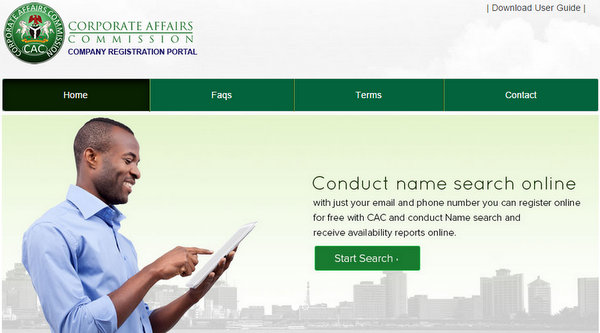
CAC has fully digitized its processes through the Company Registration Portal (CRP) at https://icrp.cac.gov.ng
. Here is exactly how to navigate it.
Step 1: Create Your CAC Portal Account
Visit the CAC Company Registration Portal and click “Create Account.” You will need:
-
Full name (exactly as it appears on your NIN)
-
Valid email address (this becomes your permanent communication channel)
-
Phone number
-
Nationality
-
Strong password
Critical tip: Use an email you check regularly. All approval notices, queries, and your certificate will be sent there. Many entrepreneurs use inactive emails and miss important updates
.
Step 2: Reserve Your Business Name
This is where many applications fail. The CAC system automatically rejects names that:
-
Are too similar to existing registered businesses
-
Contain restricted words (National, Government, Federal, Bank, Insurance)
-
Suggest government affiliation
-
Lack clarity about business activity
Process:
-
Log into your dashboard
-
Click “Name Reservation”
-
Enter your proposed name and alternative
-
Select business type (Business Name, Private Company, etc.)
-
Choose nature of business from the dropdown
-
Pay ₦500 (plus Remita charges)
-
Wait 24–72 hours for approval
The AI-enabled portal now suggests alternatives if your preferred name is unavailable. However, avoid generic names like “Global Ventures” or “Unique Enterprises” which face higher rejection rates. Choose something distinctive that reflects your specific niche
.
Step 3: Complete the Registration Form
Once your name is approved (you will receive an Availability Code), proceed to full registration:
For Business Name:
-
Click “New Registration” → “Business Name”
-
Enter your Availability Code
-
Fill in proprietor details (name, address, phone, email)
-
Upload required documents
For Limited Company:
-
Select “Private Company Limited by Shares”
-
Enter company details (address, email, phone)
-
Add director information (minimum one director under CAMA 2020)
-
Input shareholder details and share capital structure
-
Define your “Objects” (what the company will actually do)
-
Upload Memorandum and Articles of Association (auto-generated for basic registrations)
Step 4: Upload Required Documents
| Entity Type | Required Uploads |
|---|---|
| Business Name | Valid ID (NIN, voter’s card, passport, or driver’s license), passport photograph, signature specimen |
| Limited Company | Directors’ IDs, passport photos, signature specimens, MEMART (if customized), proof of address |
Document requirements:
-
Scan in high resolution
-
Use clear naming conventions (e.g., “Director_ID_Adeola_Bakare”)
-
Ensure ID details are clearly visible
-
File formats typically accepted: PDF, JPG, PNG
Step 5: Identity Verification (The Hidden Bottleneck)
Here is where patience becomes necessary. CAC’s system performs real-time NIN validation through external databases. When these systems experience delays, your registration stalls even if you did everything right
.
Common issues:
-
Name spelling inconsistencies between NIN record and application
-
NIN database downtime
-
High portal traffic during peak periods
If your application seems stuck at “verification” status for days, this is usually the cause. CAC has acknowledged these delays occur due to external validation processes
.
Step 6: Payment and Submission
The portal calculates your total fees based on entity type and share capital. Payment options:
-
Debit card (Visa, Mastercard, Verve)
-
Bank transfer through Remita
-
Internet banking
Always save your Remita Retrieval Reference (RRR) number and payment receipt. During the portal upgrade in late 2025, some users experienced payment reflection delays, so documentation is essential
.
Step 7: Approval and Certificate Download
Processing timelines in 2026:
-
Business Names: 24 hours to 7 working days
-
Limited Companies: 3–10 working days
-
NGOs/Incorporated Trustees: 2–4 weeks (due to additional approvals)
Once approved, you will receive email notification. Log into your portal to download:
-
Certificate of Incorporation (or Business Name Registration Certificate)
-
Status Report (company particulars)
-
Form CAC 1.1 (for companies)
-
Auto-generated TIN certificate
5. Post-Registration Requirements (Don’t Skip This)
Getting your certificate is just the beginning. Here is what you must do next to remain compliant.
Open a Corporate Bank Account
Most Nigerian banks require:
-
CAC Certificate
-
Status Report
-
Memorandum and Articles of Association (for companies)
-
Valid IDs of directors/signatories
-
Board resolution authorizing account opening
-
Proof of business address
Some fintech platforms like Kuda, Opay, and Moniepoint offer business accounts with streamlined requirements, but full corporate banking with tier-1 banks requires complete documentation.
Tax Identification Number (TIN) Registration
Since 2021, CAC and FIRS have integrated systems. When you register a business, a TIN is automatically generated and printed on your CAC certificate
.
However, here is the critical distinction: The TIN number on your CAC certificate is often not sufficient for all purposes. Many regulatory bodies and banks require the actual TIN certificate issued by FIRS
.
You should:
-
Visit FIRS TaxPro Max portal or your nearest FIRS office
-
Validate your auto-generated TIN
-
Obtain your official TIN certificate
-
Register for VAT if your annual turnover exceeds ₦25 million
Under the Nigeria Tax Administration Act (NTAA) effective January 2026, your NIN (for individuals) or CAC RC number (for businesses) now automatically serves as your Tax ID, simplifying the process significantly
.
File Annual Returns
This is mandatory for all registered entities and separate from tax returns:
| Entity Type | Filing Deadline | Fee Range |
|---|---|---|
| Business Names | By June 30 each year (starting second year after registration) | ₦2,000–₦5,000 |
| Private Companies | Within 42 days after Annual General Meeting (AGM) | ₦3,000–₦5,000+ |
| Incorporated Trustees | Between June 30 and December 31 for previous year | ₦10,000+ |
Failure to file annual returns results in:
-
Late filing penalties
-
“Inactive” status on CAC public search
-
Eventual striking off from the register
-
Inability to process post-incorporation changes
Obtain Necessary Licenses
Depending on your industry, you may need:
-
NAFDAC registration: For food, drugs, cosmetics
-
NCC permits: For telecommunications and tech services
-
SCUML certificate: For businesses susceptible to money laundering (required for opening accounts with some banks)
-
State/local government permits: Depending on your business location
6. Business Name vs Limited Company: Making the Right Choice
Many entrepreneurs agonize over this decision. Here is a practical framework to help you choose.
Choose Business Name If:
-
You are testing a new idea with minimal capital
-
You operate alone as a freelancer or consultant
-
Your annual turnover is below ₦5 million
-
You do not plan to seek external investment
-
You want minimal compliance burden and costs
Choose Limited Company If:
-
Your business is generating consistent revenue above ₦5 million annually
-
You plan to seek investment from angel investors or VCs
-
You work with corporate clients who require LLC status
-
You want to protect personal assets from business liability
-
You anticipate scaling beyond sole proprietorship within 12 months
The Tax Advantage of Limited Companies
Under Nigeria’s 2026 tax reforms, small companies (turnover below ₦25 million) enjoy 0% Company Income Tax rate. Between ₦25 million and ₦100 million, the rate is 20%. Above ₦100 million, it is 30%
.
Crucially, limited companies can deduct legitimate business expenses (rent, salaries, equipment, marketing, professional fees) before calculating taxable profit. Business names cannot properly deduct these expenses, often resulting in higher effective tax rates
.
Real-World Scenario:
Chioma runs “Gainsquares Nigeria Enterprises” as a business name. Wilson runs “Movexport Logistics Limited” as an LLC. Both face a ₦5 million lawsuit.
Six months later, Chioma has lost her personal car, her savings are frozen, and she is considering selling family land. Wilson loses only the business assets. His personal house, car, and children’s school fees account remain untouched
.
7. Risks & Realistic Expectations for 2026 Applicants
Let us address the hard truths about CAC registration in Nigeria today.
The “Connection” Myth
Many Nigerians believe you cannot get approved without knowing someone at CAC. This is largely false. The digital portal processes applications automatically based on compliance with requirements, not who you know. However, if your application gets stuck in “query” status or requires manual review, having an accredited agent can help navigate bureaucracy
.
Portal Technical Issues
The CAC portal, while improved, still experiences:
-
Payment gateway failures
-
Document upload errors
-
Timeout issues during peak hours
-
NIN verification delays
Always complete your application during business hours when support is available. Save your progress frequently
.
Fraudulent Agents and Scams
Beware of anyone promising:
-
“Same-day approval” for standard fees
-
Guaranteed approval regardless of documentation
-
Registration without required IDs
-
“Special connections” at CAC
Legitimate CAC registration requires proper documentation and follows set timelines. No agent can bypass these requirements legally
.
Documentation Fatigue
The paperwork is real. You will need:
-
Valid NIN-linked ID
-
Consistent personal details across all documents
-
Proper business address (can be residential for small businesses)
-
Clear understanding of your business activities
If you are not prepared for administrative work, consider paying a reputable agent ₦10,000–₦30,000 to handle the process
.
Foreign-Owned Companies Face Higher Barriers
If you are a foreign entrepreneur, you cannot register a Business Name. You must:
-
Incorporate a Limited Company with ₦100 million minimum share capital
-
Obtain NIPC Business Permit
-
Apply for Expatriate Quota if employing foreigners
-
Appoint at least one Nigerian director (recommended)
-
Complete more complex post-incorporation compliance
8. Pro Tips for Nigerians: How to Register Your Business Without Stress
Follow these actionable strategies to ensure smooth registration.
Perfect Your Name Selection
-
Avoid generic words: Global, Unique, Mega, Prime
-
Check availability using CAC Public Search before paying reservation fees
-
Have three alternatives ready
-
Ensure your name reflects your actual business activity
-
Avoid restricted words unless you have special approval
Prepare Documents Before Starting
-
Verify your NIN details are correct and updated
-
Ensure your ID name matches exactly across all documents
-
Have a digital passport photo ready (white background, no glasses)
-
Prepare a clear utility bill or tenancy agreement for address verification
-
Use a dedicated email address for business correspondence
Time Your Application Strategically
-
Avoid month-end and quarter-end when portal traffic peaks
-
Apply Tuesday through Thursday for faster processing
-
Do not wait until you need the certificate urgently
-
Start the process at least 3 weeks before any grant or contract deadline
Verify Your TIN Immediately
-
Do not assume the auto-generated TIN on your CAC certificate is sufficient
-
Visit FIRS within 30 days of registration to validate and obtain proper TIN certificate
-
This prevents delays when opening corporate accounts or applying for contracts
Set Calendar Reminders for Compliance
-
Mark June 30 for Business Name annual returns
-
Set AGM dates for companies and calculate 42-day filing deadline
-
Budget ₦5,000–₦30,000 annually for compliance fees
-
Non-compliance can cost you your business registration entirely
9. Frequently Asked Questions (FAQs)
Is it safe to apply for CAC registration online?
Yes, provided you use the official portal at https://icrp.cac.gov.ng. The process is fully digital and secure. Never share your ATM PIN or BVN password with anyone claiming to help with registration. Avoid third-party websites that mimic the CAC portal
.
How much does CAC registration cost in 2026?
Business Name registration costs approximately ₦20,000–₦25,000 total (including name reservation). Private Limited Company registration starts at ₦18,500 for ₦1 million share capital but typically costs ₦50,000–₦100,000 when using an agent or with higher share capital
.
Can I register CAC myself without an agent?
Absolutely. The CAC portal is designed for self-service. However, if you are unfamiliar with online forms or want to avoid rejection risks, using a CAC-accredited agent costs an additional ₦10,000–₦30,000 but provides peace of mind
.
How long does CAC registration take in 2026?
Business Names: 24 hours to 7 working days. Limited Companies: 3–10 working days. NGOs: 2–4 weeks. Delays usually occur due to NIN verification issues, document errors, or high portal traffic
.
Can I use my voter’s card for CAC registration?
Yes. CAC accepts National ID Card (NIN), International Passport, Driver’s License, or Voter’s Card as valid identification, provided the details are clear and match your application name exactly
.
Do I need an office address before registering?
No. You can use your residential address for initial registration, especially for Business Names. However, if you plan to open a corporate account with major banks, having a commercial address or virtual office may strengthen your application
.
What happens if I don’t file annual returns?
Your business will be marked “Inactive” on the CAC public register, you will lose access to post-incorporation services, and eventually CAC will strike your business off the register entirely. Reinstatement requires paying all outstanding fees plus penalties
.
10. Conclusion
The Nigerian business landscape in 2026 rewards formality. While the informal economy still exists, the real opportunities, funding, and growth potential lie on the formal side of the fence. CAC registration is your entry ticket to this world.
You now have the complete roadmap. From choosing between a Business Name and Limited Company, to navigating the portal step-by-step, to understanding the real costs and compliance requirements. The process is not as intimidating as it seems, but it does require attention to detail.
Do not let another year pass with your business operating in the shadows. The clients who will pay you premium prices expect this credibility. The grants that could scale your operations require this documentation. The banks that will fund your growth need this proof.
Register your business this week. Open that corporate account. File your first annual return when due. Build a business that outlasts your personal involvement and creates generational wealth.
Which business structure are you choosing, Business Name or Limited Company? Drop your decision in the comments below and share this guide with every Nigerian entrepreneur you know who is still operating informally. Let us build a culture of formal, compliant, and profitable businesses together.