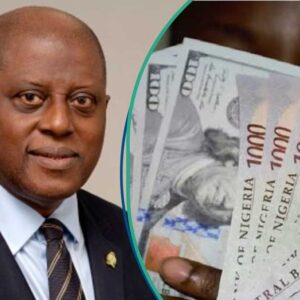
Every morning in Lagos, many Nigerians wake up to the same harsh reality: prices rising, wallets shrinking, hopes dimming. Meanwhile, a select few quietly build fortunes — seemingly immune to the economic storm. What if I told you there’s a hidden money trap keeping millions poor, and a secret formula the rich quietly use to escape it? Welcome to the real story of the Nigerian money trap.
What is the “Nigerian money trap”?
The term “Nigerian money trap” refers to the vicious cycle of economic pressures, systemic inequalities, and structural inefficiencies that prevent the majority of Nigerians from accumulating wealth. It’s not just about being poor; it’s about being stuck — working harder but never climbing out because the game is rigged.
- High inflation erodes real income: When everyday costs skyrocket faster than wages, families spend almost everything on food, transport, and basics — leaving nothing for savings or investments.
- Structural inequality and resource concentration: A tiny elite holds most of the wealth, benefiting from oil revenues, business monopolies, and access to privileged investment opportunities. Those left behind often lack access to quality education, stable jobs, or capital.
Put simply: while many hustle to survive, structural barriers ensure only a few thrive. That’s the trap.

Why Millions Stay Stuck — The Forces Behind the Trap
Inflation, cost of living and shrinking purchasing power
- Inflation in Nigeria has surged sharply in recent years. For households living on fixed or modest income, rising food and fuel costs mean that more than half their earnings go to basics — little left for savings, education, or investment. (Businessday NG)
- The removal of fuel subsidies and the devaluation of the naira have amplified cost increases, making transportation, food, utilities — daily essentials — significantly more expensive for ordinary Nigerians. (TheCable)
- As a result, more households are forced to prioritize immediate survival — often foregoing future-oriented spending like savings, education, or small business investment. Experts warn that this disincentive to save or invest threatens long-term financial stability for many. (The Guardian Nigeria)
In short: procrastinating poverty — where people live hand-to-mouth, never accumulating wealth or buffer against shocks.
Wealth inequality & resource concentration
- According to a recent report by Oxfam in Nigeria, a tiny fraction of the population controls vast swathes of wealth. The richest could reportedly spend ₦1 million daily for decades without exhausting their resources — a stark contrast to millions barely affording meals. (Oxfam in Nigeria)
- Most of Nigeria’s economic growth — especially from oil — has benefited this elite, while other sectors like agriculture and manufacturing remain underfunded or overlooked. The result: a glaring divide where the majority is excluded from meaningful wealth creation. (National Economy)
- Structural inequalities also show in access to education, healthcare, and infrastructure — often more available in urban or wealthy zones, leaving rural and poor communities behind. (EYN News)
Thus, even if someone works hard and earns reasonably, systemic disadvantages often block their path to lasting wealth.
Corruption, mismanagement, and under-investment
- Persistent corruption and poor governance mean public resources meant for education, healthcare, infrastructure — the very foundations that enable social mobility — often end up misallocated or diverted. (EYN News)
- Under-investment in manufacturing and local industries forces Nigeria to import most goods, draining foreign exchange and reducing domestic opportunities for entrepreneurship or value-added work. (IJL Temas)
- The failure to improve human capital and create stable, well-paid jobs means many remain stuck in insecure, informal, or low-pay employment — often too poor for savings or growth. (Intercept NG)
So even effort and discipline may not be enough — structural holes make upward mobility an uphill battle.
The Hidden Formula Rich People Use — What Separates Them
If most Nigerians are caught in a trap, some manage to break free. What is their secret?
Strategic buffering and diversified income
Wealthy Nigerians typically:
- Avoid investing solely in naira-denominated assets: They diversify into real estate, foreign currency, foreign assets, import-export businesses, or other inflation-resistant ventures. This shields them from currency devaluations and inflation eroding their wealth. (Businessday NG)
- Invest in non-oil sectors, real estate and passive income streams: Rather than rely on wage income, they leverage capital, networks, and access to credit to build assets that appreciate over time. (Businessday NG)
- Keep wealth growth and preserve value: Through real estate, businesses, and holding foreign assets or diversified portfolios, they ride out inflation, leverage arbitrage, and build generational wealth.
Leverage of privilege — access to opportunities, influence, and insulation
- Education, social networks, governance influence: Rich elites often have access to quality education, better healthcare, stable power supply or infrastructure, and social networks that give them a head start. This significantly improves their ability to access good jobs or start capital-intensive businesses. (Oxfam in Nigeria)
- Ability to evade or avoid taxes: Data suggests that over 99% of Nigeria’s wealthiest citizens evade or avoid paying taxes — meaning they keep more of their income and wealth for reinvestment or asset accumulation. (Oxfam in Nigeria)
- Exploiting systemic loopholes and informal advantage: Where policies or economy disfavor the poor (e.g. volatile naira, import-dependency, inflation), the elite exploit these for profit — through monopolies, import-export arbitrage, control over foreign exchange, and so on. (National Economy)
In other words: the rich aren’t just making more — they’re building resilience and preserving value in a system stacked against the rest.
The Human Cost: What This Trap Means for Everyday Nigerians
Let’s zoom out and see how this trap plays out in real life.
Widening Poverty, Hunger and Social Inequality
- The rise in poverty is not theoretical — recent studies estimate that over half of Nigeria’s population now live below the national poverty line. (Punch Newspapers)
- As prices rise faster than incomes, many households are forced to choose between essentials: food, health, education. These tough choices erode not only living standards, but people’s hopes and future. (Businessday NG)
- Inequality becomes entrenched: children from poor families get poorer education or limited opportunities; healthcare becomes unaffordable; social mobility shrinks across generations.
It’s a slow but brutal leech — sucking not just income, but aspiration, dignity, and potential.
Emotional toll, stress and societal despair
Behind the statistics are human lives. Families stressing over next meal; parents unable to afford school fees; dreams of entrepreneurship or security thwarted. For many, survival becomes the only goal.
Some people turn to informal sector hustles — but without infrastructure, safety nets, proper regulation, many remain exposed to exploitation or when crisis hits, collapse entirely. The result: a society where despair and insecurity become common.
It’s not just money lost — it’s hope lost, generation after generation.
Could Nigeria Break the Trap? What It Takes to Shift the Balance
Escaping the “Nigerian money trap” won’t be easy — but it’s not impossible. With the right policies, vision, and public will, real change can happen.
Structural reforms & equitable policies
- Implement progressive wealth taxation and close tax-evasion loopholes: This would ensure the wealthy contribute fairly to public funds — resources that could fund education, healthcare, infrastructure and social services. Experts suggest such a tax could generate billions annually for redistribution. (Oxfam in Nigeria)
- Diversify the economy beyond oil: Invest in agriculture, manufacturing, technology, and small-scale industries — creating mass employment and reducing dependence on imports or volatile commodities. (National Economy)
- Strengthen public services — education, healthcare, infrastructure: Ensuring access to quality education and healthcare across rural and urban areas gives more people a fighting chance at upward mobility. (Oxfam in Nigeria)
Grassroots money habits and financial literacy
- Encourage savings habit and investment — even small amounts: Households, regardless of income level, can develop financial discipline: small monthly savings, prioritize long-term goals, not just day-to-day survival. Financial literacy and budget awareness can make a difference.
- Build community-level support and cooperative investments: Rather than isolated hustles, collective efforts — community saving groups, cooperative businesses — can pool resources, share risk, and build assets over time.
- Use technology and innovation: Digital tools, microfinance, mobile apps for farming or small businesses — when well-designed — could open up new paths for ordinary Nigerians to generate income, secure stability, and invest for the future.
Comparison: Life for the Many vs Life for the Few
| Situation | Majority (Trapped in Money Trap) | Elite / Wealthy Few (Using Hidden Formula) |
|---|---|---|
| Income & Expenses | Earn modest wages or irregular income; most of it spent on food, transport, fuel | Earn diversified income — some from business, real estate, investments |
| Savings / Investment | Little or nothing after essentials; minimal savings/investment | Invest in assets, real estate, foreign currency, businesses |
| Assets Value | Assets (if any) often depreciate or lose value due to inflation / currency devaluation | Assets preserve value or appreciate; shielded from inflation via diversification |
| Opportunities | Limited access to quality education, healthcare, financial services | Access to high-quality services, social networks, influence, capital |
| Economic Mobility | Stagnant — hard to rise above living-cost pressures | Growing — ability to expand businesses, accumulate wealth over time |
This table highlights the asymmetry clearly: for many, life is a treadmill; for a few, it’s a launchpad.
Why We Need to Talk About It — And Act
Because this isn’t just an economic issue — it’s a social, moral, and national development issue.
- When half of the country is stuck in poverty, inequality deepens — social cohesion frays, frustration builds, and instability looms.
- Neglecting human capital and fair distribution means the country loses its potential: wasted talents, brain drains, and generational poverty.
- Breaking the trap could unlock real prosperity: with equitable policies and financial literacy, more Nigerians could contribute meaningfully — reducing inequality, boosting economic growth, and building lasting stability.
We must talk about this money trap — not in whispers, but out loud. Because silence only helps keep the cage locked.
What You Can Do — Personal Steps to Break Away
Even if systemic change is slow — there are things you, as an individual, can do to protect yourself and maybe build real wealth:
- Track your income and expenses — create a simple budget to see where your money goes.
- Try to save a little — even 5-10% of income — consistently; treat it as non-negotiable.
- Avoid putting all your eggs in one basket. If possible, diversify income: side hustle, small business, investment in skills or assets.
- Invest in yourself — education, skills, health. Long-term gains matter more than short-term comfort.
- Stay informed, demand transparency and fairness — support policies that promote equity, accountability, and economic reforms.
Conclusion: The Trap Is Real — But So Is the Way Out
The “Nigerian money trap” isn’t a myth or exaggeration — it’s a hard, structural reality biting millions every day. Inflation, inequality, corruption, weak infrastructure — these are the chains that keep many chained to survival, while a few fly high.
Yet, as bleak as things may look, the hidden formula the rich use to escape poverty offers a blueprint — not just for the elite, but for ordinary Nigerians who choose to be savvy, strategic, and resilient.
With systemic reform, collective action, and personal discipline, the trap can be dismantled — brick by brick. The first step: acknowledging it’s there. The next: refusing to accept it.
Share this article with someone you care about. Start the conversation. One small ripple can start a wave.
Call to Action (CTA): If you found this useful — Share Now. Let’s get more Nigerians awake to the trap — and inspired to break free.