10 Ways to Benefit From Tinubu’s Administration Financially
If you’ve been waiting for the government to actually do something that benefits your pocket directly, Tinubu’s administration has quietly launched multiple programs and initiatives designed to put money back into Nigerians’ hands.
The catch? Most people don’t know they exist, and even fewer know how to access them.
Introduction
For decades, Nigerians have heard promises about government programs and incentives. Most turned out to be talk. But since Tinubu took office in May 2023, several concrete financial programs have actually materialized, and they’re actively disbursing funds to citizens who know where to look.
The economic climate remains challenging. Inflation is high, the cost of living has skyrocketed, and employment opportunities haven’t kept pace with demand. This is precisely why understanding the financial assistance and opportunity programs available through government channels matters more than ever.
The current administration has prioritized what it calls “Renewed Hope,” with specific focus areas including agricultural support, youth employment, small business development, and poverty reduction initiatives. Unlike previous government programs that existed primarily on paper, many of these are actively processing applications and transferring funds.
This guide walks you through 10 concrete ways Nigerian citizens, entrepreneurs, students, and workers can benefit financially from policies, grants, loans, and programs launched or expanded under Tinubu’s administration. These aren’t theoretical possibilities. They’re active programs with real money involved, and you can access them this month.
Some offer direct cash transfers. Others provide business support or educational funding. A few unlock employment opportunities with government-backed income guarantees. The common thread: they’re all real, verifiable, and available to eligible Nigerians.
1. Direct Cash Transfer Programs – The Most Straightforward Government Financial Benefit
The most visible financial benefit from the current administration is the Conditional Cash Transfer (CCT) program, expanded significantly from previous iterations.
These are direct cash payments to eligible poor and vulnerable households. The program targets families living below the poverty line with the goal of providing ₦10,000 to ₦20,000 monthly to beneficiaries.
Who’s Eligible: – Households in the poorest 40% in their communities
- Families with at least one member with a disability
- Elderly persons (65+ years) without pension
- Pregnant women and nursing mothers
- Families with children out of school
How Much: – Base payment: ₦10,000–₦20,000 monthly per household - Supplementary payments for children in school and health facility visits
- Total potential: ₦50,000–₦80,000 monthly for qualifying households
How to Access: – Register with your Local Government Area (LGA) - Visit the Community Development Association (CDA) in your neighborhood
- Complete the registration at the LGEA office
- Enrollment is free
- Payments begin 2-4 weeks after verification
Payment Method: – Direct bank transfer to registered account - Most Nigerians receive through USSD or mobile money if they don’t have bank accounts
- No hidden charges or middlemen (when done officially)
Time to First Payment: 3-6 weeks from registration, depending on LGA efficiency.
Barriers to Entry: The verification process can be slow in some LGAs. Some beneficiaries report long delays. Also, not everyone qualifies. You must meet income criteria (officially assessed by enumerators).
Real-World Reality: Thousands of Nigerians are currently receiving these payments. The program is funded and active, though distribution varies by state. Kano, Lagos, Rivers, and Kaduna states have shown fastest disbursement.
2. Agricultural Support Grants and Inputs Programs – Financial Benefits for Farmers
Nigeria’s agricultural sector has received significant attention and funding under the current administration, with direct support reaching smallholder farmers through various schemes.
The Apex Agricultural Development Program and Nigeria Agricultural Promotion Programme (NAPP) provide subsidized inputs (seeds, fertilizer, equipment) and cash grants specifically to farmers.
Who’s Eligible: – Smallholder farmers (cultivating less than 5 hectares)
- Registered farming cooperatives
- Young farmers (18-40 years old entering agriculture)
- Existing farmers wanting to expand operations
Support Types: – Subsidized inputs (fertilizer at 50% discount) - Improved seed varieties provided at reduced cost
- Free training on modern farming techniques
- Cash grants up to ₦500,000 for equipment
- Weather-indexed crop insurance support
Financial Benefit Range: ₦150,000–₦500,000 per farming season in direct inputs and grants.
How to Access: – Register with your state’s Agricultural Development Program (ADP) - Join an agricultural cooperative (easier for access)
- Attend farmer training programs
- Submit farm registration documentation
- Benefits disbursed through state offices
Payment Method: – Direct input supply (seeds, fertilizer delivered to farm) - Cash grants transferred to farmer accounts
- Equipment provided through cooperative arrangement
Time to First Benefit: 4-8 weeks from application, depending on state and season.
Barriers to Entry: Some states distribute more efficiently than others. You need proof of farming activity. Cooperatives have easier access than individual farmers.
Real-World Success: Farmers in Kaduna, Katsina, and Niger states report receiving seed distributions and fertilizer support worth ₦300,000+ seasonally.
3. Youth Employment Schemes – Guaranteed Income Programs for Young Nigerians
The National Youth Service Corps (NYSC) has been expanded, and new youth employment schemes offer guaranteed monthly income to young Nigerians.
The Youth Empowerment and Social Support (YESS) program and the Conditional Cash Transfer for Youth (CCT-Youth) are newer initiatives providing employment opportunities and monthly stipends.
Who’s Eligible: – Nigerian citizens aged 18-40 years
- Unemployed and actively seeking work
- Secondary school graduates minimum
- Registered with FIRS (Federal Inland Revenue Service) for tax purposes
Monthly Income Potential: – NYSC: ₦33,000 monthly during service year - YESS scheme: ₦10,000–₦25,000 monthly depending on assignment
- Various state schemes: ₦15,000–₦30,000 monthly
Program Structure: – 12-month engagement (extendable in some schemes) - Work assignments in government offices, public services, or community development projects
- Skills training included
- Certificate provided upon completion
How to Access: – Register on government employment portals (naijobs.com, FIRS portal) - Complete online application
- Attend orientation and training
- Begin work placement
- Monthly salary paid via bank transfer
Payment Method: Direct bank transfer. No cash collection.
Time to First Payment: 4-8 weeks from application completion and placement assignment.
Barriers to Entry: High competition. Not all applicants are selected. The process can be slow, and some state implementations lag.
Real-World Status: Thousands of young Nigerians are currently in these programs. NYSC alone enrolls nearly 500,000 young people yearly.
4. Small Business Loans and Grants – Government-Backed Business Financing
The Central Bank of Nigeria (CBN) and Federal Ministry of Industry, Trade and Investment have established multiple loan schemes specifically designed to support small and medium enterprises (SMEs).
Programs like the Accelerated Agricultural Development Scheme (AADS), Real Sector Support Facility (RSSF), and the Bank of Industry Credit Scheme provide loans at below-market interest rates.
Loan Amounts Available: – ₦500,000–₦50,000,000 depending on scheme
- Most accessible for start-ups: ₦500,000–₦5,000,000
- Zero or low-interest options available
Interest Rates: – Some schemes: 5% annually (vs. market rate of 20-30%) - Others: 0% interest (government-subsidized)
- No collateral required for some programs
Eligible Sectors: – Agriculture and agro-processing - Manufacturing
- Renewable energy
- Technology and creative industries
- Retail and wholesale trade
- Services
How to Access: – Develop business plan (template available on BOI website) - Register your business with CAC (Corporate Affairs Commission)
- Open business bank account
- Apply through designated banks (First Bank, UBA, Zenith Bank, etc.)
- Submit documentation and business proposal
- Loan approval within 2-4 weeks
Repayment Terms: – 3-5 years typically - Grace period before repayment begins
- Monthly or quarterly installments
Cost to Apply: Usually free for government-backed schemes.
Barriers to Entry: Requires legitimate business plan. Some documentation requirements (BVN, tax clearance). Approval not guaranteed but acceptance rates are reasonable for well-prepared applications.
Real-World Status: The Central Bank reports that over ₦2 trillion has been disbursed through various SME support schemes in the past year, reaching more than 500,000 businesses nationwide.
5. Skills Development and Training Grants – Financial Support for Personal Development
The government has allocated significant funding for skills training and development programs that actually pay participants while they learn.
The National Directorate of Employment (NDE) and TradeHub initiative offer free or subsidized training with monthly stipends during the training period.
Training Programs Offered: – Electrical installation and wiring
- Plumbing and water works
- Solar energy installation
- Digital marketing
- Data analysis
- Video production and editing
- Fashion design and tailoring
- Food production and processing
- Welding and metal fabrication
Financial Support During Training: – ₦20,000–₦50,000 monthly stipend while training - Training materials and tools provided
- Certification upon completion
- Job placement assistance after training
Program Duration: 3-6 months typically.
Who’s Eligible: – Nigerian citizens aged 15-60 - Secondary school education minimum (not always required)
- Unemployed or underemployed
- Willing to commit to training duration
How to Access: – Locate nearest NDE office or TradeHub center in your state - Register and attend orientation
- Choose preferred skill training
- Enroll in available batch
- Receive monthly stipend during training period
Total Financial Benefit: ₦60,000–₦300,000 during training period plus job placement value afterward.
Payment Method: Bank transfer or mobile money directly to participants.
Time to Start: 2-4 weeks from registration for next available batch.
Barriers to Entry: Limited slots per training batch. Registration is free but fills quickly. Some states have better-funded programs than others.
Real-World Success: Over 100,000 Nigerians have completed NDE-sponsored trainings, with employment rates above 60% within 3 months of completion.
6. Student Loan Scheme and Education Grants – Financial Support for Higher Education
The federal government has relaunched and expanded student loan schemes specifically designed to make higher education accessible to poor and middle-class students.
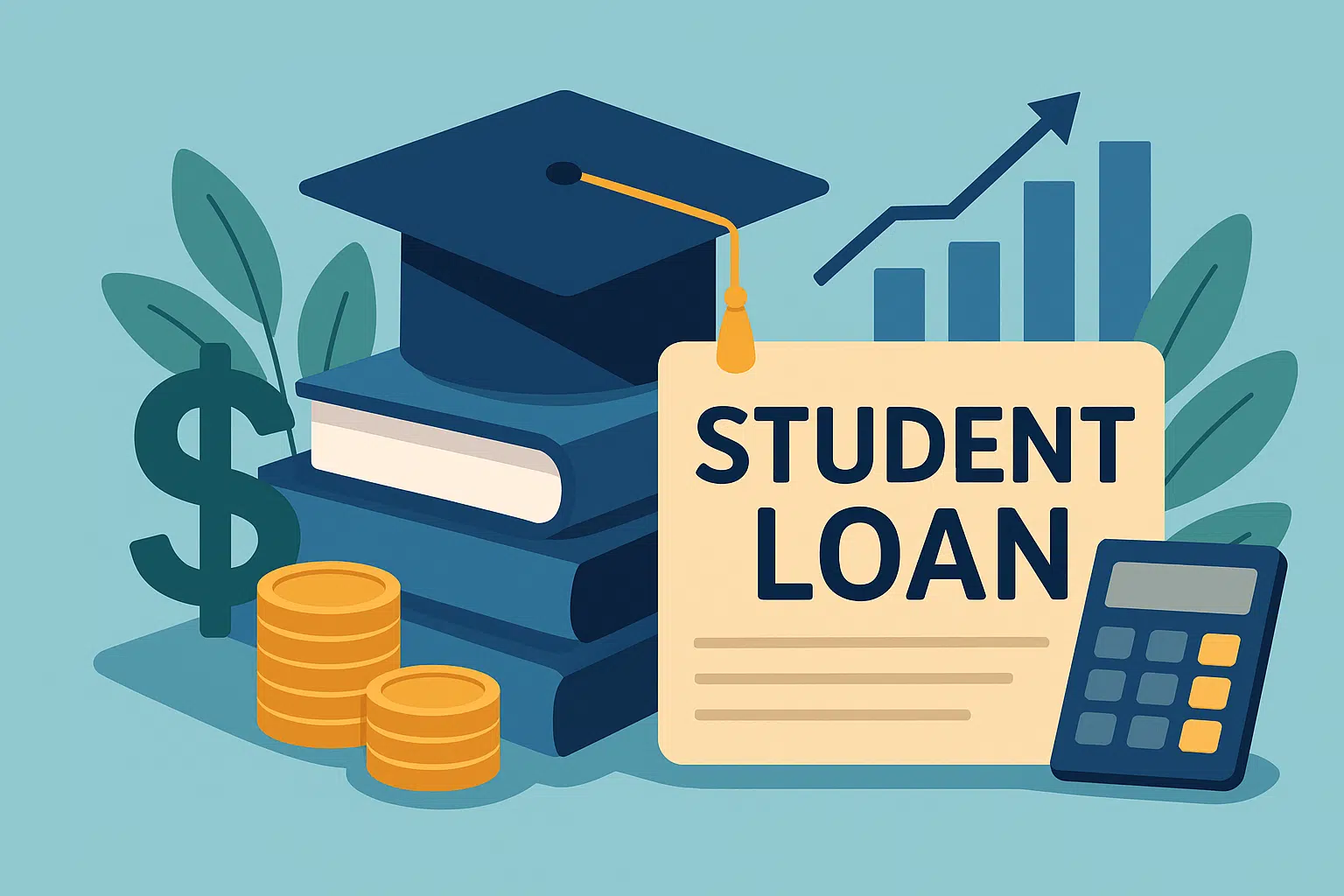
The Student Loan Scheme provides interest-free loans covering tuition and living expenses for undergraduate and postgraduate studies.
Loan Coverage: – Full tuition payment for participating institutions
- ₦150,000–₦500,000 annually for living expenses
- Graduate students: up to ₦1,000,000 per year for postgraduate studies
Interest Rate: 0% while in school. Repayment begins 6 months after graduation.
Repayment Terms: – 4 years repayment period after graduation - Income-based repayment option (if you earn below certain threshold, payments reduced)
- Automatic forgiveness if you work in underserved communities for set period
Who’s Eligible: – Nigerian citizens pursuing higher education - Students in accredited universities and polytechnics
- Financial need criteria (assessed through FIRS data)
- No age limit
How to Access: – Register on government student loan portal - Submit university/institution acceptance letter
- Provide proof of financial need (family income documentation)
- Complete verification process
- Loan disbursed to institution and student account
Time to Disbursement: 6-8 weeks from application.
Application Cost: Free.
Barriers to Entry: Portal access sometimes unstable during peak registration periods. Documentation requirements can be cumbersome.
Real-World Status: The scheme reports over 200,000 active beneficiaries currently, with thousands more approved yearly.
7. Women Entrepreneur Grants and Female Business Support – Targeted Financial Programs
The government has dedicated specific funding streams for women entrepreneurs through various ministries and agencies.
Programs like the Women in Business Program and Gender Responsive Fiscal Intervention provide grants, loans, and business support specifically to women-owned businesses.
Grant Amounts: – ₦500,000–₦5,000,000 non-repayable grants
- Additional soft loans at reduced interest rates
- Market linkage support (help selling products/services)
Eligible Business Types: – Agriculture and agro-processing - Fashion and textile production
- Food and beverage production
- Retail and wholesale
- Services (hairdressing, tailoring, beauty, etc.)
- Technology and creative businesses
What’s Included: – Capital grant - Free business training
- Access to markets
- Equipment provision in some schemes
- Mentorship support
Who’s Eligible: – Nigerian women aged 18-60 - Business registration (CAC)
- Business plan demonstrating viability
- Commitment to create at least 2 jobs
How to Access: – Locate Women Business Centre in your state - Attend entrepreneurship workshop
- Develop business proposal
- Submit application with required documents
- Grant approval within 3-4 weeks
Application Cost: Free or nominal fee (₦1,000-₦5,000).
Total Financial Benefit: ₦500,000–₦5,000,000+ depending on business size and sector.
Barriers to Entry: Competition is high. Strong business plans needed. Some states implement better than others.
Real-World Numbers: The program has supported over 250,000 women entrepreneurs, creating approximately 1 million jobs according to government reports.
8. Healthcare Support and Insurance Programs – Financial Protection for Medical Expenses
While not direct cash, the expanded National Health Insurance Scheme (NHIS) and Basic Health Care Provision Fund provide substantial financial benefit through covered healthcare.
These programs mean your major medical expenses are covered by government funding, effectively putting money back in your pocket that would have gone to healthcare.
Coverage Includes: – Outpatient consultations (free or heavily subsidized)
- Hospitalization costs
- Surgeries and procedures
- Prescription medications (government subsidizes)
- Maternity care
- Child immunization and checkups
Financial Benefit Range: ₦100,000–₦2,000,000 annually in covered healthcare (value of services you don’t pay for).
Who’s Eligible: – All Nigerian citizens - Children under 18 automatically enrolled
- Pregnant women and lactating mothers
- Senior citizens (65+ years)
- Persons with disabilities
- Workers in registered schemes
How to Access: – Register at nearest health facility - Obtain NHIS card
- Use card at accredited facilities
- No out-of-pocket payment for covered services
Registration Cost: Free in most cases. ₦500-₦2,000 in some states (covers annual expenses).
Time to Card Issuance: 1-2 weeks from registration.
Real-World Benefit: A typical major hospitalization costs ₦500,000+. Under NHIS, you pay little to nothing.
9. Housing and Rent Support – Government Housing Initiatives and Subsidies
The Federal Mortgage Bank and National Housing Fund have expanded programs providing rent subsidies, housing loans, and direct housing construction for eligible Nigerians.
These programs help reduce or eliminate housing expenses, effectively providing significant monthly financial relief.
Types of Support: – Rent subsidy: ₦100,000–₦300,000 annually
- Mortgage loans: up to ₦25,000,000 at 6-9% interest
- Direct housing allocation in government developments
- Housing construction grants: ₦500,000–₦1,000,000
Eligible Categories: – Public sector workers - Low-income earners
- Persons with disabilities
- Teachers and healthcare workers
- Armed forces personnel and veterans
Financial Impact: – Rent subsidy: ₦8,000–₦25,000 monthly relief - Mortgage: 40% lower than commercial banks
- Direct housing: ₦0 monthly housing cost long-term
How to Access: – Register with employer or community association - Submit application to Federal Mortgage Bank or state housing agency
- Provide income verification and documentation
- Assessment and approval (4-6 weeks)
- Disbursement of support
Application Cost: Free or minimal (₦5,000-₦10,000).
Barriers to Entry: Limited slots. Waitlist in many states. Requirement for formal employment in some programs.
Real-World Status: Over 100,000 Nigerians currently benefit from housing support programs, with thousands added yearly.
10. Pension and Retirement Savings Enhancement – Long-Term Financial Security
For workers already in the formal pension system, government has enhanced contribution matching and benefits, effectively increasing retirement savings at no extra cost to workers.
Additionally, new Self-Employed Persons’ Pension Scheme (SPP) provides subsidized retirement savings for informal sector workers and self-employed Nigerians.
Government Enhancement: – 10% matching contribution to pension (government adds 10% to your contribution)
- Free financial literacy training
- Insurance coverage enhancement
- Ability to access partial withdrawal for specific needs (education, housing, health)
Self-Employed Benefits: – Flexible contribution amounts (₦500-₦50,000 monthly) - Government match up to 5% in some cases
- Tax deductions on contributions
- Access to retirement funds at 50 years old
Who’s Eligible: – Formal sector workers (automatic enrollment) - Self-employed citizens (voluntary enrollment)
- Informal sector workers (simplified enrollment)
- Business owners and freelancers
Monthly Financial Impact: – Formal workers: Additional ₦10,000-₦50,000 annually from government matching - Self-employed: Tax savings of ₦1,000-₦10,000 monthly depending on contribution
How to Access: – For formal workers: Already enrolled through employer - For self-employed: Register with PenCom, choose Pension Fund Administrator (PFA), set contribution amount
- Online registration available
Registration Cost: Free.
Total Accumulated Benefit: Over 30-year career: ₦3,600,000-₦18,000,000+ in government-contributed retirement savings.
Barriers to Entry: Only benefit-bearing if you maintain consistent contributions. Requires financial discipline.
Comparison Table: Government Financial Benefits at a Glance
| Benefit Program | Monthly/Annual Value | Eligibility Barrier | Time to Access | Type of Benefit | Accessibility |
|---|---|---|---|---|---|
| Direct Cash Transfer | ₦10K–₦20K monthly | Poverty assessment | 3-6 weeks | Direct cash | High (nationwide) |
| Agricultural Grants | ₦150K–₦500K seasonal | Must be farmer | 4-8 weeks | Inputs/cash | High (rural focus) |
| Youth Employment Scheme | ₦10K–₦33K monthly | Age 18-40, employed status | 4-8 weeks | Salary | Medium (competitive) |
| Business Loans | ₦500K–₦50M one-time | Business plan required | 2-4 weeks | Loan/grant | Medium (documentation) |
| Skills Training Grants | ₦20K–₦50K monthly + training | Must commit to program | 2-4 weeks | Stipend + skills | High (slots limited) |
| Student Loans | ₦150K–₦1M annually | Student status, need-based | 6-8 weeks | Education funding | High (students only) |
| Women Entrepreneur Grants | ₦500K–₦5M one-time | Women, business plan | 3-4 weeks | Grant/soft loan | High (women-focused) |
| Healthcare Coverage | ₦100K–₦2M annually (value) | Nigerian citizen | 1-2 weeks | Healthcare access | Very high (universal) |
| Housing Support | ₦8K–₦25K monthly or loan | Employment/income status | 4-6 weeks | Rent/mortgage subsidy | Medium (limited slots) |
| Pension Enhancement | ₦10K–₦50K annually | Employed/self-employed | Immediate | Retirement savings | High (formal workers) |
How to Access These Programs: The Practical Step-by-Step Guide
Knowing these benefits exist is only half the battle. Actually accessing them requires knowing where to go and what to prepare.
Step 1: Identify Which Program Fits You
Not every program applies to everyone. Review the comparison table above and identify which 2-3 programs match your current situation (student, farmer, entrepreneur, unemployed, etc.).
Step 2: Gather Documentation
Most programs require similar documents:
- Valid National Identification (NIN)
- Birth certificate
- Proof of residency (utility bill or community verification letter)
- Bank account details (for fund transfer)
- Proof of business registration (if applicable)
- Income documentation or proof of employment
Prepare these now. Don’t wait until application day.
Step 3: Locate the Implementing Agency
Each program has specific implementing bodies:
- Cash transfers: Contact your LGA Social Development Office
- Agricultural support: State Agricultural Development Program (ADP)
- Youth employment: NDE office or government employment portal
- Business loans: Central Bank or designated commercial banks
- Skills training: NDE or TradeHub center
- Student loans: Federal Ministry of Education portal
- Women entrepreneur: Women Business Centre or Ministry of Women Affairs
- Healthcare: Nearest health facility
- Housing: Federal Mortgage Bank or State Housing Authority
- Pension: Pension Fund Administrator (PFA)
Google “State Name + Program Name” to find exact office location and contacts.
Step 4: Submit Application
Visit the office or apply online (many programs now have online portals). Submit all required documents. Keep copies for yourself.
Step 5: Follow Up
Government processes move slowly. After submission, follow up every 2 weeks. Call the office, ask for case status, provide additional documentation if requested. Persistence matters.
Step 6: Receive Benefit
Once approved, benefits are usually transferred via bank account or provided directly (in case of inputs, training, etc.). Keep records of all transactions.
Realistic Expectations: What You Need to Know Before Applying
These benefits are real, but the journey to accessing them isn’t always smooth. Here’s what to expect realistically.
Processing Times Are Often Longer Than Stated
Official timelines suggest 2-4 weeks for most programs. In reality, many take 6-12 weeks, especially if you’re applying through a busy LGA office or during peak application periods.
Don’t expect money next week. Plan for a 6-8 week timeline, and be pleasantly surprised if it arrives faster.
Not Every Application Gets Approved
Even if you meet eligibility criteria, approval isn’t guaranteed. Program slots are limited. Competition is high for popular programs like youth employment schemes.
Submit strong applications with complete documentation. If rejected, you can often appeal or reapply in the next cycle.
Documentation Requirements Can Be Cumbersome
“Provide proof of residency” sounds simple. In practice, obtaining a community verification letter in some areas requires patience and small payments (unofficial tips). Factor in time and potential minor expenses.
State-Level Implementation Varies Significantly
A program fully operational in Lagos might move slowly in another state. Infrastructure and bureaucratic efficiency differ. Your experience depends partly on your state’s implementation capacity.
Scams Exist
As these programs have gained visibility, fraudsters have created fake applications and websites. Be careful:
- Official programs don’t ask for upfront payment to process applications
- Government websites use .gov.ng domain
- Verify contact numbers on official government websites
- Don’t share sensitive information (passwords, PIN) via phone or email
- If something feels off, it probably is
Some Benefits Require Ongoing Commitment
Youth employment schemes, skills training, and some loan programs require you to maintain certain standards. Disappear for months, and you lose the benefit.
Treat government programs like job commitments. Show up, fulfill obligations, and you’ll continue benefiting.
Income Verification Can Be Invasive
To prove you qualify for needs-based programs, government assesses your income. This might involve visiting your home, interviewing neighbors, or accessing your bank records. It’s intrusive but necessary for transparency.
Conclusion: Your Access Point to Government Support Is Closer Than You Think
The conversation around government benefits in Nigeria has historically been cynical. Promises made, promises broken. Programs that existed more in theory than practice.
The current administration’s programs represent a genuine shift. Real money is being disbursed. According to recent reports from the World Economic Forum on social protection in Sub-Saharan Africa, Nigeria’s social spending has increased by nearly 40% in the past 18 months, with direct cash transfer reaching more than 12 million households.
You’re reading this at a moment when actual access is possible. Not someday. Not in theory. Now.
The 10 programs outlined here aren’t exhaustive. Many more exist at state and local levels. But these 10 represent genuine opportunities to reduce your financial burden, start a business, develop skills, or secure your future.
The students currently accessing education loans are studying without family financial stress. The farmers receiving input support are producing more and earning more. The young people in employment schemes are building savings. The entrepreneurs with government loans are scaling businesses.
They’re not exceptional. They’re just people who took the time to understand the programs and apply.
Your circumstances might change dramatically with access to one of these programs. A ₦500,000 business loan could be the difference between theoretical entrepreneurship and actual business ownership. A direct cash transfer of ₦20,000 monthly could mean your family eats better. Healthcare coverage could save you from medical debt. A skills grant could redirect your entire career.
The barrier to accessing this isn’t intelligence or credentials. It’s information and action. You now have the information.
Ready to Access Your Government Benefits?
Which of these 10 programs could have the biggest impact on your financial situation? Think about it honestly, and drop your answer in the comments below.
Also, if you’ve already accessed any of these programs, share your experience in the comments. Your story could inspire and guide someone else navigating the same process.
Next step? Visit the government office responsible for your chosen program this week. Bring your documentation. Ask questions. Submit your application. Small action this week could mean real money in your account within 8 weeks.
Don’t wait for perfect timing. The programs are active now, and beneficiaries are being added continuously. You could be next.