Introduction
The naira hit ₦1,850 to $1 last week. Your landlord is threatening eviction. NEPA took light for the fifth day straight, and your generator fuel budget has tripled since January. Your salary—if you even have one—arrives on the 25th of every month, but by the 10th, your bank account is already gasping for breath.
I know this story because I’ve lived it. So have millions of Naijarians across Lagos, Abuja, Enugu, and Port Harcourt. The traditional monthly salary model is broken, especially when garri now costs ₦1,200 per mudu and transport fares change faster than celebrity marriages.
What if I told you there are legitimate Nigerian businesses that pay you daily cash—not at month-end, not “when funds drop,” but the same day you work?
In this comprehensive guide, I’m revealing 9 Nigerian businesses that pay daily cash you can start with just your smartphone, zero capital, or minimal investment. These aren’t Ponzi schemes or “investment opportunities” that vanish overnight. These are real, tested income streams that Nigerians are using right now to survive—and thrive—in 2026’s economic chaos.
By the end of this article, you’ll know exactly which business fits your skills, how to start today, and how to withdraw your earnings before sunset. Let’s get your financial oxygen mask on.
Why Daily Payment Businesses Are Critical for Nigerians in 2026
Nigeria’s inflation rate officially crossed 32% in early 2026. Unofficially? Ask any mama buying rice at Balogun Market—it’s closer to 50% for everyday items.
Monthly salaries don’t match daily expenses anymore. When you wait 30 days for payment while bread prices jump twice in that period, you’re essentially taking a pay cut every week.
Daily income businesses in Nigeria solve this timing mismatch. They let you:
- Pay for emergencies immediately without begging or borrowing
- Reinvest profits quickly before currency devaluation eats your earnings
- Test multiple income streams without waiting months to see results
- Maintain cash flow even during the notorious “January to December” struggle
The businesses I’m sharing aren’t theoretical. They’re currently feeding families in Surulere, paying school fees in Benin City, and funding generator fuel across Kaduna.
1. POS (Point of Sale) Agency Banking — The King of Daily Cash in Nigeria
What It Is and Why It Pays Daily
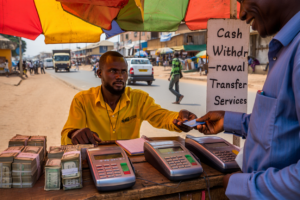
POS agency banking remains the heavyweight champion of Nigerian businesses with instant payment. Every withdrawal, transfer, or bill payment you process puts cash in your hand immediately—minus your service charge.
In 2026, with most Nigerians avoiding banks due to long queues and ATM scarcity, POS agents have become the neighborhood Central Bank. One agent in Ikeja told me she processes over ₦2 million daily during month-end periods.
How Much Can You Earn?
Typical service charges:
- Withdrawals: ₦100-₦200 per ₦10,000
- Transfers: ₦50-₦100 per transaction
- Bill payments: ₦100-₦300 commission
Realistic daily income:
- Low-traffic location: ₦3,000-₦8,000 daily
- Medium traffic (residential area): ₦10,000-₦25,000 daily
- High traffic (market, motor park): ₦30,000-₦100,000+ daily
What You Need to Start
Capital required: ₦100,000-₦500,000 (for cash float and machine deposit)
Equipment:
- POS machine (provided by aggregators, usually ₦20,000-₦50,000 deposit)
- Smartphone for monitoring
- Secure location (even a table in front of your house works)
Best POS aggregator platforms in Nigeria:
- Moniepoint (www.moniepoint.com) – Most popular, largest network
- OPay (www.opayweb.com) – Quick setup, low requirements
- PalmPay (www.palmpay.com) – Good commissions, instant settlement
- Kuda Business (www.kuda.com/business) – Modern interface
- Gomoney Agent (www.gomoney.global) – Competitive rates
Step-by-Step Starting Guide
Day 1:
- Visit any Moniepoint or OPay office nearest to you (they’re in all major cities)
- Bring: Your BVN, valid ID, passport photograph, and ₦50,000 minimum
- Complete registration (takes 30-60 minutes)
- Collect your POS machine and login credentials
Day 2-3:
- Stock your cash float (start with at least ₦100,000)
- Announce your service in your neighborhood WhatsApp groups
- Create simple signage: “POS HERE – WITHDRAW, TRANSFER, PAY BILLS”
Day 4 onwards:
- Process transactions
- Withdraw your profit daily through the aggregator’s app
- Restock cash as needed (many agents restock twice daily)
Pro Tips for Maximum Earnings
- Location is everything: Motor parks, market entrances, and estate gates = higher traffic
- Offer extended hours: Opening by 7 AM and closing at 9 PM captures early workers and night transactions
- Keep cash available: Nothing kills your business faster than “No cash now, come back later”
- Build relationships: Regular customers will choose you over other agents
- Diversify services: Add airtime, data, and cable TV subscriptions for extra commissions
Real Success Story
Aisha in Kubwa, Abuja, started with one POS machine and ₦150,000 in October 2025. By January 2026, she was running three machines, employing two attendants, and clearing ₦40,000-₦60,000 profit daily. Her secret? She positioned herself at the entrance of a large estate and stayed open until 10 PM when other agents had closed.
2. Dispatch Riding (Bike/Car) — Get Paid After Every Delivery
Why This Is a Daily Cash Goldmine
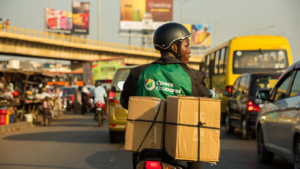
Dispatch riding has exploded in Nigeria since 2024 when e-commerce platforms multiplied and logistics became the bottleneck. Whether you own a bike, car, or even bicycle in some areas, you can start earning daily cash withdrawal jobs Nigeria style—literally getting paid minutes after each delivery.
How the Money Works
Payment models:
- Instant withdrawal apps: Earn per delivery, cash out anytime
- Daily settlement: Complete deliveries, get paid EOD (end of day)
- Cash-on-delivery bonus: You collect customer payment, keep your commission, remit balance
Realistic earnings (Lagos/Abuja 2026 rates):
Motorcycle (Okada) dispatch:
- ₦500-₦1,500 per delivery
- Average 10-20 deliveries daily
- Daily income: ₦8,000-₦30,000
Car dispatch:
- ₦1,000-₦3,500 per delivery
- Average 8-15 deliveries daily
- Daily income: ₦12,000-₦45,000
Bicycle (yes, bicycle!) in traffic-heavy areas:
- ₦400-₦800 per delivery
- Average 8-12 deliveries daily
- Daily income: ₦5,000-₦10,000
Best Dispatch Platforms That Pay Nigerians Daily
- Gokada (www.gokada.ng)
- Vehicles: Motorcycles only
- Cities: Lagos primarily
- Payment: Instant withdrawal to bank
- Requirements: Motorcycle ownership or rental program available
- MAX.ng (www.max.ng)
- Vehicles: Motorcycles
- Cities: Lagos, Ibadan, Abuja, Port Harcourt
- Payment: Daily settlements
- Unique feature: Bike lease-to-own program
- Kwik Delivery (www.kwik.delivery)
- Vehicles: Motorcycles, bicycles, cars, vans
- Cities: All major Nigerian cities
- Payment: Instant withdrawal
- Best for: Flexible workers who don’t want commitments
- Jumia Logistics (Formerly J-Force) (www.logistics.jumia.com.ng)
- Vehicles: Motorcycles and cars
- Cities: Nationwide
- Payment: Weekly, but high volume = negotiable daily
- Advantage: Guaranteed deliveries during peak seasons
- Glovo Nigeria (www.glovoapp.com/ng)
- Vehicles: Motorcycles, cars, bicycles
- Cities: Lagos, Abuja, Ibadan
- Payment: Weekly standard, but instant cash-out feature available
- Bonus: Food delivery tips can double earnings
- Bolt Food/Packages (www.bolt.eu/ng)
- Vehicles: Motorcycles primarily
- Cities: Major cities
- Payment: Instant withdrawal after each trip
- Feature: Same app as Bolt ride-sharing
How to Start Dispatch Riding Today
If you own a bike/car:
Step 1: Download 3-4 dispatch apps (Kwik, Gokada, MAX, Glovo)
Step 2: Complete registration:
- Valid driver’s license
- Vehicle documents
- Passport photograph
- BVN
- Bank account details
Step 3: Pass verification (usually 24-48 hours)
Step 4: Go online and start accepting deliveries
If you DON’T own a vehicle:
Option A – Rental:
- MAX.ng offers daily bike rentals (₦3,000-₦5,000/day)
- Still profitable if you complete 12+ deliveries daily
Option B – Lease-to-own:
- MAX and some traditional okada unions offer lease programs
- Pay weekly from your earnings until you own the bike
Option C – Partner arrangement:
- Find a bike owner, agree on profit-sharing (typically 60-40 or 70-30 split)
- You ride, they provide bike and fuel
Maximizing Your Daily Dispatch Income
Work smart, not just hard:
- Peak hours = peak pay: 7-9 AM (breakfast deliveries), 12-2 PM (lunch rush), 6-9 PM (dinner and after-work shopping)
- Position strategically: Park near restaurants, malls, and supermarkets during peak hours
- Accept stacked deliveries: Multiple packages going same direction = more money per trip
- Maintain 5-star ratings: Higher ratings = priority access to best-paying deliveries
- Join multiple platforms: Don’t rely on one app—toggle between 3-4 simultaneously
Fuel efficiency tips (critical with current petrol prices):
- Map out delivery clusters to minimize backtracking
- Turn off unnecessary apps that drain battery (you need it for GPS)
- Maintain your bike/car properly—breakdowns kill your daily target
Real Success Story
Chidi in Port Harcourt quit his ₦45,000/month security job in November 2025. He bought a used Bajaj Boxer for ₦280,000, registered with Kwik and MAX, and now earns ₦18,000-₦35,000 daily. His trick? He specializes in corporate deliveries (documents between offices), which pay premium rates and have zero traffic stress.
3. Street Food Vending — Nigeria’s Timeless Daily Cash Business
Why Food Vending Never Dies
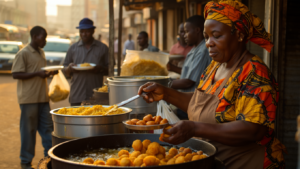
Nigerians must eat. Every. Single. Day. Whether economy good or bad, fuel expensive or cheap, people will always buy affordable street food. This makes food vending one of the most reliable daily income businesses in Nigeria.
Unlike POS or dispatch that require tech skills, food vending needs just one skill: making something people want to eat.
What Sells Best in 2026 (With Realistic Profit Margins)
Breakfast options:
- Akara and Pap/Bread
- Capital needed: ₦15,000-₦30,000
- Selling price: ₦200-₦500 per portion
- Daily sales (average): 50-100 portions
- Daily profit: ₦8,000-₦20,000
- Best locations: Bus stops, office areas, estates (6 AM-10 AM)
- Boiled Eggs and Bread
- Capital needed: ₦10,000-₦20,000
- Selling price: ₦300-₦500 per combo
- Daily sales: 40-80 combos
- Daily profit: ₦6,000-₦15,000
- Advantage: No cooking skills needed
- Tea/Coffee and Buns/Doughnut
- Capital needed: ₦12,000-₦25,000
- Selling price: ₦300-₦600 per serving
- Daily sales: 50-90 servings
- Daily profit: ₦7,000-₦18,000
Lunch/Dinner options:
- Rice and Stew (plates)
- Capital needed: ₦30,000-₦60,000
- Selling price: ₦800-₦1,500 per plate
- Daily sales: 30-60 plates
- Daily profit: ₦12,000-₦35,000
- Challenge: Requires cooking space and food warmers
- Sharwarma/Boli and Fish
- Capital needed: ₦25,000-₦50,000
- Selling price: ₦1,200-₦2,500
- Daily sales: 20-50 pieces
- Daily profit: ₦10,000-₦40,000
- Trend alert: Sharwarma is MASSIVELY popular in 2026
- Pepper Soup and Nkwobi (evening)
- Capital needed: ₦20,000-₦40,000
- Selling price: ₦1,000-₦2,500 per bowl
- Daily sales: 25-50 bowls
- Daily profit: ₦12,000-₦30,000
- Peak hours: 6 PM-11 PM
Snacks (all-day options):
- Popcorn/Groundnut
- Capital needed: ₦8,000-₦15,000
- Selling price: ₦200-₦500 per bag
- Daily sales: 60-120 bags
- Daily profit: ₦5,000-₦15,000
- Advantage: Almost zero spoilage risk
- Pure Water/Drinks
- Capital needed: ₦15,000-₦30,000
- Pure water: ₦100-₦150 per bag (cost ₦60-₦80)
- Cold drinks: ₦300-₦500 per bottle (cost ₦150-₦250)
- Daily sales: 100-300 items
- Daily profit: ₦8,000-₦25,000
- Critical: Requires cooler/freezer and reliable power
Complete Beginner’s Setup Guide (Akara Business Example)
What you need (Total: ₦25,000-₦35,000):
- 5 mudus of beans: ₦12,000
- Groundnut oil (25 liters): ₦8,000
- Seasoning, pepper, salt, onions: ₦3,000
- Frying pan and stove/charcoal pot: ₦7,000
- Serving plates/leaves/wrapping materials: ₦2,000
- Small table/display setup: ₦3,000
Daily routine:
5:00 AM: Soak beans (if not soaked overnight)
5:30 AM: Grind beans at nearby mill (₦200-₦300)
6:00 AM: Set up at your chosen location
6:15 AM: Start frying—first batch ready
6:30 AM – 9:30 AM: PEAK SELLING PERIOD (80% of daily sales happen here)
9:30 AM: Pack up, count money, restock for tomorrow
Total work time: 4-5 hours for ₦10,000-₦20,000 profit
Where to Sell for Maximum Daily Cash
The ₦10,000/day locations:
- Bus stops (Berger, Oshodi, Ojuelegba type areas)
- Outside factory gates during shift changes
- University/polytechnic campuses
- Hospital vicinities
- Large office complexes
The ₦20,000+ locations:
- Market entrances (early morning before traders finish setting up)
- Construction sites (workers eat A LOT)
- Motor parks (travelers always hungry)
- Evening spots near bars/viewing centers
Critical Success Factors
Taste: Your food MUST taste good. One bad experience = lost customer forever
Hygiene: Clean presentation = customer trust = repeat business
Consistency: Same quality, same time, same place = loyal customers
Portion size: Don’t be stingy—Nigerian customers WILL switch to your competitor
Packaging: Even akara wrapped in clean paper instead of newspaper = perceived quality
Real Success Story
Mama Nkechi in Enugu started selling akara with ₦15,000 in September 2025. By December, she was frying 10 mudus of beans daily, employing her niece, and clearing ₦35,000-₦45,000 profit daily. Her secret? She added free extra pepper sauce and always gave “one more” when customers bought five pieces. Word spread, and now people come from two bus stops away specifically for her akara.
4. Freelance Digital Services — Get Paid Immediately After Each Gig

The New Oil: Freelancing in Naira and Dollars
While others queue for scarce jobs, smart Nigerians are offering digital services and getting paid daily in Nigeria through international and local freelancing platforms. Unlike traditional employment, you can complete a gig at 2 PM and have your money by 6 PM.
Highest-Paying Freelance Services Nigerians Can Offer
No special degree needed—just learnable skills:
- Social Media Management
- What you do: Manage Instagram, Facebook, Twitter, TikTok accounts for businesses
- Skills needed: Content creation, basic Canva design, understanding trends
- Payment per client: ₦30,000-₦150,000/month (but paid weekly or per-post)
- Daily income potential: ₦5,000-₦25,000 (managing 3-5 clients)
- Where to learn free: YouTube (Smart Money Afrika, AJ Osaro, Tayo Aina marketing videos)
- Graphic Design
- What you do: Design flyers, logos, social media posts, banners
- Tools: Canva (free), CorelDRAW, Photoshop
- Payment per design: ₦2,000-₦50,000 depending on complexity
- Daily income potential: ₦8,000-₦40,000 (4-8 quick designs)
- Where to learn free: Canva Design School, YouTube tutorials
- Content Writing
- What you do: Write blog posts, product descriptions, website content
- Skills needed: Good English, research ability, basic SEO knowledge
- Payment: ₦5,000-₦30,000 per 1,000-word article
- Daily income potential: ₦10,000-₦50,000 (2-4 articles)
- Where to learn free: Copyblogger, HubSpot Academy, YouTube
- Virtual Assistance
- What you do: Email management, scheduling, data entry, customer support
- Skills needed: Organization, communication, basic computer skills
- Payment: ₦3,000-₦8,000/hour or ₦50,000-₦200,000/month for retainer clients
- Daily income potential: ₦7,000-₦30,000 (4-6 hours work)
- Video Editing
- What you do: Edit YouTube videos, Instagram Reels, TikToks, ads
- Tools: CapCut (free, mobile), DaVinci Resolve (free, PC), Adobe Premiere Pro
- Payment per video: ₦5,000-₦80,000 depending on length and complexity
- Daily income potential: ₦10,000-₦60,000 (2-4 quick edits)
- Where to learn free: YouTube (Cinecom.net, Justin Odisho)
- Voiceover Services
- What you do: Record voiceovers for videos, ads, audiobooks, e-learning
- Equipment needed: Smartphone (newer models have decent mics), quiet room
- Payment: ₦5,000-₦40,000 per project
- Daily income potential: ₦8,000-₦35,000 (3-5 short recordings)
- Where to learn free: YouTube voice training videos, Voices.com blog
Best Freelance Platforms for Daily Payment
International platforms (earn in dollars, withdraw to Nigerian bank):
- Fiverr (www.fiverr.com)
- Withdrawal: Every 14 days to Nigerian bank via Payoneer/PayPal
- Transaction fee: 20% to Fiverr + withdrawal fees
- Best for: Graphic design, writing, video editing
- Nigerian success rate: Very high if you optimize your gigs
- Upwork (www.upwork.com)
- Withdrawal: Weekly to Payoneer, then to Nigerian bank
- Transaction fee: 10-20% sliding scale + withdrawal fees
- Best for: Virtual assistance, writing, social media management
- Verification: Requires ID verification (straightforward for Nigerians)
- Freelancer.com (www.freelancer.com)
- Withdrawal: On-demand to Payoneer/Skrill
- Transaction fee: 10% or $5 minimum + withdrawal fees
- Best for: Data entry, research, writing
- Competition: Very high, but Nigerian freelancers are thriving
Nigerian/African platforms (earn and withdraw in Naira daily):
- Tuteria (www.tuteria.com)
- Service: Online and offline tutoring
- Payment: After each session or weekly
- Best for: Teachers, university students, anyone knowledgeable in a subject
- Daily income: ₦5,000-₦20,000 (2-4 hours tutoring)
- Asuqu (www.asuqu.com)
- Service: Marketplace for creative services (design, writing, etc.)
- Payment: Instant to Nigerian bank after project approval
- Transaction fee: Lower than international platforms
- Advantage: No dollar conversion hassle
- Facebook/Instagram Direct Clients
- How it works: Offer your service directly via posts, connect with clients, get paid directly
- Payment: Bank transfer, same day
- Transaction fee: ZERO (except bank charges)
- Challenge: Requires self-marketing and trust-building
How to Get Your First Paying Client in 7 Days
Day 1: Choose ONE service (don’t try to do everything)
- Pick based on what you already know or what excites you
Day 2-3: Learn the basics
- Spend 4-6 hours on YouTube consuming tutorials
- Practice by creating sample work (design a logo, write an article, edit a video)
Day 4: Create your portfolio
- Make 3-5 sample works
- Create free portfolio website using: Wix, WordPress.com, or Canva website builder
- Alternative: Use Instagram/Twitter as portfolio by posting your samples
Day 5: Set up on platforms
- Create profiles on Fiverr AND one Nigerian platform
- Write compelling descriptions (check top sellers for examples)
- Price competitively to attract first clients (you can increase later)
Day 6-7: Aggressive marketing
- Join 10-15 Facebook groups related to Nigerian businesses
- Offer free/discounted service to first 3 clients in exchange for testimonials
- Share your service on your WhatsApp status daily
- Comment on relevant posts offering value (not spam)
Day 8-14: Follow up and deliver exceptionally
- Overdeliver on your first gigs
- Ask for reviews
- Use those reviews to attract paying clients
Pro Tips for Daily Freelance Income
Price for volume initially:
- ₦2,000 designs that you complete in 30 minutes = ₦16,000 daily (8 designs)
- ₦20,000 complex design taking 4 hours = ₦10,000 daily (2 designs)
Specialize in one niche:
- “I design church flyers” beats “I design everything”
- Easier to market, easier to perfect, faster completion
Use templates:
- Create design/writing templates you can customize quickly
- Reduces work time = more gigs per day = more cash
Build retainer clients:
- One client paying ₦80,000/month for weekly posts = ₦20,000/week guaranteed
- Stability while you chase one-off gigs
Communicate clearly:
- Set realistic deadlines
- Update clients on progress
- Nigerians appreciate updates more than perfection
Real Success Story
Tunde in Ibadan learned Canva in January 2026 by watching YouTube for 5 days. He created sample church flyers and posted them in 20 Facebook church groups. Within 10 days, he got his first ₦3,000 gig. By March, he was completing 6-10 designs daily at ₦3,000-₦8,000 each, clearing ₦25,000-₦50,000 daily. He quit his ₦55,000/month teaching job and now works from his one-room apartment.
5. Recharge Card/Airtime Reselling — Small Capital, Daily Profits

Why This Business Refuses to Die
Every Nigerian uses airtime. For calls, data, subscriptions, betting (yes, betting consumes MASSIVE airtime). Even with bank apps and USSD, millions still prefer buying physical cards or VTU (Virtual Top-Up). This consistency makes airtime reselling one of the safest Nigerian businesses with instant payment.
How Much You Can Actually Make
Physical recharge cards:
- Buy from distributors at 2.5-4% discount
- Example: ₦100 card costs you ₦96-₦97.50
- Profit per card: ₦2.50-₦4
- Sell 200-500 cards daily = ₦500-₦2,000 profit
VTU (Virtual Top-Up) – Higher margins:
- Buy data/airtime bundles at 3-6% discount through reseller apps
- Sell at market rate or slight markup
- Profit margins: 3-8% depending on volume
- Example: ₦10,000 worth of transactions = ₦300-₦800 profit
- Process ₦100,000-₦500,000 daily = ₦3,000-₦40,000 profit
Cable TV subscriptions (DSTV, GOtv, Startimes):
- Commission: ₦100-₦500 per subscription depending on package
- Process 10-30 subscriptions daily = ₦1,000-₦15,000 profit
Total realistic daily income: ₦5,000-₦50,000 (depending on location and capital)
Best VTU Platforms for Nigerian Resellers
- Husmodata (www.husmodata.com)
- Services: Airtime, data, cable TV, electricity bills
- Profit margins: 3-5% on data, 2-3% on airtime
- Minimum funding: ₦1,000
- Withdrawal: Instant to bank account
- Advantage: Very reliable uptime
- Vtpass (www.vtpass.com)
- Services: Airtime, data, cable TV, electricity, education payments
- Profit margins: 2-4% average
- API access: Available for tech-savvy resellers
- Withdrawal: Instant
- Unique: Pay WAEC, JAMB, NECO fees and earn commission
- Topupearn (www.topupearn.com)
- Services: Airtime, data, cable TV
- Profit margins: 3-6% on data
- Minimum funding: ₦500
- Referral program: Extra income from referring other resellers
- Advantage: Newbie-friendly interface
- SmartRecharge (www.smartrecharge.ng)
- Services: Airtime, data, cable TV, electricity
- Profit margins: 3-5%
- Minimum funding: ₦1,000
- Unique feature: Bulk SMS services
- CliQtopay (www.cliqtopay.com)
- Services: Airtime, data, cable subscriptions
- Profit margins: 4-7% on data bundles
- Minimum funding: ₦1,000
- Advantage: Competitive data prices attract customers
Complete Setup Guide for Airtime Business
If you want physical card business (Low-tech):
Step 1: Find distributor
- Visit major distributors in your city (search “MTN distributor [your city]”)
- Alternatively, buy from wholesalers at major markets
Step 2: Stock up
- Start with ₦20,000-₦50,000 worth of cards
- Buy: ₦100, ₦200, ₦500, ₦1,000 cards (₦100 and ₦200 sell fastest)
- Get all networks: MTN, Airtel, Glo, 9mobile
Step 3: Set up shop
- Table/kiosk at bus stop, market entrance, or estate gate
- Display cards clearly
- Signage: “RECHARGE CARDS HERE – ALL NETWORKS”
Step 4: Sell and restock
- Sell throughout the day
- Restock when inventory runs low
- Collect your profit daily
If you want VTU business (Tech-enabled, higher profits):
Step 1: Choose platform (I recommend Husmodata for beginners)
Step 2: Register and fund
- Visit www.husmodata.com
- Register with phone number and BVN
- Fund wallet via bank transfer (minimum ₦1,000)
Step 3: Start selling
- Share your services on WhatsApp status
- Join neighborhood groups and announce
- Post in Facebook marketplace groups
Step 4: Process orders
- Customers send requests
- You fulfill via the app (takes 10 seconds)
- You collect payment from customer (plus your profit margin)
Example transaction:
- Customer wants ₦5,000 MTN data
- Your cost on Husmodata: ₦4,750 (5% discount)
- You charge customer: ₦5,000
- Your profit: ₦250 (in 30 seconds)
Advanced Strategy: Combine Physical Location + VTU
This is the ₦30,000-₦50,000/day strategy:
Morning-Evening (Physical presence):
- Sit at strategic location (bus stop, market)
- Sell physical cards to passersby
- Sell data/airtime via VTU to people who approach you
24/7 (Virtual sales):
- Your WhatsApp status advertises your VTU services
- Customers send requests anytime
- You process from your phone wherever you are
- Money hits your account before delivery (no credit!)
Added services for extra commissions:
- DSTV/GOtv renewals: ₦200-₦500 per transaction
- Electricity tokens: ₦100-₦300 per transaction
- Betting wallet funding (if you’re comfortable): ₦100-₦500 per transaction
Critical Success Tips
Never sell on credit: This kills 80% of airtime businesses. Cash before service, ALWAYS.
Stock what sells: In most Nigerian neighborhoods, MTN ₦100 cards and 1GB data move fastest.
Location, location, location: Near banks (people withdraw cash and buy), bus stops (commuters), markets (traders and customers).
Build trust: Same location, same time, same quality service = repeat customers.
Diversify offerings: The more services (airtime + data + cable + electricity), the more daily transactions.
Real Success Story
Emeka in Aba started with ₦30,000 in physical cards in December 2025. He sat in front of Ariaria Market daily from 7 AM to 7 PM. By February 2026, he added VTU services and started processing electricity tokens. He now clears ₦18,000-₦35,000 daily profit, employed his younger brother to manage the physical kiosk while he focuses on VTU from home.
6. Car Wash Services — Suds, Water, and Daily Cash Flow
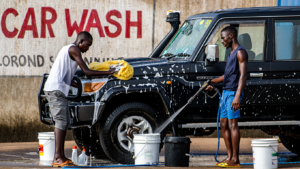
Why Nigerians Will Always Wash Their Cars
Despite economic hardship, Nigerians take car appearance seriously—it’s status, it’s pride, and dusty Lagos/Port Harcourt roads ensure every car needs washing at least weekly. A good car wash service can generate ₦15,000-₦80,000 daily depending on scale.
How Much Car Washers Earn (2026 Rates)
Basic car wash:
- Small cars (Corolla, Camry): ₦1,500-₦3,000
- SUVs (Highlander, Prado): ₦2,500-₦5,000
- Luxury vehicles: ₦3,000-₦8,000
Wash + interior vacuum:
- Small cars: ₦3,000-₦5,000
- SUVs: ₦5,000-₦10,000
Full detailing:
- Small cars: ₦8,000-₦15,000
- SUVs: ₦12,000-₦25,000
Daily realistic numbers:
- Low-end operation (roadside, 5-10 cars): ₦8,000-₦15,000 profit
- Medium operation (proper bay, 15-25 cars): ₦20,000-₦45,000 profit
- High-end operation (estate/office location, 25-50 cars): ₦40,000-₦100,000 profit
What You Need to Start
Minimum capital: ₦50,000-₦150,000
Equipment:
- Heavy-duty buckets (5-10): ₦5,000
- Quality sponges and brushes: ₦3,000
- Car shampoo, tire black, dashboard polish: ₦8,000
- Vacuum cleaner (rechargeable): ₦25,000-₦45,000
- Water source/storage tanks: ₦15,000-₦30,000
- Canopy/shade (optional but recommended): ₦30,000-₦50,000
Location options:
Roadside (cheapest start):
- Find busy road with parking space
- Get informal permission from area boys/community
- Cost: ₦0-₦5,000 monthly “settlement”
Estate entrance:
- Approach estate management
- Offer percentage or flat monthly fee
- Cost: ₦10,000-₦30,000 monthly
Office complex parking lot:
- Negotiate with facility management
- Workers = guaranteed daily customers
- Cost: ₦15,000-₦50,000 monthly
Own space (if available):
- Your compound (if accessible)
- Family/friend’s space
- Cost: ₦0-₦10,000 monthly
Step-by-Step Launch Guide
Week 1: Preparation
Day 1-2: Scout locations
- Observe traffic patterns
- Count potential cars
- Approach landlords/estate management
Day 3-4: Buy equipment
- Visit Ladipo Market (Lagos), or local hardware markets
- Negotiate bulk discounts
- Test vacuum cleaner before leaving shop
Day 5-6: Set up space
- Arrange shade/canopy
- Organize equipment neatly
- Create simple signage: “CAR WASH – ₦1,500 up | INTERIOR CLEANING AVAILABLE”
Day 7: Soft launch
- Offer discounts (₦1,000 for first 10 customers)
- Focus on QUALITY service
- Ask for testimonials and referrals
Week 2 onwards:
- Regular pricing
- Build customer database (phone numbers)
- Send WhatsApp reminders: “Your car needs washing o! Come through this weekend.”
How to Wash 20-30 Cars Daily (The System)
Hire help: One person can wash 3-4 cars thoroughly per day. Two people = 8-12 cars. Three people = 15-25 cars.
Labor costs: Pay per car (₦300-₦800 depending on car size) OR daily rate (₦3,000-₦5,000)
Speed optimization:
- One person washes exterior
- Another does interior/vacuum
- Third handles tire black and final touches
- Time per car: 15-25 minutes (vs. 40-60 minutes alone)
Peak day strategy (Saturdays):
- Saturdays are GOLD for car wash (people have time)
- Start 7 AM, work till 7 PM
- Expect 2-3X your weekday numbers
Value-Added Services for Extra Daily Income
Monthly subscription packages:
- ₦10,000/month = 4 washes + 2 vacuums
- Guaranteed recurring income
- Customers pay upfront (immediate cash)
Mobile car wash:
- Bring service to customer’s office/home
- Charge ₦500-₦1,000 extra
- Requires portable water tank and transportation
Car AC cleaning:
- Learn via YouTube (simple skill)
- Charge ₦3,000-₦8,000 per service
- Add ₦5,000-₦15,000 daily to your income
Upholstery shampooing:
- Requires upholstery cleaner and machine
- Charge ₦5,000-₦15,000 per car
- Premium service for stained/dirty interiors
Real Success Story
Biodun started with ₦80,000 in Victoria Island, Lagos in October 2025. He positioned himself at a medium-sized office complex, offering workers 7 AM – 6 PM service. By January 2026, he was washing 28-35 cars daily with two employees, clearing ₦45,000-₦70,000 profit daily. His secret? He sends personalized WhatsApp messages every Thursday: “Oga [customer name], your car fit wash this Friday? I go give you special shine!” The personal touch kept customers coming back.
7. Laundry and Dry Cleaning Services — Nigerians Hate Washing Clothes

The Honest Truth: Nobody Enjoys Laundry
Between NEPA failures, water scarcity, and exhaustion from Lagos hustle, many working-class Nigerians would HAPPILY pay someone else to wash their clothes. This creates a massive opportunity for daily cash withdrawal jobs Nigeria style—wash in the morning, deliver in the evening, collect your cash.
How Laundry Services Make Money
Pricing structure (2026 standard rates):
Washing only:
- Shirt/trouser/blouse: ₦200-₦400 per piece
- Bedsheets/duvet covers: ₦500-₦1,500
- Towels: ₦300-₦600
- Children’s clothes: ₦150-₦300
- Bulk laundry (per kg): ₦800-₦1,500
Washing + Ironing:
- Shirt/trouser: ₦400-₦800 per piece
- Native wear (full): ₦1,500-₦3,000
- Suits: ₦2,000-₦5,000
Dry cleaning (premium service):
- Suits: ₦2,500-₦6,000
- Dresses/gowns: ₦2,000-₦5,000
- Heavy curtains: ₦5,000-₦15,000
Realistic daily income:
- Home-based, manual washing (15-25 pieces): ₦6,000-₦15,000
- Small shop with machine (30-60 pieces): ₦15,000-₦40,000
- Proper laundry business with dry cleaning (60-100+ pieces): ₦40,000-₦120,000
Three Ways to Start (Depending on Capital)
Option 1: Zero-Machine Home Service (Capital: ₦10,000-₦30,000)
What you need:
- Large basins: ₦3,000
- Quality detergent (buy wholesale): ₦5,000
- Pegs, hangers, drying line: ₦2,000
- Iron and ironing board: ₦8,000-₦15,000
- Customer clothes bags: ₦2,000
How it works:
- Collect clothes from customers (homes/offices)
- Wash manually at your house
- Sun-dry or indoor-dry
- Iron and package neatly
- Deliver and collect cash same day or next day
Best for: Students, people in small apartments, those testing the business
Option 2: Machine-Based Small Shop (Capital: ₦150,000-₦400,000)
What you need:
- Washing machine (fairly-used acceptable): ₦80,000-₦200,000
- Dryer OR strong standing fan: ₦40,000-₦100,000
- Industrial iron: ₦15,000-₦30,000
- Shop space (rent): ₦30,000-₦100,000/year in small areas
- Detergent, softener, starch (bulk): ₦20,000
- Signage and branding: ₦10,000
How it works:
- Customers drop off clothes
- You wash using machine (faster, more volume)
- Dry using dryer/fan
- Iron and package
- Customer picks up and pays (same day or next day service)
Best for: Those with small capital and commitment to grow
Option 3: Full Laundry & Dry Cleaning Business (Capital: ₦800,000-₦2,000,000+)
What you need:
- Industrial washing machines (2-3): ₦300,000-₦800,000
- Industrial dryers (1-2): ₦200,000-₦500,000
- Dry cleaning machine: ₦250,000-₦600,000
- Industrial irons and steamers: ₦50,000-₦100,000
- Generator (for power backup): ₦150,000-₦300,000
- Shop in decent location: ₦200,000-₦500,000/year rent
- Staff (2-4 people): ₦80,000-₦200,000/month total
- Supplies and branding: ₦50,000-₦100,000
Best for: Serious entrepreneurs with capital or partnership arrangements
How to Get Customers Immediately
Week 1 strategies:
Door-to-door in estates:
- Print simple flyers (₦5,000 for 1,000 copies)
- Drop in mailboxes in middle-class estates
- Offer “First 3 pieces FREE” to new customers
Office marketing:
- Approach HR departments of medium-sized companies
- Offer staff discount packages
- Some companies even pay directly for staff laundry as benefit
WhatsApp status marketing:
- Post before/after photos of neatly washed clothes
- Announce: “Drop off before 9 AM, pick up by 6 PM same day”
- Show pricing clearly
Social media:
- Create Instagram/Facebook business page
- Post transformation photos
- Run ₦5,000-₦10,000 location-targeted ads
Partnership with hostels/hotels:
- Offer to handle their guest laundry
- Bulk pricing but guaranteed volume
- Daily cash flow
The Daily Routine for Maximum Profit
6:00 AM: Pick up clothes from early customers (or they dropped off previous evening)
6:30 AM – 10:00 AM: Washing phase (machines run, you sort and prep next batches)
10:00 AM – 2:00 PM: Drying phase
2:00 PM – 5:00 PM: Ironing and packaging
5:00 PM – 7:00 PM: Customer pickup and payment (THIS IS YOUR DAILY CASH COLLECTION TIME)
7:00 PM – 8:00 PM: Collect clothes from evening customers for next day
Pro Tips for ₦30,000+ Daily Profit
Specialize in premium items:
- Wedding clothes, suits, traditional wear = higher prices
- Develop reputation for delicate fabric handling
Offer express service:
- Same-day service: Regular price + ₦500-₦1,000 premium
- 3-hour express: Regular price + ₦1,000-₦2,000 premium
- Premium customers WILL pay for convenience
Subscription packages:
- ₦15,000/month = 4 laundry sessions (family package)
- Upfront payment = immediate cash, guaranteed customers
Free pickup and delivery:
- Charge ₦500-₦1,500 delivery fee OR
- Offer free delivery for orders above ₦5,000
- Convenience = customer loyalty = daily cash
Partner with dry cleaners (if you’re not doing dry cleaning):
- Customer brings suit for dry cleaning
- You send to dry cleaner, add your margin
- Extra income without dry cleaning equipment
Handling Power Issues (Critical in Nigeria!)
Solar solution:
- ₦300,000-₦500,000 investment in solar panels and batteries
- Eliminates generator fuel costs (huge savings)
- Uninterrupted service = more customers
Generator backup:
- Budget ₦3,000-₦8,000 daily for fuel (depending on usage)
- Factor into pricing
Strategic timing:
- Wash during grid power hours (if your area has patterns)
- Use generator only for drying/ironing (less fuel consumption)
Real Success Story
Chioma in Lekki started with a ₦200,000 fairly-used washing machine and small shop in September 2025. She targeted young professionals in nearby estates with “24-hour turnaround” service. By December, she added a dryer and hired one assistant. She now washes 45-70 pieces daily, clearing ₦35,000-₦65,000 profit. Her secret? She sends WhatsApp reminders every Sunday evening: “Boss, hope your work clothes ready for the week? Bring them now, collect tomorrow evening sharp!” The nudge keeps customers coming.
8. Forex Trading (CAREFULLY) — High Risk, High Daily Profit Potential

The Brutal Honesty You Need to Hear First
Forex trading is NOT a get-rich-quick scheme. More Nigerians LOSE money than make money. That said, those who learn properly, practice discipline, and manage risk ARE making ₦10,000-₦500,000+ daily—but it took months or years of learning and practice accounts before risking real money.
I’m including this because it’s a legitimate daily income business in Nigeria where profits can be withdrawn instantly—but ONLY if you approach it correctly.
How Forex Trading Generates Daily Income
What forex trading is: Buying and selling currency pairs (e.g., EUR/USD, GBP/USD) to profit from price movements.
How money is made:
- Buy a currency pair when you predict it will rise
- Sell when you predict it will fall
- The difference = your profit (or loss)
- Trades can last minutes (scalping), hours (day trading), or days (swing trading)
Realistic daily income (AFTER you’re skilled):
- Conservative trader (2-5% monthly return): ₦5,000-₦15,000 daily from ₦500,000 account
- Moderate trader (5-10% monthly return): ₦10,000-₦40,000 daily from ₦1,000,000 account
- Aggressive trader (skilled, high risk): ₦50,000-₦500,000+ daily from ₦5,000,000+ accounts
WARNING: These numbers assume SKILL. Beginners usually lose their first account.
The Right Way to Start Forex Trading in Nigeria
Step 1: Education FIRST, money LATER (1-3 months)
Free learning resources:
- Babypips School of Pipsology (www.babypips.com/learn/forex) — The best free forex course globally, covers everything
- YouTube: Rayner Teo, The Trading Channel, ForexSignals TV
- Nigerian forex mentors: Follow trading communities on Twitter/Instagram (verify legitimacy first)
What to learn:
- Currency pairs and pips
- Chart patterns and indicators (candlesticks, support/resistance, moving averages)
- Risk management (position sizing, stop-loss, take-profit)
- Trading psychology (emotion control, discipline)
Step 2: Demo trading (2-6 months minimum)
Use demo accounts (fake money, real market conditions):
- Practice until you’re consistently profitable for 3+ months
- If you can’t profit with fake money, you’ll DEFINITELY lose with real money
Best demo platforms:
- MetaTrader 4/5 (most popular globally)
- TradingView (excellent charts)
- Download from broker websites below
Step 3: Choose a reliable broker (CRITICAL)
Top forex brokers accepting Nigerians in 2026:
- Exness (www.exness.com)
- Minimum deposit: $10
- Withdrawal: Instant to Nigerian bank via Perfect Money/Neteller
- Spreads: Very low (0.3 pips on EUR/USD)
- Regulation: Trusted, transparent
- Nigerian rating: Excellent
- HotForex (HFM) (www.hfm.com)
- Minimum deposit: $5
- Withdrawal: 1-2 days to Nigerian bank
- Bonus programs: Available for new traders
- Regulation: Strong, multiple licenses
- Nigerian rating: Very good
- XM (www.xm.com)
- Minimum deposit: $5
- Withdrawal: Fast to bank/e-wallets
- Free education: Webinars and courses
- Regulation: Reputable
- Nigerian rating: Good
- FXTM (ForexTime) (www.forextime.com)
- Minimum deposit: $10
- Withdrawal: Multiple options including bank transfer
- Nigerian presence: Local payment solutions
- Regulation: Strong
- Nigerian rating: Good
RED FLAGS to avoid:
- Brokers promising guaranteed profits
- Unregulated platforms
- Those asking for payment via gift cards or crypto only
- “Nigerian-only” platforms with no international regulation
Step 4: Start with SMALL capital ($50-$200 / ₦100,000-₦400,000)
Risk management rules (NON-NEGOTIABLE):
- Never risk more than 1-2% per trade: ₦100,000 account = risk only ₦1,000-₦2,000 per trade
- Always use stop-loss: Automatic exit when trade goes against you
- Set realistic targets: 2-5% monthly profit, not 50%
- Don’t trade emotions: Revenge trading after losses = guaranteed bigger losses
Step 5: Treat it like a business, not gambling
Daily trading routine:
- Morning: Review economic calendar (news affects currency prices)
- Analyze charts: Identify trading opportunities
- Execute 1-3 trades maximum (quality over quantity)
- Evening: Review trades, journal what worked/didn’t work
- Withdraw profits weekly/bi-weekly: Don’t leave all money in trading account
Best Tools for Nigerian Forex Traders
Trading platforms:
- MetaTrader 4/5 (Free) — Industry standard
- TradingView (Free + Premium $14.95/month) — Best charts and analysis
Economic calendars:
- ForexFactory (www.forexfactory.com) — Track news events that move markets
- Investing.com Economic Calendar — Real-time updates
Signal services (use cautiously):
- 1000pip Builder — Paid service with decent track record
- Learn To Trade — Education + signals
- WARNING: Most free Telegram/WhatsApp signal groups are scams
Community and mentorship:
- Join NairaForex Forum (Nigerian traders sharing experiences)
- Twitter: Follow verified profitable traders (not those selling courses aggressively)
- Discord/Telegram groups: Verify legitimacy and track record
Realistic Timeline to Profitable Trading
Month 1-3: Education and demo trading (₦0 invested)
- Learn fundamentals
- Practice on demo account
- Expect to lose fake money (it’s practice!)
Month 4-6: Serious demo trading (still ₦0 invested)
- Develop and test your strategy
- Track performance in trading journal
- If profitable consistently, move to step 4
- If NOT profitable, continue practicing
Month 7: First small live account (₦100,000-₦200,000)
- Expect psychological differences from demo
- Focus on following your rules, not profit
- Daily target: ₦1,000-₦3,000 (1-2% account growth)
Month 8-12: Building consistency
- Some months profitable, some break-even, maybe some losses
- Gradually increase capital as confidence and skill grow
- Daily target: ₦3,000-₦8,000 (from ₦300,000-₦500,000 account)
Year 2+: Potential for serious income
- Experienced traders with ₦1,000,000+ accounts can target ₦15,000-₦50,000 daily
- But many traders never reach this—respect the learning curve
Why Most Nigerian Forex Traders Fail
Greed: Trying to turn ₦50,000 into ₦500,000 in one week = guaranteed loss
Impatience: Skipping demo trading and education
Overleveraging: Using maximum leverage (1:1000) instead of conservative levels
Emotion trading: Revenge trading after losses
Scam “mentors”: Paying ₦50,000-₦200,000 for courses teaching basic YouTube content
No risk management: Going “all in” on single trades
Real Success Story (AND Failure Story for Balance)
Success:
Ahmed in Kano spent 8 months learning and demo trading in 2024-2025. He started with ₦300,000 in April 2025, following strict 1% risk per trade rule. By March 2026, his account grew to ₦780,000, and he consistently withdraws ₦50,000-₦80,000 monthly (₦2,500-₦4,000 daily average). He still works his day job and trades part-time.
Failure:
Chinedu in Lagos paid ₦150,000 for a “guaranteed profit” course in January 2026. He skipped demo trading, funded a ₦500,000 account, and lost it all in 3 weeks by ignoring stop-losses and overleveraging. He’s now starting over with proper education.
The lesson: Approach forex seriously or don’t approach it at all.
9. Professional Phone Photography Services — Your Smartphone is a Cash Machine
(Suggested Image: Photographer using modern smartphone on gimbal taking professional photos at Nigerian event)
The Smartphone Revolution Nobody Told You About
Nigerian phones in 2026 (even mid-range ones like Infinix, Tecno, Samsung A-series) have cameras that match professional cameras from 5 years ago. Yet most Nigerians and businesses still need quality photos for:
- Instagram businesses (product photography)
- Events (birthdays, weddings, anniversaries)
- Corporate headshots and branding
- Real estate listings
- Food/restaurant menus
If you can learn basic photography skills, your phone becomes a daily income business in Nigeria printing cash faster than NEPA takes light.
How Much Phone Photographers Earn
Service pricing (2026 rates):
Product photography (for small businesses):
- 10-20 product photos: ₦5,000-₦15,000
- Instagram-ready content (20-30 edited photos): ₦15,000-₦35,000
- Time required: 1-2 hours
Event coverage:
- Small events (birthday, dedication): ₦15,000-₦40,000 (2-4 hours)
- Medium events (wedding engagement, corporate events): ₦40,000-₦100,000 (4-8 hours)
- Full wedding: ₦80,000-₦300,000 (full day)
Corporate/personal branding:
- Headshot session: ₦8,000-₦20,000 (30 minutes)
- Brand photoshoot (lifestyle, professional): ₦25,000-₦80,000 (2-3 hours)
Real estate photography:
- Apartment/property photos: ₦10,000-₦30,000 per property
- Video walkthrough: Additional ₦15,000-₦40,000
Realistic daily income:
- Part-time (2-3 gigs weekly): ₦5,000-₦15,000 daily average
- Serious hustler (5-7 gigs weekly): ₦15,000-₦40,000 daily average
- Full-time professional (10+ gigs weekly + retainer clients): ₦30,000-₦100,000+ daily average
What You Actually Need to Start
Equipment (Total: ₦50,000-₦200,000):
Essential:
- Good camera phone: Already have one? Perfect. Buying new? Infinix Note 30 (₦140,000), Samsung A54 (₦280,000), iPhone 11 used (₦200,000-₦250,000)
- Editing apps: Snapseed (free), Lightroom Mobile (free version sufficient), VSCO (free)
- Portfolio on Instagram: Free
Upgrades as you grow:
- Phone gimbal/stabilizer: ₦15,000-₦35,000 (smooth videos, professional shots)
- Ring light: ₦8,000-₦20,000 (for indoor/evening shoots)
- Portable backdrop: ₦5,000-₦15,000 (for clean product photos)
- External lens kit: ₦10,000-₦25,000 (wide angle, macro lenses for phones)
Optional but valuable:
- Second phone for BTS content: Your old phone works—film your photography process
- Business cards: ₦5,000 for 500 cards
Step-by-Step Launch in 14 Days
Week 1: Learn + Practice
Day 1-3: YouTube photography crash course
- Watch: “Smartphone Photography Tutorial” by Peter McKinnon
- Watch: “Product Photography with Phone” by Sorelle Amore
- Learn: Composition rules (rule of thirds, leading lines, symmetry), lighting basics, editing techniques
Day 4-5: Practice shoots
- Photograph everything around your house (products, food, people)
- Edit photos using Snapseed/Lightroom
- Get feedback from friends/online communities
Day 6-7: Build portfolio
- Select your best 15-20 photos
- Create Instagram business account: “[YourName]Photography” or “[YourCity]PhonePhotos”
- Post photos with descriptions of what you can offer
- Create simple logo using Canva (free)
Week 2: Get Clients
Day 8-9: Offer free/discounted test shoots
- Approach 5-10 small businesses in your area (barbershop, restaurants, boutiques, salons)
- Offer: “Free product photography for your Instagram. I just need to add it to my portfolio and you give me a testimonial.”
- Deliver EXCELLENT work
- Ask for reviews and referrals
Day 10-11: Aggressive social media marketing
- Post before/after transformation photos
- Share behind-the-scenes videos of your shoots
- Use hashtags: #[YourCity]Photographer #NigerianPhotographer #PhonePhotography #ProductPhotography
- Join local Facebook business groups, share your services
Day 12-13: Event marketing
- Visit event centers, introduce yourself, leave business cards
- Approach party planners on Instagram
- Offer introductory rates (₦15,000 for small event coverage)
Day 14: First paid gig
- By this point, you should have at least 1-2 paid bookings
- OVERDELIVER on quality
- Ask for referrals immediately after delivering photos
Pro Strategies for ₦30,000+ Daily Income
Niche specialization:
- Food photography: Lagos/Abuja restaurants desperately need this—₦20,000-₦50,000 per menu shoot
- Real estate: Agents need property photos constantly—₦15,000-₦30,000 per property, multiple properties weekly
- E-commerce products: Online sellers on Instagram/Jumia need professional photos—₦10,000-₦25,000 per batch
Retainer packages (monthly guaranteed income):
- Offer businesses: “₦40,000/month = 4 photoshoots (weekly content for your Instagram)”
- 3 retainer clients = ₦120,000/month guaranteed = ₦4,000/day baseline before one-off gigs
Bundle services:
- Photos + short video clips: Add ₦5,000-₦15,000 to photo package price
- Photos + basic captions for posts: Add ₦3,000-₦8,000
- Photos + social media posting service: Add ₦10,000-₦20,000/week
Collaborate with related businesses:
- Partner with event planners (they recommend you to clients, you split or pay referral fee)
- Partner with makeup artists (you shoot their work, they refer their clients to you)
- Partner with boutiques (you shoot their clothes on models, they display your work)
Run mini photography classes:
- “Phone Photography Masterclass – ₦5,000 per person”
- Teach 10-20 people in one session = ₦50,000-₦100,000
- One class per month = extra income + networking
Best Phone Photography Apps (2026)
Editing apps:
- Snapseed (Free, iOS/Android) — Professional-level editing, intuitive
- Adobe Lightroom Mobile (Free + Premium ₦4,000/month) — Industry standard
- VSCO (Free + Membership ₦8,000/year) — Film-like filters, popular with brands
- PicsArt (Free + Gold ₦3,500/month) — Creative editing and effects
Collage and design:
- Canva (Free + Pro ₦5,000/month) — Create flyers, watermarks, Instagram posts
- Unfold (Free + Premium ₦3,000/month) — Instagram Story templates
Business tools:
- Planoly (Free + Premium $7/month) — Schedule Instagram posts
- Hashtagify (Free) — Find best hashtags for reach
- WhatsApp Business (Free) — Manage client communications professionally
Handling Competition: Why You’ll Still Win
The market is HUGE: Lagos alone has over 200,000 small businesses needing photos
Most “photographers” are inconsistent: Show up on time, deliver on deadline = you’re already top 20%
Quality matters: Phone cameras are good, but knowing composition, lighting, editing = what separates you
Customer service wins: Respond quickly, be professional, deliver extra value = clients refer you
Real Success Story
Tolu in Ibadan bought a used Samsung A52 for ₦120,000 in November 2025. She spent two weeks watching YouTube tutorials and practicing on friends’ products. By December, she was shooting for 5 small fashion businesses at ₦12,000-₦20,000 per shoot. By February 2026, she added event coverage and retainer clients, now clearing ₦280,000-₦450,000 monthly (₦15,000-₦22,000 daily average). She’s saving to upgrade to better equipment but proves you don’t need ₦500,000 cameras to make serious money.
Best Platforms for Daily Payment in Nigeria (2026)
(Suggested image: Collage of popular payment platform logos used in Nigeria – Opay, Moniepoint, PalmPay, Paystack, etc.)
To successfully run any of these Nigerian businesses that pay daily cash, you need reliable platforms for receiving and withdrawing money. Here are the best options:
Payment Collection Platforms
- OPay (www.opayweb.com)
- Account opening: 5 minutes via app, BVN required
- Daily withdrawal limit: ₦500,000
- Charges: Free transfers within OPay, ₦10-₦50 to other banks
- Best for: POS agents, freelancers, small businesses
- ATM card: Available, works nationwide
- Moniepoint (www.moniepoint.com)
- Account opening: Online or at branches, BVN required
- Daily withdrawal limit: ₦1,000,000+
- Charges: Very competitive, free within network
- Best for: High-volume traders, POS agents
- Business tools: Invoicing, payment links
- PalmPay (www.palmpay.com)
- Account opening: App-based, 10 minutes
- Daily withdrawal limit: ₦300,000-₦500,000
- Charges: Free internal transfers, low external fees
- Best for: Small daily transactions, convenience
- Bonus: Regular cashback promotions
- Kuda Bank (www.kuda.com)
- Account opening: Fully digital, 5 minutes
- Daily withdrawal limit: ₦500,000
- Charges: 25 free transfers monthly, then ₦10 per transfer
- Best for: Freelancers, digital workers
- Unique: Budgeting and savings tools
- VFD Microfinance (V by VFD) (www.vbankng.com)
- Account opening: Online or branches
- Daily withdrawal limit: High (negotiable for businesses)
- Charges: Competitive
- Best for: Established businesses with high daily turnover
International Payment Platforms (for Freelancers)
- Payoneer (www.payoneer.com)
- Use: Receive international payments (Upwork, Fiverr, etc.)
- Withdrawal: Direct to Nigerian bank, 2-3 business days
- Charges: $3 per withdrawal + conversion fees
- Daily withdrawal: Unlimited
- Requirement: Valid ID, BVN, proof of activity
- Wise (formerly TransferWise) (www.wise.com)
- Use: Receive and hold multiple currencies
- Withdrawal: To Nigerian bank
- Charges: Transparent, lower than traditional banks
- Best for: Freelancers with regular international clients
- PayPal (Limited in Nigeria) (www.paypal.com)
- Nigerian status: Can receive, difficult to withdraw directly
- Workaround: Use Grey.co or VFD to withdraw
- Best for: One-off international payments
- Chipper Cash (www.chippercash.com)
- Use: Cross-border payments in Africa
- Withdrawal: Instant to Nigerian bank
- Charges: Low fees
- Best for: Receiving payments from other African countries
Crypto Payment Options (Advanced)
For tech-savvy entrepreneurs receiving international payments:
- Binance P2P (www.binance.com)
- Receive crypto, sell for Naira directly to Nigerian buyers
- Instant settlement to your bank
- Lower fees than traditional banking
- Luno (www.luno.com)
- Buy/sell crypto, withdraw to Nigerian bank
- Regulated, safer for beginners
- Good customer support
Important: Only use for legitimate business transactions, understand tax implications.
Top Tools to Maximize Your Daily Income (2026)
(Suggested image: Smartphone screen showing various business apps and tools)
Business Management Tools
- Wave Accounting (www.waveapps.com) – FREE
- What it does: Track income, expenses, invoices
- Why you need it: Know your REAL daily profit after expenses
- Perfect for: All 9 businesses listed
- Google Sheets/Excel – FREE
- What it does: Create daily cash tracking spreadsheets
- Template: Daily Sales | Expenses | Profit (track every single day)
- Why it matters: “Feelings” lie, numbers don’t
- Trello (www.trello.com) – FREE
- What it does: Project management, task organization
- Use case: Track freelance projects, delivery schedules, customer orders
- Perfect for: Freelancers, dispatch riders, laundry services
Marketing and Customer Acquisition Tools
- Canva (www.canva.com) – FREE + Pro ₦5,000/month
- What it does: Create flyers, social media posts, logos, business cards
- Why you need it: Professional marketing materials = more customers
- Perfect for: ALL businesses
- WhatsApp Business (www.whatsapp.com/business) – FREE
- What it does: Professional customer management, automated messages, catalog
- Critical features:
- Away messages when you’re busy
- Quick replies for common questions
- Product catalog for display
- Perfect for: All businesses with customer communication
- Meta Business Suite (business.facebook.com) – FREE
- What it does: Manage Facebook and Instagram business pages from one place
- Features: Schedule posts, respond to messages, track engagement
- Perfect for: Photographers, food vendors, freelancers
- Google My Business (www.google.com/business) – FREE
- What it does: Puts your business on Google Maps and Search
- Critical for: Car wash, laundry, POS, food vendors (location-based businesses)
- Result: People searching “car wash near me” find YOU
Financial Tools
- Piggyvest (www.piggyvest.com) – FREE
- What it does: Automated savings, investment
- Critical habit: Save 10-20% of daily income AUTOMATICALLY
- Why it matters: Daily cash = temptation to spend; automated saving = future security
- Cowrywise (www.cowrywise.com) – FREE
- What it does: Savings and investment platform
- Use case: Stash daily profits, earn interest, plan for business expansion
- Carbon (www.getcarbon.co) – FREE
- What it does: Quick loans (if you need emergency capital), bill payments
- Emergency use only: Don’t borrow for lifestyle, only for genuine business opportunities
- Rates: Competitive for Nigerian market
Learning and Skill Development Tools
- YouTube – FREE
- Channels by skill:
- POS business: SmartSMSSolutions, Nigerian entrepreneur channels
- Dispatch riding: MAX.ng official channel, delivery optimization
- Food vending: Sisi Yemmie, Zeelicious Foods (see food presentation)
- Freelancing: Enstine Muki, Udemezue John
- Forex: Babypips, Rayner Teo
- Photography: Peter McKinnon, Sorelle Amore
- Channels by skill:
- Udemy (www.udemy.com) – ₦3,000-₦15,000 per course (frequent sales)
- Best courses for Nigerians:
- Social Media Marketing
- Graphic Design with Canva
- Freelance Writing
- Basic Business Accounting
- Pro tip: NEVER buy full price, wait for ₦3,000-₦5,000 sales (every 2 weeks)
- Best courses for Nigerians:
- Coursera (www.coursera.org) – FREE to audit, ₦20,000+ for certificates
- Free access: Audit courses without certificate
- Best for: Digital marketing, business fundamentals, data analysis
Productivity Tools
- Todoist (www.todoist.com) – FREE + Premium ₦2,500/month
- What it does: Task management, daily to-do lists
- Daily routine:
- Morning: List your money-making tasks
- Evening: Check off completed tasks
- Track: How many tasks = how much money?
- Forest App (www.forestapp.cc) – ₦1,000 one-time
- What it does: Focus timer, blocks phone distractions
- Why you need it: 2 hours of focused work > 8 hours distracted
- Perfect for: Freelancers, online workers
How to Get Started TODAY — Zero Excuses Action Plan
(Suggested image: Nigerian youth with determined expression, smartphone in hand, with checklist visible)
You’ve read about 9 businesses. Analysis paralysis is real. Here’s how to start making money TODAY, not “someday.”
If You Have ₦0-₦10,000 Capital
Best options:
- Freelance digital services (₦0 capital)
- Phone photography (use your current phone)
- Dispatch riding (partner arrangement, zero capital)
Today’s action steps:
- Next 2 hours: Pick ONE service, watch 3 YouTube tutorials
- Before sleeping tonight: Create one sample work (design, article, photo)
- Tomorrow morning: Post on 5 Facebook groups offering discounted first service
- This week: Complete 1-3 practice jobs (free or cheap), get testimonials
- Next week: Start charging full price
If You Have ₦20,000-₦100,000 Capital
Best options:
- Street food vending (start with ₦25,000)
- Airtime/VTU reselling (start with ₦30,000)
- Phone photography (invest in gimbal/ring light, ₦50,000 total)
Today’s action steps:
- Next 30 minutes: Choose ONE business
- This afternoon: Visit market or online store, price equipment/stock
- Tomorrow: Buy supplies and set up
- Day 3: Start selling/offering services
- End of week 1: Evaluate, adjust, reinvest first profits
If You Have ₦100,000-₦500,000 Capital
Best options:
- POS business (₦150,000-₦300,000)
- Laundry services (₦200,000-₦400,000 with machine)
- Car wash (₦150,000-₦250,000 full setup)
- Forex trading (₦200,000-₦400,000 AFTER 3 months demo practice)
Today’s action steps:
- This morning: Choose ONE business
- Today: Visit registration offices (POS aggregator, equipment sellers, etc.)
- This week: Complete setup, soft launch
- Week 2: Full operations, aggressive marketing
- Month 1 end: Evaluate profitability, scale what works
The “Start All 9 Simultaneously” Trap
DON’T DO THIS.
Why? Jack of all trades, master of none = zero daily income.
Better approach:
- Master ONE business first (2-4 weeks to profitability)
- Systematize it (can run with minimal daily attention)
- THEN add second income stream
- Repeat
By month 6, you could be running 2-3 businesses simultaneously, but only because you MASTERED them one at a time.
The “I’ll Start When…” Lies We Tell Ourselves
“I’ll start when I have more money.”
→ Start with what you have TODAY. ₦5,000 can start VTU reselling.
“I’ll start when I finish learning.”
→ You learn MOST by doing, not watching tutorials forever.
“I’ll start when the economy improves.”
→ The economy might get worse. Start NOW while you still have energy and time.
“I’ll start when I have more time.”
→ You’ll never have more time. You MAKE time for what matters.
“I’ll start when I’m 100% sure it’ll work.”
→ No business is guaranteed. Test small, learn fast, adjust.
Your 30-Day Daily Income Challenge
Week 1: Setup
- Choose business
- Learn basics
- Get first client/customer
- Earn first ₦1,000-₦5,000
Week 2: Consistency
- Serve 3-5 clients/customers
- Earn ₦5,000-₦15,000 total
- Get testimonials
- Improve systems
Week 3: Scale
- Serve 10-15 clients/customers
- Earn ₦15,000-₦40,000 total
- Start building repeat customer base
- Invest profits in business improvement
Week 4: Optimization
- Serve 15-25 clients/customers
- Earn ₦30,000-₦80,000 total
- Calculate: What makes money, what wastes time?
- Plan month 2 growth strategy
End of 30 days:
- You should be earning ₦3,000-₦15,000 daily consistently
- You’ve proven the business model works
- You have testimonials and repeat customers
- Decision time: Scale this business OR add second income stream
Monetization Tips: How to Maximize Every Single Naira
(Suggested image: Calculator, Naira notes, and smartphone showing income app)
Pricing Strategies That Maximize Daily Cash
1. Price for VOLUME, not prestige (at first)
Wrong approach:
- Charge ₦50,000 for graphic design
- Get 1 client per week
- Earn ₦200,000/month
Better approach:
- Charge ₦5,000 for quick designs
- Get 8-12 clients per week
- Earn ₦240,000-₦360,000/month
- Build portfolio FASTER
- Get more testimonials
- Word of mouth spreads
After 3-6 months of volume, THEN increase prices gradually.
2. Create package deals for guaranteed daily income
Examples:
For photographers:
- “₦80,000/month = 4 photoshoots + all edited photos + 2 video clips”
- Client pays upfront = ₦80,000 immediate cash
- You deliver weekly = ₦2,600 guaranteed daily income from this one client
- Get 3 such clients = ₦7,800/day baseline before one-off gigs
For laundry services:
- “₦12,000/month = Unlimited laundry (family package)”
- Collect upfront = ₦12,000 cash
- Actually costs you ₦6,000-₦8,000 to service = ₦4,000-₦6,000 profit
- 10 such families = ₦40,000-₦60,000 profit monthly = ₦1,300-₦2,000 guaranteed daily
For food vendors:
- “Buy breakfast Monday-Friday package (5 days) = ₦2,000 (₦400/day instead of ₦500)”
- Monday morning you collect ₦2,000 from 30 customers = ₦60,000 immediate cash
- Your cost: ₦40,000 for the week
- Profit: ₦20,000 guaranteed = ₦4,000/day from package deals alone
3. Upsell and cross-sell at EVERY opportunity
POS agent:
- Customer withdraws ₦10,000
- Ask: “You need airtime or data?”
- 30% will say yes = extra ₦200-₦500 profit per customer
Car wash:
- Customer pays for basic wash (₦2,000)
- “Boss, your interior need small vacuum? Just ₦1,500 extra”
- 40% will agree = extra ₦600-₦800 profit (after labor)
Photographer:
- Client books photoshoot (₦20,000)
- “I fit add 3 short video clips for your Instagram for just ₦8,000 more”
- 50% will take it = extra ₦8,000
4. Collect payment UPFRONT or same-day (NEVER credit!)
This is CRITICAL for daily income:
Bad system:
- Deliver service
- “I’ll pay you next week”
- You chase for 2 months
- Maybe you get paid, maybe you don’t
- ZERO daily cash flow
Good system:
- “Payment is upfront before service” OR
- “Payment immediately after delivery”
- Customer wants credit? “Sorry, that’s our policy”
- Lose 10% of customers who can’t pay immediately? GOOD. You keep 90% who CAN pay = reliable daily cash
Exception: ONLY give credit to proven repeat customers with excellent payment history.
5. Reinvest 30-40% of profit immediately
Daily discipline:
- Earn ₦15,000 today
- Save ₦3,000 automatically (Piggyvest)
- Reinvest ₦4,500 in business (more stock, better equipment, marketing)
- Live on ₦7,500
Why this matters:
- Month 1: ₦15,000/day
- Month 3: ₦25,000/day (from reinvestment growth)
- Month 6: ₦40,000-₦60,000/day
- Month 12: ₦80,000-₦150,000/day
Without reinvestment, you’ll still be at ₦15,000/day in month 12.
Apps That Help You Save and Invest Daily Profits
6. Automate savings BEFORE you see the money
Best apps:
Piggyvest (www.piggyvest.com)
- Autosave feature: Automatically deducts ₦1,000-₦10,000 daily/weekly from your account
- Interest: 5-15% per annum
- Lock feature: Safelock prevents emotional spending
- Reality: You WILL spend whatever’s in your main account. Automate savings FIRST.
Cowrywise (www.cowrywise.com)
- Savings circles: Join with friends, save together
- Investment: Mutual funds, decent returns
- Flexibility: Better withdrawal options than Piggyvest
7. Track EVERY expense religiously
Use:
- Expense Manager app (free, Android/iOS)
- Google Sheets (free)
- Simple notebook (₦200)
Daily habit (5 minutes before sleep):
- Income today: ₦XX,XXX
- Expenses today: ₦X,XXX
- Profit today: ₦X,XXX
- Running monthly total: ₦XXX,XXX
Why it matters: Most Nigerian businesses fail because owners THINK they’re profitable but actually aren’t when expenses are properly calculated.
8. Master the “side hustle stack” strategy
Don’t rely on ONE income stream:
Example stack:
- Main hustle: POS business (₦15,000-₦25,000 daily)
- Side hustle 1: VTU services via same POS platform (+₦3,000-₦8,000 daily)
- Side hustle 2: Simple graphic design on Fiverr (+₦5,000-₦15,000 daily)
- Total daily: ₦23,000-₦48,000
The beauty: If POS has slow day, freelance might boom. If both slow, VTU keeps baseline income flowing.
Frequently Asked Questions (FAQ)
1. Which of these 9 businesses can I start with absolutely zero capital?
Answer:
Freelance digital services and phone photography (if you already own a smartphone) require zero capital. For freelancing, you can offer services like social media management, content writing, or virtual assistance using just your phone and free apps like Canva. Start by offering discounted services to build your portfolio, then charge full price within 2-4 weeks. Phone photography uses your existing phone—practice with free editing apps like Snapseed, offer free shoots to local businesses in exchange for testimonials, then start charging ₦5,000-₦15,000 per gig.
2. How do I avoid Ponzi schemes while looking for daily payment businesses in Nigeria?
Answer:
Red flags to watch for: Any business asking you to “invest” money with guaranteed returns, pay registration fees before earning, recruit others to make money, or promising unrealistic daily profits (like ₦50,000 daily from ₦10,000 investment). Legitimate daily payment businesses involve you WORKING or SELLING something—POS transactions, delivering packages, cooking food, offering a skill. You earn based on your effort, not on recruiting others or passive “investments.” Stick to businesses listed in this article—they’re all legitimate, effort-based income streams.
3. Can I really make ₦20,000-₦50,000 daily from these businesses as a complete beginner?
Answer:
Realistic expectation: Most beginners earn ₦3,000-₦10,000 daily in their first month while learning and building clientele. By month 2-3, with consistent effort and smart reinvestment, ₦15,000-₦30,000 daily becomes achievable. ₦50,000+ daily typically requires 3-6 months of experience, established customer base, and scaling (hiring help, multiple service locations, or high-volume operations). The businesses ARE capable of these earnings—real Nigerians prove it daily—but your personal income depends on your effort, location, capital invested, and business management skills. Start with realistic targets, celebrate small wins, and scale deliberately.
4. What’s the best business for someone living outside Lagos or Abuja?
Answer:
Excellent options for smaller cities/towns: POS agency banking (arguably BETTER in smaller towns with fewer banking options), street food vending (lower competition, cheaper rent), airtime reselling, car wash services, and laundry services. Freelance services work regardless of location since clients can be anywhere in Nigeria or globally. Dispatch riding works if your city has e-commerce activity (Port Harcourt, Ibadan, Enugu, Kano all have active delivery platforms). Phone photography works everywhere—every town has businesses needing product photos and events needing coverage. The key advantage outside major cities: LOWER costs (rent, labor, food ingredients) and often LESS competition, meaning you can dominate your local market faster.
5. How do I handle tax and business registration for these daily income businesses?
Answer:
For small-scale operations (under ₦10 million annual revenue), you’re not legally required to register with CAC (Corporate Affairs Commission), but you SHOULD register for a Tax Identification Number (TIN) with the Federal Inland Revenue Service (free, online at www.firs.gov.ng). For daily businesses earning ₦300,000-₦1,000,000+ monthly, consider formal business registration (₦10,000-₦40,000 through CAC or online platforms like Sterling Bank’s Business Registration). Tax reality: Most small daily income businesses operate informally, but as you scale, proper registration protects you legally, enables you to apply for loans, and builds business credibility. Start informal if capital-constrained, but plan to formalize within 6-12 months of consistent profitability.
6. Which business can I do part-time while keeping my regular job?
Answer:
Best part-time options: Freelance digital services (work evenings/weekends), phone photography (weekend events, evening product shoots), VTU/airtime reselling (fully automated via app, can process transactions on lunch break), and forex trading (if you’re disciplined, can trade specific hours). Laundry services can work part-time if you collect clothes evenings, wash/iron at night, deliver next evening. POS business works if you have family member/trusted person managing the location while you’re at your job, or if you’re in flexible work environment where you can step out to restock cash. Realistic approach: Start part-time to validate the business and build income, then transition to full-time once your daily business income consistently exceeds your salary for 3+ months.
7. How do I handle NEPA/power failures for businesses that need electricity?
Answer:
For laundry and car wash businesses: Budget ₦3,000-₦8,000 daily for generator fuel (factor this into your pricing). Better long-term solution: Invest in solar power (₦300,000-₦800,000 depending on capacity)—pays for itself in 6-12 months through fuel savings and enables you to work uninterrupted. For phone charging (photographers, freelancers): Get power banks (₦15,000-₦35,000 for high-capacity models), charge during any available power. For food vendors: Gas stoves eliminate electricity dependency (₦25,000-₦45,000 investment, gas refill ₦5,000-₦8,000 lasts 2-4 weeks). Strategic timing: If your area has predictable power patterns (e.g., power 6 AM-2 PM), schedule heavy electricity-dependent tasks during those hours.
8. Can I combine 2-3 of these businesses simultaneously from the start?
Answer:
Not recommended for complete beginners. Master ONE business first (4-8 weeks), systematize it so it runs smoothly with minimal attention, THEN add a second. Exception: Businesses that naturally complement each other can be combined—for example, POS + VTU/airtime reselling (same location, same customers), or car wash + phone photography (photograph cars for clients’ Instagram, offer at discounted rate). Reality check: Trying to start 3 businesses simultaneously usually results in zero businesses succeeding because your attention is too divided. Focus, master, systematize, then expand. By month 6-12, you CAN successfully run 2-3 businesses, but only because you built them sequentially, not simultaneously.
9. What if I try a business and it’s not working after 2-3 weeks?
Answer:
First, diagnose the problem: Is it lack of customers (marketing issue), no repeat customers (quality issue), or no profit despite sales (pricing/cost issue)? Give it 4-6 weeks minimum—2-3 weeks is often too early; customers need time to discover you. Then decide: If fundamentals are wrong (terrible location for POS, no market for laundry in your area), pivot to another business from the list. If fundamentals are right but execution needs improvement (your akara doesn’t taste great yet, your photos aren’t attracting clients), invest in skill improvement before quitting. Successful entrepreneurs average 2-3 failed attempts before finding their winning business. Each “failure” teaches you what works in your specific environment—apply those lessons to the next attempt.
10. How do I scale from ₦20,000 daily to ₦100,000+ daily income?
Answer:
Scaling strategies: (1) Hire help to multiply your output—one person can wash 8-10 cars daily, three people can wash 25-35 cars. (2) Multiple locations—successful POS agents often run 2-4 machines at different locations. (3) Higher-value clients—shift from ₦5,000 gigs to ₦25,000-₦50,000 gigs as your skills and reputation grow. (4) Productize your service—create packages/bundles that clients buy repeatedly (monthly retainers, subscription models). (5) Add complementary services—car wash adds detailing, photographer adds videography, POS adds bill payments. Timeline: ₦20,000/day → ₦50,000/day typically takes 3-6 months. ₦50,000/day → ₦100,000/day takes another 6-12 months. Critical factor: You MUST reinvest 30-50% of profits into business growth (equipment, staff, marketing, skills) to scale—if you spend all profit on lifestyle, you’ll stay at ₦20,000/day forever.
Conclusion: Your Daily Cash Flow Starts Today, Not Tomorrow
(Suggested image: Confident Nigerian young adult holding cash with sunrise/new beginning in background)
If you’ve read this far, you’re already ahead of 90% of Nigerians who complain about the economy but take zero action to change their situation.
Let’s recap the undeniable truth:
The naira will probably weaken further in 2026. Fuel prices aren’t coming down. Food costs will keep rising. Your monthly salary (if you even have one) will stretch less and less each week.
BUT—
You now have detailed knowledge of 9 proven Nigerian businesses that pay daily cash, not some distant month-end that feels like a mirage in the Sahara.
You’ve learned:
- POS agency banking can clear you ₦10,000-₦60,000 daily
- Dispatch riding transforms your bike/car into a daily cash machine
- Street food vending feeds bellies and your bank account simultaneously
- Freelancing turns your smartphone into a dollar-earning device
- Airtime reselling generates small, consistent daily profits
- Car washing creates ₦15,000-₦80,000 daily from soap and water
- Laundry services profit from Nigerians’ hatred of washing clothes
- Forex trading (done carefully) can multiply capital daily
- Phone photography transforms your camera into consistent income
You’ve discovered:
- Best platforms for instant payment and withdrawal
- Top tools to manage, market, and scale your business
- How to start TODAY with whatever capital you have (even ₦0)
- Monetization strategies to maximize every single naira
- Real success stories of everyday Nigerians making it work
Now comes the ONLY question that matters:
Will you take action, or will you add this article to the graveyard of “things I meant to do someday”?
Your Next Move (Choose One, Do It NOW):
If you’re reading this in the morning:
- Spend the next 2 hours researching your chosen business
- Visit the market/platform this afternoon
- Make your first sale/offer your first service today
If you’re reading this in the afternoon/evening:
- Spend tonight deciding your business and watching tutorials
- Tomorrow morning, take the FIRST physical step (buy supplies, register on platform, make portfolio)
- Start earning within 72 hours
If you’re reading this at night:
- Before you sleep, write down: “I will start [specific business] tomorrow”
- Put your phone alarm: “START YOUR BUSINESS NOW” for 7 AM
- Tomorrow, NO EXCUSES—take step 1
The Honest Truth About “Luck”
People will call you lucky when you’re earning ₦30,000-₦50,000 daily in 3-6 months. They’ll say “You’re just fortunate” or “Things worked out for you.”
Here’s what they won’t see:
- The evenings you spent learning instead of watching Big Brother
- The weekends you worked while they partied
- The small failures you pushed through
- The customers who didn’t pay, the gigs that flopped, the days you earned ₦1,000 instead of ₦10,000
- The consistency of showing up EVERY. SINGLE. DAY.
“Luck” is just consistency meeting opportunity over time.
This Economy Will Not Defeat You
Yes, things are hard. Yes, ₦1,850 to $1 is painful. Yes, the government isn’t helping.
BUT—
Millions of Nigerians are THRIVING in this same economy because they stopped waiting for things to get better and started building their own daily cash flow.
You have the knowledge. You have the roadmap. You even have the specific platforms, tools, and step-by-step guides.
The only missing ingredient is YOUR DECISION to start.
Join the Movement
Thousands of Nigerians are reading this article right now. Some will bookmark it and forget it. Some will share it and do nothing.
But a few—maybe 3-5%—will actually START.
Those 3-5% will be earning daily income 30 days from now while the 95% are still “planning to start.”
Which group will you be in?
Final Words
This isn’t just about money. It’s about dignity. It’s about not begging for loans from that uncle who embarrasses you. It’s about paying school fees without stress. It’s about looking your landlord in the eye when rent is due. It’s about building the life you deserve despite this economy’s best attempts to break you.
Your daily cash flow journey starts the moment you close this article and take ACTION.
Start small. Start scared. Start imperfectly.
But START.
See you on the other side, where daily income is not a dream, but your new reality.
NOW: Drop a comment below telling me which business you’re starting this week. Accountability increases your success rate by 300%. Let’s do this together. 🇳🇬💪🏾💰
SHARE this article with 3 Nigerians who need daily income right now. You might just change a life today.