AUTHOR STATEMENT
Written by Ogaraya Emeka, a Nigerian financial blogger and content monetization specialist with over 7 years of experience covering the Nigerian fintech ecosystem, investment culture, and personal finance. Ogaraya has helped thousands of Nigerian millennials and Gen-Z readers navigate legitimate investment opportunities while avoiding costly financial fraud.
INTRODUCTION
You have seen them. That guy on TikTok showing off a Mercedes G-Wagon and claiming he made ₦50 million last month from forex. That woman on Facebook Live promising to “mentor” you into financial freedom for just ₦50,000.
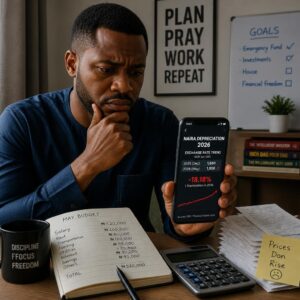
With Nigeria’s inflation hovering above 30% and the naira having lost over 60% of its value against the dollar in recent years, millions of desperate Nigerians are searching for any legitimate path to financial stability. That desperation is exactly what fake investment coaches feed on.
This post pulls back the curtain on investment coaches flooding Nigerian social media platforms. You will learn how to spot the red flags, understand the psychology they exploit, discover what real financial education looks like, and protect every kobo you have worked for.
This is not a textbook. This is the conversation your financially savvy friend never had with you but should have.
Let us get into it.
SECTION 1: Who Are These “Investment Coaches” and Why Are They Everywhere Now?
The Social Media Investment Boom in Nigeria
The word “investment coach” sounds professional. It sounds like someone with credentials, track records, and a genuine desire to help you grow your wealth.
In Nigeria’s social media landscape, however, the title means absolutely nothing. Anyone with a smartphone, a ring light, and a borrowed Airbnb apartment can call themselves an investment coach today. There are no licensing requirements, no regulatory oversight, and no accountability.
Between 2020 and 2024, the number of Nigerians on TikTok grew by over 400%. Facebook remains the most-used social media platform in Nigeria, with an estimated 35 million active users. These platforms became gold mines for people selling financial “mentorship,” and the algorithms actively reward flashy, emotional content.
Key reasons why fake investment coaches multiplied in Nigeria:
- The naira devaluation created mass financial anxiety that bad actors exploit.
- Social media algorithms reward sensational content, meaning a video of someone counting ₦10 million gets more reach than a sober financial education video.
- Unemployment and underemployment push young Nigerians toward any promised income shortcut.
- Low financial literacy means many people cannot distinguish between legitimate investing and outright fraud.
- The pandemic normalized online transactions, reducing the natural skepticism people had about sending money to strangers.
The TikTok and Facebook Pipeline Explained
Here is exactly how the pipeline works. A “coach” posts daily content showing lifestyle proof: luxury cars, hotel suites, foreign trips, and stacks of cash. They never show you a verified bank statement. They never show you a regulated brokerage account. They show you emotion-triggering visuals designed to make you feel poor by comparison.
Once you follow them, they offer a free “strategy session” or a free PDF. You give them your WhatsApp number. Then comes the paid course, the mentorship group at ₦30,000 to ₦150,000, and eventually the “managed account” where you send them your money to trade on your behalf.
That last part is where your money disappears.
SECTION 2: The Real Numbers Behind Nigerian Investment Coaching Fraud
How Much Money Are Nigerians Losing?
The scale of this problem is genuinely alarming. According to data published by the SEC Nigeria (Securities and Exchange Commission), investment-related fraud remains one of the fastest-growing categories of financial crime in the country.
In 2023 alone, Nigerian financial regulators issued warnings against dozens of unregistered investment platforms and individuals. The actual number of victims who never report their losses is believed to be many times higher. People stay silent because of shame, or because they do not even know who to report to.
Here are some real figures to consider:
- Average reported loss per victim: ₦150,000 to ₦2.5 million depending on the scheme.
- “Managed forex account” fraud is the most common category, where victims hand money to someone claiming to trade on their behalf.
- Ponzi-style schemes disguised as investment coaching have collectively cost Nigerians billions of naira annually.
- Most victims are between 22 and 38 years old, exactly the demographic these coaches target on TikTok and Facebook.
Why Most Victims Never Get Their Money Back
Once your money enters a fraudulent scheme, recovery is nearly impossible. Here is why:
- Most transactions happen through bank transfers to personal accounts, not registered business accounts.
- Coaches often move money quickly through multiple accounts, sometimes converting to cryptocurrency to avoid tracing.
- Nigeria’s legal system makes it difficult and expensive to pursue small-to-medium-scale fraud cases.
- Many victims signed “investment agreements” with language that protects the fraudster.
The painful truth is that prevention is your only realistic protection. There is almost no “after” scenario where you recover your funds.
SECTION 3: 9 Red Flags Every Nigerian Must Recognize Immediately
How to Spot a Fake Investment Coach Before They Take Your Money
This section is the most important thing you will read today. Print it. Screenshot it. Share it with your family.
These are the non-negotiable warning signs:
Red Flag 1: Guaranteed Returns
Any coach promising “guaranteed” profits from forex, stocks, or crypto is lying to you. No legitimate investment in the world offers guaranteed returns. Markets move in both directions. According to Investopedia’s guide on investment fraud, the promise of guaranteed returns is one of the oldest and most reliable markers of investment fraud globally.
Red Flag 2: Lifestyle Proof Instead of Verified Track Record
Showing you a car or a hotel room costs almost nothing. Renting a G-Wagon for a TikTok shoot costs ₦80,000 to ₦150,000 for a day, which is cheap marketing for someone planning to collect millions from victims. Ask instead: can they show you verified, audited trading statements from a regulated broker?
Red Flag 3: Urgency and Scarcity Pressure
“Slots are filling up fast.” “This offer closes tonight.” “Only 5 spots left in my mentorship.” These are classic sales manipulation tactics designed to stop you from thinking clearly. Any legitimate educator welcomes you to take your time and do research.
Red Flag 4: No Regulatory Registration
Legitimate investment advisors and fund managers in Nigeria must be registered with the SEC. Forex brokers must be regulated by the CBN or operate under international regulatory bodies like the FCA (UK) or CySEC (Cyprus). Ask for their registration number. If they cannot provide one, walk away.
Red Flag 5: “Send Me Your Money to Trade”
This is the single most dangerous offer. No legitimate trader asks clients to send money to a personal account. Legitimate managed accounts use registered brokers, signed agreements, and audited performance records. If they are asking you to send ₦200,000 to their GTBank account so they can “trade it for you,” you are about to be robbed.
Red Flag 6: Testimonials from Unknown or Unverifiable People
Screenshots of “client wins” mean absolutely nothing. Anyone can create a fake WhatsApp screenshot in five minutes. Ask to speak with real, named clients you can independently verify.
Red Flag 7: Blocking or Dismissing Anyone Who Asks Questions
Watch how a coach responds to skepticism in their comment sections. Coaches who block questioners, insult doubters, or label critical thinking as “poverty mindset” are protecting a lie.
Red Flag 8: Courses That Teach You to Recruit Others
If the “investment strategy” involves bringing other people into the scheme and earning from their participation, it is a pyramid scheme. This is not a grey area. It is illegal in Nigeria.
Red Flag 9: Pressure to Join Exclusive Paid Groups
WhatsApp and Telegram groups charging ₦20,000 to ₦100,000 monthly for “signals” or “alerts” are almost universally scams. Trading signals are freely available from legitimate, regulated brokers.
SECTION 4: The Psychology These Coaches Use to Trap Smart Nigerians
Why Even Educated People Fall for Investment Scams
You might think only uneducated people fall for these schemes. You would be wrong. University graduates, corporate professionals, and even accountants have lost money to fake investment coaches. Here is why.
These scammers are not random criminals. Many of them understand behavioral psychology better than most therapists. They deliberately exploit emotions that every Nigerian feels right now.
The Scarcity Mindset Trigger
When you are watching your salary buy fewer and fewer goods every month because of inflation, your brain becomes desperate for a solution. Fake coaches know this and design their entire content strategy around that desperation. They make you feel that this is your last chance to escape financial struggle.
Social Proof Manipulation
Humans are wired to follow crowds. When you see hundreds of testimonials in a group chat, you naturally assume some of them must be real. But these coaches manage their image obsessively. Negative comments get deleted instantly. Only positive “testimonials” remain visible.
Authority Fabrication
They create logos, certificates, and brand names that sound official. “Certified Forex Analyst.” “Wealth Creation Institute.” “International Investment Academy.” These titles cost nothing to create and mean nothing without regulatory backing.
The “Poverty Mindset” Weapon
This is particularly sinister. When you raise doubts, they accuse you of having a “poverty mindset” or “being afraid of success.” This weaponizes your ego. Nobody wants to be told they think like a poor person. It silences legitimate questions and keeps you compliant.
Gradual Commitment Escalation
They start small. A free PDF. Then a ₦5,000 beginner course. Then a ₦50,000 advanced class. By the time they ask for ₦500,000 for a “managed account,” you have already invested so much emotionally and financially that walking away feels like failure.
SECTION 5: Investment Coaching vs. Financial Education — The Critical Difference
What Real Financial Education Looks Like in Nigeria
Not everyone calling themselves a financial educator is a fraud. The critical difference lies in accountability, transparency, and what they are actually selling you.
Here is a clear comparison to help you distinguish:
COMPARISON TABLE: Fake Investment Coach vs. Legitimate Financial Educator
| Feature | Fake Investment Coach | Legitimate Financial Educator |
|---|---|---|
| Regulatory Status | Unregistered, no SEC/CBN affiliation | SEC-registered or affiliated with regulated institutions |
| Income Claims | “Make ₦1M monthly guaranteed” | Explains realistic returns with risks disclosed |
| Teaching Style | Sells secrets, exclusive access | Teaches openly available, verifiable concepts |
| Lifestyle Marketing | Heavy use of cars, cash, foreign trips | Focus on knowledge, testimonials with full names |
| Money Handling | Asks you to send money to them | Never holds your capital personally |
| Course Content | Vague “strategies” and “signals” | Specific, teachable skills (technical analysis, risk management) |
| Track Record | Screenshots only | Verified broker statements, audited reports |
| Response to Doubt | Blocks, dismisses, insults | Welcomes questions, provides documentation |
| Refund Policy | None or extremely restrictive | Clear terms of service with legitimate dispute resolution |
| Social Proof | Anonymous testimonials | Named, contactable client references |
Platforms That Provide Legitimate Financial Education in Nigeria
If you want to learn about investing in Nigeria, these are the types of resources worth your time and money:
- Cowrywise Learn: Free financial education content tied to their regulated savings and investment platform.
- PiggyVest Blog: Practical, Nigeria-specific personal finance content with transparent product information.
- SEC Nigeria’s investor education portal: Government-backed financial literacy resources.
- YouTube channels of licensed stockbrokers: Look for channels run by registered firms on the Nigerian Stock Exchange (NGX).
- Coursera and edX: Global platforms offering certified finance courses from accredited universities.
The best financial education teaches you to make your own decisions, not to depend on someone else’s “signals.”
SECTION 6: The Forex Trading Trap — Nigeria’s Biggest Investment Coaching Scam Category
Why Forex Is the Favourite Tool of Nigerian Investment Scammers
Forex trading (foreign exchange trading) is one of the most misunderstood financial instruments in Nigeria. It is real. It is legal. People do make money from it. But the way it is marketed by fake coaches is almost entirely fictional.
Here is the truth about forex trading that coaches never tell you:
- Approximately 70 to 80% of retail forex traders lose money, according to data from regulated European brokers required to disclose this information by law.
- Profitable forex trading requires months or years of practice, significant starting capital, and sophisticated risk management skills.
- The “₦500 a day from your phone while you sleep” narrative is mathematically impossible for beginner traders with small capital.
- Most “forex coaches” in Nigeria have never traded profitably on a verified live account. They make money only from selling courses and “managed accounts.”
How the Managed Forex Account Scam Works:
A coach promises to trade your money and give you 30 to 50% monthly returns. You send ₦500,000. For the first month, you receive “profits” of ₦150,000. You are excited. You reinvest. You tell your friends and family. By month three or four, withdrawals become impossible. The coach disappears or claims “market losses.” You have lost everything.
This is called a “return fabrication” scam. The early profits you received were simply paid from other victims’ deposits, classic Ponzi mechanics.
SECTION 7: How to Verify a Nigerian Investment Coach or Platform Before You Invest
Your Due Diligence Checklist for 2026
Before you send a single naira to any person or platform claiming to help you invest, run through this checklist completely.
Step 1: Check SEC Nigeria Registration
Visit the SEC Nigeria investor education portal and search for the company or individual. If they are not listed, they are operating illegally. Full stop.
Step 2: Google Their Name Plus “Scam”
This simple search reveals an enormous amount. Search “[Coach Name] scam Nigeria” and “[Coach Name] fraud.” Check Nairaland forums, Twitter/X, and Reddit for real victim reports.
Step 3: Request Verified Trading Statements
A legitimate trader can show you statements downloaded directly from regulated brokers like FXTM, HotForex, or OctaFX, with their account numbers and performance statistics. If they only show screenshots, those are worthless.
Step 4: Call Their Claimed Referees
If they list previous clients, contact those clients independently. Do not use contact information the coach provides. Find the clients on LinkedIn or other platforms yourself and reach out directly.
Step 5: Verify Their Business Registration
A legitimate business should have CAC (Corporate Affairs Commission) registration. You can verify this at the CAC portal for a small fee. An investment business with no formal registration is a major warning sign.
Step 6: Start with Regulated Platforms Instead
Rather than trusting individuals, consider starting your investment journey with properly regulated, transparent Nigerian platforms:
- Cowrywise: Licensed by the SEC, offers mutual funds and treasury bills.
- Bamboo: SEC-licensed platform for buying US stocks in dollars.
- Risevest: SEC-licensed, invests in dollar-denominated assets.
- PiggyVest: CBN-licensed partner, offers savings and investment products.
These platforms publish their regulatory details publicly. You can verify them in minutes.
SECTION 8: The Real Cost of Fake Investment Coaches on Nigerian Society
Beyond Individual Losses: What This Fraud Culture Is Doing to Nigeria
The impact of investment coaching fraud extends far beyond individual financial losses. It is reshaping how Nigerians think about money, trust, and financial planning in deeply damaging ways.
It Destroys Family Financial Safety Nets
Many victims do not invest their own savings. They borrow from cooperative societies, collect from esusu groups, or take soft loans from family members. When the scheme collapses, entire family financial networks suffer. Relationships break. Trust dissolves.
It Creates Cynicism About Legitimate Investing
After losing money to a scam, many Nigerians swear off all investing entirely. They keep cash under the mattress or simply spend everything. This reaction, while understandable, is exactly the wrong response. It prevents wealth-building and leaves people permanently financially vulnerable.
It Funds Criminal Networks
A significant portion of investment fraud proceeds in Nigeria is linked to broader criminal enterprises. The money you send to a fake coach does not just disappear. It funds lifestyles, enables further fraud operations, and sometimes flows into money laundering networks.
It Poisons the Financial Education Space
Because of widespread fraud, genuinely good financial educators struggle to build trust with Nigerian audiences. Every legitimate financial blogger, certified financial planner, or registered investment advisor now has to overcome a wall of justified skepticism created by criminals.
This is a national problem that requires national awareness. Sharing this post is literally an act of financial self-defense for your community.
RISKS AND REALISTIC EXPECTATIONS
The Hard Truths You Need to Hear About Investing in Nigeria
Let us be completely honest with each other here, because honesty is more valuable than false comfort.
Legitimate investing is slow.
Building real wealth through regulated investments takes years, not months. Platforms like Cowrywise and Risevest offer 10 to 18% annual returns in naira terms, or 7 to 12% in dollar terms for foreign-denominated products. These are real, sustainable numbers. They are not ₦1 million per month on a ₦200,000 investment.
You will need patience that social media discourages.
Instagram and TikTok are optimized to show you the most extreme results. You will never see a viral video titled “I invested ₦50,000 for 3 years and now have ₦85,000.” But that story is real, sustainable wealth-building. The ₦50 million in 30 days stories are almost entirely fictional.
Financial literacy takes time to develop.
Anyone promising you can start making consistent trading profits within 2 to 4 weeks of a course is lying to you. Professional traders spend years learning, often losing money during that learning period even with proper education.
There are genuine opportunities in Nigeria’s financial markets.
The Nigerian Stock Exchange (NGX) offers real equity investments. Treasury bills offer government-backed returns. Fixed deposits, Eurobonds, and regulated mutual funds are all legitimate. These require patience and consistency, but they work.
Inflation is a real enemy, but panic is a worse one.
Yes, naira inflation erodes the value of idle cash. This pressure is real and urgent. But making a panicked, poorly-researched investment decision to “beat inflation” by sending money to a fake coach is infinitely worse than keeping your money safe while you build genuine financial knowledge.
PRO TIPS FOR NIGERIANS: HOW TO AVOID INVESTMENT COACH SCAMS AND BUILD REAL WEALTH
Here are five actionable, Nigeria-specific steps you can take starting today:
- Start only with SEC-registered platforms. Before anything else, only consider investment platforms that appear on the SEC Nigeria registered entities list. This single rule eliminates the vast majority of scam risk immediately.
- Invest in your financial education first, then your portfolio. Spend ₦5,000 to ₦15,000 on legitimate finance books, Udemy courses, or certified programs before you invest a single naira in any market. The Chartered Institute of Bankers of Nigeria (CIBN) and the CFA Institute both offer credible learning pathways.
- Use the community verification method. Before any investment decision, post about it on Nigeria’s Nairaland Finance subforum or active Twitter/X finance communities. Real Nigerians who have had experiences with that platform or person will respond quickly.
- Never combine learning and capital in the same transaction. If someone is charging you to both teach you AND manage your money for you, those should be two completely separate, independently verified engagements. Legitimate educators do not also hold your capital.
- Set a maximum “experimentation budget.” If you want to try any new investment avenue, set a hard limit of money you can genuinely afford to lose completely. Never invest emergency funds, borrowed money, or essential living costs into anything not fully insured and regulated.
FAQ SECTION
Frequently Asked Questions About Investment Coaches and Scams in Nigeria
Q1: How do I know if an investment coach is legit in Nigeria?
Check their SEC Nigeria registration number first. Then verify their CAC business registration, request audited trading statements from a regulated broker, and search their name online for scam reports. Legitimate coaches welcome this scrutiny. Fraudulent ones will become hostile or evasive the moment you ask for documentation.
Q2: Is forex trading legal and safe in Nigeria?
Forex trading is legal in Nigeria when conducted through CBN-licensed banks or internationally regulated brokers. It is, however, extremely high-risk for beginners. Studies from regulated European markets show 70 to 80% of retail traders lose money. It is not safe to give someone else money to trade on your behalf unless they are a SEC-registered portfolio manager with a verifiable audited track record.
Q3: How much do I need to start investing legitimately in Nigeria?
You can start with as little as ₦1,000 on platforms like Cowrywise or PiggyVest. Treasury bills require a minimum of ₦50,000 through most banks or licensed platforms. Dollar-denominated investments through Bamboo or Risevest can start from ₦10,000 to ₦25,000. There is no legitimate investment opportunity that requires you to send millions to an individual’s personal bank account.