How to Find Reliable Wholesale Suppliers in Lagos Nigeria (Complete Market Guide)
The wrong supplier will not just cost you money. It will quietly destroy the business you worked so hard to build.
Most new retailers in Lagos learn this the painful way. They rush into a market, buy from the first person who gives them a price, and three weeks later they are dealing with fake products, short deliveries, and a supplier who has suddenly stopped picking up calls. If that sounds familiar, this guide was written specifically for you.
Introduction: Why Finding the Right Wholesale Supplier in Lagos Is the Most Important Decision You Will Make
Let us be honest about something most business advice skips over.
Your retail business is only as strong as your supply chain. You can have the best location in Lekki, the most beautiful display, a loyal WhatsApp customer list, and a genuine talent for selling. None of that saves you if your supplier delivers bad products, inflates prices randomly, or disappears during peak demand.
In Lagos, the wholesale supplier market is enormous, chaotic, and full of opportunity. But it is also full of landmines. There are genuine traders who have run honest businesses for 20 or 30 years. There are also opportunists who specialize in spotting fresh faces and overcharging them. There are middlemen pretending to be wholesalers. There are “agents” who charge you for access to prices you could have gotten yourself for free.
Navigating all of this requires knowledge, not just courage.
This guide covers everything you need to know about finding reliable wholesale suppliers in Lagos for whatever retail business you are running. Whether you sell groceries, beauty products, fashion, electronics, phone accessories, or anything in between, the principles and specific locations in this article apply directly to your situation.
You will learn exactly which markets to visit, how to approach suppliers, what questions to ask, how to evaluate whether a supplier is legitimate, how to negotiate prices, and how to build long-term relationships that give you competitive pricing advantages over other retailers.
By the end, you will not be a lost newcomer wandering through Trade Fair Complex hoping someone takes pity on you. You will walk in like someone who has been doing this for years.
Let us start from the beginning.
Understanding How the Lagos Wholesale Supply Chain Actually Works
Why Knowing the Supply Chain Helps You Find Better Wholesale Suppliers in Lagos
Before you step foot in any Lagos wholesale market, you need to understand the layers between the manufacturer and your customer. Most new retailers do not know these layers exist, and that ignorance costs them money every single time they restock.
Here is how the chain typically looks in most product categories:
Manufacturer or Importer imports or produces the goods. This could be a factory in China, Turkey, or right here in Nigeria.
Primary Wholesaler buys in massive quantities directly from the manufacturer or importer. They operate from large warehouses and sell only in bulk. Minimum orders can be very high.
Secondary Wholesaler buys from the primary wholesaler and breaks the goods into smaller but still significant quantities. These are the most common type of supplier you will encounter in Lagos markets.
Retailer (you) buys from the secondary wholesaler and sells to individual customers.
Middleman or Agent operates between any of these layers, adding their margin without providing any real value. They are worth avoiding unless they offer something genuinely useful.
The sweet spot for most Lagos small retailers is building a relationship directly with secondary wholesalers. You get prices significantly better than what retailers charge each other, without needing the huge capital requirements of buying from primary wholesalers.
As you grow and your capital base expands, you can start approaching primary wholesalers and cutting your costs even further.
The Role of Trust in Lagos Wholesale Markets
Lagos wholesale markets run on relationships and reputation far more than formal contracts. In most markets, your word carries real weight. A supplier who trusts you will extend credit. They will call you when new stock arrives. They will give you better prices than strangers get.
A retailer who bounces cheques, delays payments, or haggles aggressively and then disappears will find the same information spreading to other suppliers in the same market faster than they can walk from one stall to the next. Markets talk.
Build your supplier relationships the same way you build customer relationships. With consistency, respect, and payment that arrives when you promised it would.
Where to Find Wholesale Suppliers in Lagos: The Major Markets You Need to Know
Finding Wholesale Suppliers in Lagos Through the City’s Biggest Trading Hubs
Lagos has several major wholesale markets that serve different product categories. Knowing which market to visit for your specific retail business saves you enormous amounts of time and travel cost.
Here is a breakdown of the most important wholesale markets in Lagos and what they specialize in.
Lagos Island Markets
Lagos Island is the commercial heart of the city. It contains some of the oldest and most established wholesale trading operations in West Africa.
Balogun Market: One of the largest markets in West Africa. Specializes in fabrics, fashion, clothing, and textiles. If you retail Ankara, Aso-oke, imported clothing, or ready-to-wear fashion, your primary wholesale relationships should start here. Balogun has suppliers for every price point and every market segment.
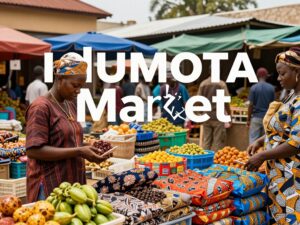
Idumota Market: Known for electronics, electrical goods, and consumer products. Also has a strong section for household goods. If you retail small electronics or home appliances, Idumota traders have competitive prices.
Apongbon Market: Strong for electronics, cables, phones, and accessories. Also known for building materials. Located near Lagos Island bridge area.
Dosunmu Market: One of Lagos Island’s major food and grocery wholesale hubs. Excellent for staple food items, packaged goods, and household consumables.
Mainland Markets
The Lagos mainland hosts several major wholesale markets that serve the growing residential and commercial population north and east of the island.
Oshodi International Market: Massive open market with wholesale sections covering clothing, shoes, bags, cosmetics, and general merchandise. Prices tend to be very competitive. Good for fashion and beauty retailers who want variety.
Tejuosho Ultra Modern Market in Yaba: Reorganized in recent years into a more structured trading environment. Good for fashion, fabrics, and cosmetics. More accessible for beginners than some of the more chaotic open markets.
Oyingbo Market: One of the best wholesale food markets on the mainland. Strong for fresh produce, dried goods, and food processing ingredients. If you retail groceries or run a food-based business, Oyingbo is worth a visit.
Agege and Ketu Markets: Local wholesale hubs serving the high-density residential areas of the mainland. Good for basic food staples, household goods, and everyday consumables.
Large Specialized Trade Complexes
Trade Fair Complex, Ojo: One of the largest trading complexes in Nigeria. Covers an enormous range of categories including electronics, building materials, furniture, clothing, and more. If you are serious about retail, making at least one research trip to Trade Fair is valuable even if you do not source primarily from there. It gives you a strong sense of market prices across categories.
Ikeja Computer Village: The undisputed wholesale and retail hub for phones, phone accessories, computers, and electronics in Lagos. If you retail anything in the technology and accessories space, your supplier relationships start here. Thousands of traders operate in this densely packed complex.
Cappa Mile 2: Focused on building materials but also has sections for hardware and home improvement products.
How to Approach Wholesale Suppliers in Lagos Like a Professional
Building Relationships With Wholesale Suppliers in Lagos Markets Requires Strategy
Walking into a Lagos wholesale market for the first time can feel overwhelming. It is loud, fast-moving, and everyone seems to already know each other. The instinct for many newcomers is to hover near the entrance, look uncertain, and wait for someone to approach them.
Do not do this. Waiting passively signals that you are a visitor, not a serious buyer. And visitors get tourist prices.
Instead, walk in with purpose. Look like you know where you are going even if you do not fully know yet. Here is a practical step-by-step approach for your first market visit.
Step 1: Go with a research mindset first.
On your first visit, you are not buying. You are learning. Visit multiple stalls selling the same product category. Observe the prices quoted to ordinary shoppers. Take mental notes. Ask basic questions about product types and stock availability. Do not reveal that you are a new retailer looking for a wholesale supplier. Just be a curious observer.
Step 2: Identify the traders who seem established.
Experience is visible in a market. Long-established traders tend to have organized stalls, structured displays, staff helping them, and regular customers coming and going. Newer or less stable traders tend to have more chaotic operations. Prioritize the established ones.
Step 3: Come back and introduce yourself properly.
On your second visit, present yourself as a retailer looking to buy regularly. Use these exact framing words or something close to them: “I am setting up a retail business in [your area] and I am looking for a reliable supplier I can work with long-term. I want to buy [your product] regularly in [approximate quantity]. Who should I be speaking to?”
This signals that you are a serious ongoing buyer, not a one-time customer. It immediately changes how suppliers engage with you.
Questions to ask any potential supplier:
- What are your minimum order quantities?
- Do you offer credit terms to established customers?
- How often do you receive new stock?
- What is your return or replacement policy for defective goods?
- Do you deliver, and if so, what are the delivery costs?
- Can you provide a receipt or invoice for purchases?
Step 4: Place a small test order.
Before committing to buying in volume, place a smaller test order. This lets you evaluate the quality of the goods, the accuracy of the order, and the reliability of delivery if delivery is involved. A good supplier will treat your small order well because they see the long-term relationship. A bad one will be casual about it.
Step 5: Pay promptly and consistently.
After your first purchase, pay on time. Always. Even if you are tight on cash that week. Your payment history is your credit rating in Lagos markets. Consistent, prompt payment is the fastest way to build trust and unlock better terms.
How to Verify That a Wholesale Supplier in Lagos Is Legitimate
Protecting Your Retail Business From Unreliable Wholesale Suppliers in Lagos
Lagos has no shortage of people willing to take your money. Not every person presenting themselves as a wholesale supplier is what they claim to be. Some are middlemen adding unnecessary layers. Some are outright fraudsters. Some are legitimate traders who simply carry poor-quality goods.
Here is how to verify before you commit.
Check for physical presence. A legitimate wholesale supplier has a physical stall, container, or warehouse that they operate from regularly. If someone is trying to sell you wholesale goods through phone calls only and wants you to pay before seeing the product, walk away.
Ask to see existing stock. Genuine wholesalers have stock on hand or can show you what is coming from a documented supplier. Anyone who says “I can get whatever you need” without showing you anything should raise your suspicion.
Look for other retailers buying from them. When you visit a stall, observe whether other shoppers who look like retailers are buying from this trader. Other retailers represent social proof that the supplier is trustworthy enough for repeat business.
Ask for references. It feels awkward in a market context, but you can say: “I want to buy regularly. Can I speak with any other retailers who source from you?” A legitimate supplier will have no problem connecting you with satisfied customers.
Start small before going big. This cannot be overstated. Never make your first order a large one. A test order of 30,000 to 50,000 naira protects you from losing your full capital to a bad supplier.
Watch for suspiciously low prices. If a supplier’s price is dramatically lower than what everyone else is offering for the same product, the product is probably substandard, counterfeit, or the deal has a catch you have not discovered yet. Legitimate price advantages exist but they are modest, not dramatic.
Sourcing From Online Wholesale Platforms Available to Nigerian Retailers
How Digital Wholesale Suppliers Are Changing the Lagos Nigeria Retail Landscape
Physical markets are not your only sourcing option. In the last several years, online wholesale platforms have become genuinely viable for Nigerian retailers. Understanding how to use them adds a significant sourcing advantage.
Alibaba and AliExpress for imported goods:
Alibaba is the world’s largest B2B wholesale platform, connecting manufacturers primarily in China with buyers globally. Nigerian retailers can order from Alibaba directly. Minimum order quantities vary by supplier. Shipping typically takes 2 to 6 weeks by sea freight, which is the most affordable option.
For smaller quantities and faster delivery, AliExpress operates on a similar basis but with lower minimums and air shipping options.
Payment is typically done via credit card, PayPal, or in some cases through third-party payment agents based in Nigeria who process international orders for a fee.
Key considerations for importing from China:
- Factor in customs duties and import taxes when calculating your landed cost
- Use a freight forwarder based in Lagos to handle clearing from Apapa or Tin Can ports
- Start with a small test shipment before ordering large volumes
- Verify your chosen Alibaba supplier’s ratings and trade assurance status
Jumia and Konga for local wholesale:
Both Jumia and Konga have wholesale or bulk sections where registered retailers can access discounted pricing. While margins are narrower than physical market sourcing, the convenience and reliability can justify the premium for some categories.
WhatsApp wholesale groups:
This is uniquely Nigerian and extremely effective. Wholesale supplier groups on WhatsApp have proliferated across virtually every product category. Members share prices, post availability updates, and take orders. Access to these groups is typically through an existing market contact or by asking established retailers in your product category.
These groups work but require your own verification. Not everyone posting in them is reliable. Apply the same vetting principles you would use in a physical market.
According to the World Bank’s research on digital trade in Sub-Saharan Africa, digital platforms have reduced the cost of finding and verifying trading partners significantly for small businesses in African markets, with Nigeria among the countries seeing the strongest adoption of digital sourcing tools among SME retailers.
Negotiating Wholesale Prices With Lagos Market Suppliers Without Burning Relationships
How to Get Better Prices From Wholesale Suppliers in Lagos While Building Trust
Negotiation in Lagos markets is expected and normal. Suppliers build a margin into their opening price precisely because they expect buyers to negotiate. Not negotiating is leaving money on the table.
But negotiation has a texture in Lagos markets that is different from formal business settings. Aggressive, confrontational bargaining alienates suppliers. Friendly, informed negotiation builds relationships.
Here is how to negotiate well.
Know the market price before you negotiate. This goes back to your research visits. If you know that a particular item sells wholesale in the 1,500 to 1,800 naira range, you negotiate from a position of knowledge. You are not guessing. You are referencing reality.
Anchor with a reasonable opening offer. Do not open with an insulting price. Open at roughly 15% to 20% below where you expect to land. Leave room for both sides to move without either side losing face.
Use volume as leverage. “If your price works, I will be buying this amount every two weeks” is more powerful than trying to simply argue the price down. Suppliers value volume buyers. Regular reorders justify lower unit prices.
Accept some things at full price. Trying to negotiate every single item signals desperation or unreasonableness. Pick the highest-volume items to negotiate firmly on. Accept fair prices on lower-volume items. This balance signals that you are a professional, not someone simply trying to extract maximum advantage.
Never publicly compare one supplier to another in front of them. Saying “The trader two stalls down offered me cheaper” might sometimes work, but it creates friction. Use competitive knowledge internally to decide where to source, not as a negotiating weapon.
Be willing to walk away. This is the ultimate negotiating tool and it only works if you mean it. If a price genuinely does not work for your business model, politely say so and leave. Many times, a supplier will call you back before you reach the end of the aisle.
How to Evaluate Product Quality Before Buying From Wholesale Suppliers in Lagos
Quality Control When Working With Wholesale Suppliers in Lagos Markets
Your reputation with your retail customers depends entirely on the quality of what you sell. And quality control starts at the wholesale level, not after the goods are in your shop.
Here is a category-by-category guide to quality checks at the wholesale stage.
For food and grocery items:
- Check expiry dates on all packaged goods. Examine multiple items, not just the one on top.
- Check packaging integrity. Bulging cans, broken seals, and damaged boxes are red flags.
- For fresh produce, assess color, firmness, and smell.
- Understand the difference between A-grade and B-grade stock. Some suppliers offer both at different prices. Know what you are buying.
For beauty and skincare products:
- Verify authentic seals and batch numbers on branded products.
- Be suspicious of branded international products at dramatically low prices. Counterfeiting is a real problem in this category.
- Smell and consistency check on lotions and oils if the supplier allows testing.
- Check for NAFDAC registration numbers on products meant for Nigerian consumers.
For fashion and clothing:
- Examine stitching quality on seams and hems.
- Check fabric thickness and feel. Thin, rough fabric is a common indicator of poor quality.
- Look at zips, buttons, and fastenings for smooth operation.
- Order in multiple sizes and verify that sizing is consistent across the batch.
For electronics and accessories:
- Test devices where possible before buying in volume.
- Check for NAFDAC or SON (Standards Organisation of Nigeria) certification marks on applicable products.
- Ask about warranty terms. Legitimate electronics wholesalers usually offer a short return window for defective units.
- Be very cautious with refurbished or “grade B” electronics. Know exactly what you are buying before you commit.
For phone accessories:
- Test charging cables and earphones immediately.
- Quality control in this category is particularly variable. A cheap cable that works for one week will destroy your reputation faster than any single sale is worth.
Building Long-Term Supplier Relationships That Give You Competitive Advantages
How Loyal Wholesale Supplier Relationships in Lagos Create Business Advantages
The single biggest advantage a mature retailer has over a newcomer is not location or capital. It is supplier relationships. Suppliers who trust you will do things for newer retailers that they will not do for strangers.
Here is what strong supplier relationships actually unlock:
Credit terms. Instead of paying cash upfront for every order, trusted retailers get credit terms. You take the goods today and pay in 7, 14, or 30 days. This is an enormous cash flow advantage, especially during high-demand periods when you need stock faster than your cash can move.
Priority access to scarce stock. When a popular product is in short supply, suppliers fill orders for their most reliable customers first. If you are that customer, your competitors face empty shelves while you stay stocked.
Early notification of new products. Good suppliers tell their trusted retailers when something new is coming in before it hits the open market. This lets you get ahead of trends and stock items before your competitors even know they exist.
Better prices over time. As volume increases and trust deepens, your unit prices tend to drift downward. Not through aggressive renegotiation but through the natural generosity that good business relationships generate.
Problem resolution. When something goes wrong with a batch, a supplier who trusts you will replace or refund without an argument. A supplier you have no relationship with will argue, delay, or simply ignore the issue.
How to maintain these relationships:
- Pay consistently and on time, always
- Visit your key suppliers personally on a regular basis, not just when you need to reorder
- Bring small personal greetings during festive seasons like Christmas, Eid, or even during their market celebrations
- Refer other retailers to them (they will remember this)
- Give them honest feedback when product quality varies so they can improve their own sourcing
Comparison Table: Lagos Wholesale Markets by Product Category
| Product Category | Best Primary Market | Alternative Market | Avg. Min. Order | Typical Price Range | Credit Terms Available | Quality Risk Level |
|---|---|---|---|---|---|---|
| Groceries and Food Staples | Dosunmu, Oyingbo | Agege Market, Ketu | 20,000 to 50,000 naira | Competitive, market-driven | Yes (for trusted buyers) | Low to Medium |
| Fashion and Clothing | Balogun Market | Oshodi Market, Tejuosho | 50,000 to 150,000 naira | Wide range by quality | Yes (established traders) | Medium |
| Phone Accessories | Ikeja Computer Village | Idumota, Apongbon | 20,000 to 80,000 naira | Competitive | Sometimes | Medium to High |
| Beauty and Skincare | Oshodi Market | Tejuosho, Balogun | 30,000 to 100,000 naira | Variable | Yes (for regulars) | High (counterfeit risk) |
| Electronics and Appliances | Trade Fair Complex | Idumota, Apongbon | 100,000 to 500,000 naira | Fixed, some negotiation | Rarely for new buyers | Medium |
| Children’s Clothing | Balogun Market | Oshodi, Tejuosho | 40,000 to 100,000 naira | Competitive | Yes | Low to Medium |
| Cooking Gas (LPG) | Direct from LPG depots | NNPC licensed distributors | 100,000+ naira | Regulated pricing | Rarely | Low |
| Pure Water Sachets | Direct from factories | Local depots | 10,000 to 30,000 naira | Fixed price structure | Sometimes | Low |
Using Technology and Social Media to Find and Verify Wholesale Suppliers in Nigeria
Modern Tools for Finding Trusted Wholesale Suppliers Beyond Lagos Markets
The days of finding suppliers only through physical market visits are ending. Smart Lagos retailers now use a combination of physical market visits and digital tools to expand their supplier options and verify legitimacy.
Google Business search:
Searching for “[product category] wholesale supplier Lagos” on Google increasingly returns results for registered businesses with reviews, addresses, and contact information. The presence of Google reviews with real customer feedback is a positive trust signal.
LinkedIn for B2B supplier connections:
LinkedIn has a growing community of Nigerian importers and wholesale traders. Connecting with them and reviewing their activity and company pages gives you information that would take multiple market visits to gather in person. Research from LinkedIn’s own economic graph data shows that B2B sourcing connections made through professional networks result in significantly fewer disputes than cold market transactions.
Instagram for product verification:
Many Lagos wholesale traders now run Instagram pages for their businesses. An active Instagram account with regular stock posts, tagged locations, and customer interaction is a reasonable indicator of a functioning, legitimate operation. You can see their actual products, observe pricing signals, and even message them before visiting.
WhatsApp Business for ongoing supplier communication:
Once you establish a relationship with a supplier, managing reorders through WhatsApp Business is standard practice in Lagos. Set up a supplier directory on your phone organized by product category. A supplier who is responsive on WhatsApp, provides delivery confirmations, and sends invoices through the platform is demonstrating a level of professionalism worth maintaining.
Nigerian business directories:
Platforms like VConnect, BusinessList Nigeria, and similar directories list registered Nigerian businesses including wholesalers. These are imperfect but useful for initial research before visiting in person.
Practical Tips for Managing Your Wholesale Supply Chain as a New Lagos Retailer
Keeping Your Wholesale Supplier Relationships in Lagos Working Smoothly
Finding good suppliers is only half the job. Managing those relationships effectively is what keeps your business running smoothly month after month.
Here are practical supply chain management tips specifically for Lagos retail context.
Keep a simple supplier record book or spreadsheet.
For every supplier, record: their name, stall number or address, phone number, WhatsApp, product category, typical prices, payment terms, and any notes on quality or reliability. This takes 10 minutes to set up and saves enormous headaches later.
Diversify across at least two suppliers per product category.
Do not let any single supplier become your only source. If your sole grocery supplier raises prices suddenly or runs out of stock, you need an alternative ready. Two established supplier relationships per category is the minimum. Three is better.
Order ahead of your needs, not in response to running out.
Many new retailers wait until they are almost out of stock before reordering. This is a trap. Lagos traffic, supplier stock issues, and payment delays can all create gaps in your supply. Order when you reach 30% to 40% of your stock level, not when you reach zero.
Track which products move fastest and build buffer stock for them.
Your fastest-moving products are your most critical supply chain items. If your grocery kiosk sells out of palm oil every four days, you need at least five days of palm oil in stock at all times. Map your velocity and stock accordingly.
Negotiate delivery for larger orders.
Many Lagos wholesalers offer delivery for significant orders. This saves you transport costs, reduces the risk of damage during transit, and frees your time for the retail side of your business. Negotiate delivery as part of the overall deal, not as an afterthought.
Keep some emergency cash liquid for opportunistic purchases.
Occasionally, a supplier will offer excess stock at a significantly discounted price because they need to clear space. If you have liquid cash available, you can take advantage of these deals and earn extra margin. Retailers who are always fully invested in existing inventory miss these opportunities.
Risks and Realistic Expectations When Working With Lagos Wholesale Suppliers
Common Pitfalls That Catch New Retailers When Finding Suppliers in Lagos Markets
Even with all the right information, working with wholesale suppliers in Lagos comes with real risks. Acknowledging these directly helps you avoid the mistakes that catch most newcomers.
Risk 1: The “fresh face tax” on your first few visits.
New faces in wholesale markets often get quoted prices that are 20% to 40% above what regular buyers pay. This is not personal. It is market economics. Suppliers test new buyers before offering their best prices.
Protect yourself by doing extensive price research before buying and by not revealing that you are brand new to the market. Observe, compare, and let your market knowledge show through your questions rather than your wallet.
Risk 2: Counterfeit goods in high-margin categories.
Beauty products, electronics, and branded clothing are the highest-risk categories for counterfeiting in Lagos wholesale markets. The margins on genuine branded goods are attractive enough that faking them is profitable for bad actors.
Always verify product authenticity before stocking. For beauty products, check for NAFDAC numbers. For electronics, verify serial numbers and test before accepting bulk deliveries.
Risk 3: Verbal agreements that do not hold.
A supplier who told you verbally that the price would be X may deliver and charge you Y. Memories differ, especially when it is inconvenient for one side to remember correctly.
Always confirm prices in writing, even if that just means a WhatsApp message confirming the agreed terms before you pay. This creates a record without requiring a formal contract.
Risk 4: Spoilage and returns disputes.
For food categories, disputes about quality on delivery are common. Produce that looked fresh at the market may arrive at your location already turning. Without clear return terms agreed upfront, you carry the loss.
Agree on quality expectations and return terms before your first order. “If these tomatoes are not fresh on delivery, I bring them back today” should be stated and acknowledged before you buy.
Risk 5: Overextending credit exposure.
Once you establish credit terms with suppliers, the temptation is to take more goods on credit than your sales velocity can support. If your goods are not selling fast enough to cover the credit repayment, you accumulate debt to your supplier.
Keep your credit exposure at a level your 30-day sales can comfortably cover. Credit is a tool. Used carefully, it grows your business. Used carelessly, it buries it.
Risk 6: Single-supplier dependency.
We mentioned diversification earlier, but it deserves its own emphasis as a risk. Retailers who depend on a single supplier are vulnerable to that supplier’s problems becoming their own. Illness, family issues, supply disruptions, or price hikes at your single supplier’s level can shut down your retail operation without warning.
Two suppliers minimum. Always.
Frequently Asked Questions About Finding Wholesale Suppliers in Lagos
How much money do I need to start buying from Lagos wholesale markets?
The honest minimum for most categories is between 30,000 and 100,000 naira for a meaningful initial stock purchase. Some categories like pure water or phone accessories allow you to start at the lower end. Electronics and cooking gas require significantly more capital.
Can I negotiate credit terms as a completely new retailer?
It is difficult but not impossible. Some suppliers offer credit to new buyers after meeting them in person and finding them credible. More commonly, you earn credit terms after 2 to 4 months of consistent cash purchases. Be patient. Build the relationship first, then raise the conversation about credit.
How often should I visit my wholesale suppliers to maintain relationships?
For your primary suppliers, a personal visit at least once a month is worthwhile even if you are managing reorders via WhatsApp. Face-to-face contact maintains the relationship in a way that messages cannot fully replicate. During your visits, spend a few minutes talking about the market in general, not just your order. Interest in their business builds genuine connection.
What should I do if a Lagos supplier delivers substandard goods?
Act immediately. Contact the supplier on the same day of delivery, ideally within hours. Do not wait until the next restock cycle. Document the issue with photos and send them on WhatsApp. If you have a good relationship and the issue is genuine, most established suppliers will replace or credit the defective goods. If a supplier consistently delivers poor quality and refuses to acknowledge it, find an alternative and do not continue the relationship.
Conclusion: Your Wholesale Supplier Strategy Is the Foundation Everything Else Rests On
Here is the truth that separates retailers who grow from those who struggle.
Two retailers can sell the exact same product in the same area. One sources from a reliable wholesale supplier at competitive prices, maintains good credit terms, gets priority on new stock, and builds strong enough margins to reinvest in growth. The other buys from whoever is available on a given day, pays inconsistently, gets mediocre quality, and operates on thin margins that leave nothing to grow with.
Their shops might look similar from the outside. Their outcomes will be completely different within twelve months.
Your wholesale supplier relationships are not a background operational detail. They are the engine of your business. The quality of that engine determines how far and how fast you travel.
Lagos is full of excellent suppliers who have spent years building reliable operations. They are looking for reliable retailer customers just as much as you are looking for reliable suppliers. When you approach them professionally, pay consistently, and grow your volume steadily, they will invest in your success because your success becomes their success.
The markets are open. The suppliers are there. The knowledge in this guide is your map.
Go find your people, build your relationships, and build your business.
Ready to Take Your Next Step?
Which wholesale market are you planning to visit first? Drop it in the comments below and let us know which retail category you are sourcing for. We will help point you toward the most useful stalls and contacts for your specific situation.
And if you are still deciding which retail business to launch in Lagos, go back and read our complete guide on the [8 exact retail business ideas that work in high-demand Lagos areas] before your first market visit. Knowing your business model before you source makes every supplier conversation sharper and more productive.
Your Lagos retail business starts with one conversation in the right market. Go have it.
This guide was researched using market observations from Lagos retail environments, publicly available data from Nigerian trade and commerce institutions, and information from experienced Lagos retail entrepreneurs. Income figures, pricing ranges, and market details reflect conditions at the time of writing and may shift with broader economic changes. Always conduct your own current-market research before committing capital.