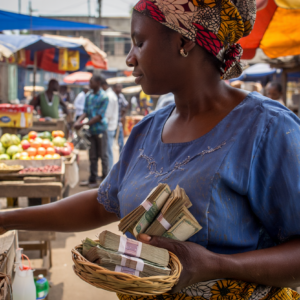
The Shocking Truth: 83% of Nigerian Workers Are Broke Before Payday — And the 7-Step Online Side Hustle Escape Plan
By a Nigerian personal finance strategist and digital income consultant with over 6 years helping West African professionals build income beyond their salaries.
You get paid on the 25th. By the 10th, your account balance is already giving you that look. That empty, hollow, “what happened?” look.
You are not careless. You are not irresponsible. You are simply operating inside a system that was never designed to let you get ahead on a single income.
Introduction: The Salary Trap That Nobody Talks About
Here is a number that should make you stop scrolling: according to a 2024 survey by Nairametrics, more than 8 in 10 Nigerian workers admit they exhaust their monthly income before the next pay cycle arrives. Not because they are buying luxury cars. Because basics like rent, food, transportation, data, electricity, and school fees have outpaced salaries so dramatically that the math simply does not add up anymore.
The naira has lost more than 70% of its value against the dollar since 2023. Inflation in Nigeria has stayed stubbornly above 30% for much of 2024 and 2025. Meanwhile, the minimum wage, even after the 2024 increase to N70,000, still does not cover a month of basic living expenses in Lagos, Abuja, or Port Harcourt.
So the problem is not you. The problem is structural.
But here is the thing about structural problems: you cannot wait for the government to fix them. You have to build your own financial floor while living inside the broken system.
This article is a detailed map for doing exactly that. You will learn the seven real reasons Nigerian workers go broke before payday, and more importantly, you will get a concrete, step-by-step online side hustle escape plan that does not require you to quit your job, attend a seminar, or pay any registration fee.
Let us get into it.
Part One: Why 83% of Nigerian Workers Are Broke Before Payday
Understanding the problem is not just an exercise in frustration. It is the foundation of every solution. You cannot fix what you have not diagnosed.
Reason 1: Salaries Have Not Kept Up With Inflation
The average Nigerian private sector salary has grown by maybe 10 to 20% over the last five years. In that same period, the cost of a bag of rice has tripled. A litre of petrol has gone from N165 to over N1,200. A studio apartment in Lekki that rented for N600,000 in 2020 now goes for N2,500,000 or more.
Your salary is the same type of money. The economy is not the same economy.
This is what economists call a real wage decline. Even if your boss gave you a raise, if inflation runs faster than the raise, you are technically earning less than before in terms of what your money can actually buy.
Reason 2: The “Ajo” and “Esusu” Gap
Traditional savings mechanisms like ajo and esusu (rotating savings groups) are genuinely useful. But they only redistribute money that exists. They do not create new income. When the baseline income is insufficient, redistributing it differently still leaves people short.
Many Nigerians also operate informal loans within family and friend networks, which creates invisible debt obligations that drain salaries the moment they land.
Reason 3: Single Income Dependence
This is arguably the biggest structural mistake. A household depending on one salary is financially fragile by design. One illness, one job loss, one delayed payment, and the entire system crashes.
In the US and UK, the median household has 2.5 income sources. In Nigeria, most salaried workers treat their monthly pay as their only financial lifeline, which means there is zero cushion when expenses spike.
Reason 4: No Emergency Fund Culture
Only 14% of Nigerian workers, according to a 2023 EFInA (Enhancing Financial Innovation and Access) report, have emergency savings sufficient to cover three months of expenses. The rest are one car repair or hospital bill away from financial crisis every single month.
Reason 5: High Dependency Ratio
Nigerian workers support an average of 6 to 8 dependents (nuclear family plus extended family obligations). In cultures where it is expected that a working person contributes to siblings’ school fees, parents’ upkeep, and relatives’ “emergencies,” the pressure on a single salary becomes enormous.
Reason 6: Financial Literacy Gaps
Schools in Nigeria do not teach personal finance. Concepts like compound interest, budget allocation, investment vehicles, and passive income are not part of the standard curriculum. Most people learn about money by trial and error, usually after expensive mistakes.
Reason 7: The Lifestyle Inflation Trap
When Nigerians get a salary raise, many immediately upgrade their lifestyle: better phone, better apartment, more spending on outings and events. This is called lifestyle inflation, and it is the silent thief that ensures even well-paid workers stay broke.
The irony is that lifestyle inflation often happens because of social pressure, “packaging” for Instagram and WhatsApp stories, rather than genuine desire.
Part Two: The 7-Step Online Side Hustle Escape Plan
Now that the diagnosis is clear, here is the treatment.
These seven steps are not seven different hustles to do simultaneously. They are seven sequential stages of a journey from broke-before-payday to financially stable and growing. Read each step. Then decide where you currently sit on this map.
Step 1: Stop the Bleeding With an Honest Budget (Online Side Hustle Foundation)
You cannot build a new income stream while financial leaks drain every naira you bring in. This step is not exciting, but it is non-negotiable.
Spend one week tracking every single kobo you spend. Not estimating. Actually tracking. Use a free app like Spendee, Money Manager, or even a WhatsApp note. At the end of the week, categorize your spending into four buckets: needs, wants, waste, and obligations.
You will almost certainly discover two or three categories where money is disappearing without adding real value. A streaming subscription you never use. Airtime you buy impulsively. Food purchases that could be replaced with cheaper home cooking three times a week.
Action items for Step 1:
- Download a free budgeting app (Spendee, Goodbudget, or a simple spreadsheet)
- Track all spending for 7 consecutive days without changing anything yet
- Identify your top three “leaks”
- Redirect that money into a dedicated hustle fund (even N5,000 to start)
The goal here is not to live like you are punishing yourself. It is to create breathing room, even a small one, so that when your first hustle income arrives, it does not immediately vanish into expenses.
Step 2: Choose One Online Side Hustle and Start in 72 Hours
The single biggest mistake aspiring hustlers make is spending three months “researching” and never starting. The second biggest mistake is trying to do five hustles at once and mastering none.
Pick one. Just one. Based on your current skills and available time.
Here is a quick skill-matching guide:
If you can write clearly: Start with freelance content writing on Upwork or Fiverr. Nigerian writers are in high demand for blog posts, product descriptions, and email newsletters. A beginner can realistically earn N80,000 to N250,000 in their first full month with consistent effort.
If you are organized and detail-oriented: Virtual assistance is your entry point. Setting up a free Upwork profile takes 45 minutes. Your first client inquiry could come within a week if your profile is well-written.
If you understand a subject well (accounting, maths, English, coding): Online tutoring on platforms like Preply or through private WhatsApp classes is viable from day one. No setup cost. No special equipment beyond a working phone or laptop.
If you have a creative eye: Canva-based graphic design is learnable in 30 days for free on YouTube, and logos, flyers, and social media graphics sell consistently on Fiverr.
If you have inventory or know a supplier: Reselling on Jumia, Konga, or your own WhatsApp status is a legitimate business model with real scale potential.
The rule is simple: do not wait until you feel ready. Set up your profile, your product listing, or your first post within 72 hours of reading this article. Momentum is everything at the start.
Step 3: Build Your Online Income Infrastructure (The Side Hustle Setup)
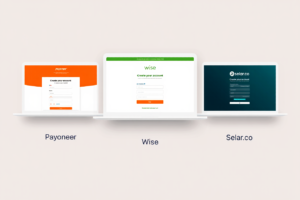
This is the step most beginner hustlers skip, and it costs them later. Your “infrastructure” is the set of tools and accounts that let you operate professionally and receive payment.
Essential infrastructure for Nigerian online side hustlers:
- Payoneer account: Free to create, accepts dollar payments from Upwork, Fiverr, and hundreds of other platforms. Withdraw to your Nigerian bank account in naira.
- Wise account: Excellent for receiving payments from UK and European clients. Low conversion fees compared to traditional banks.
- Paystack or Flutterwave account: For receiving naira payments from Nigerian clients. Both are free to set up and trusted by buyers.
- Professional email address: A free Gmail with your name (not “coolboy2015@gmail.com”) signals professionalism.
- LinkedIn profile: Even if you are not job hunting, LinkedIn is where international clients verify freelancers. A complete profile builds trust instantly.
- Simple portfolio: A free Google Sites page or Notion portfolio showing 2 to 3 samples of your work is enough to start. You do not need a paid website.
Setting all of this up takes roughly one full afternoon. Do it once, and you are equipped to receive clients and payments from anywhere in the world.
Step 4: Earn Your First N50,000 Online (Proof of Concept)
The fourth step is psychological as much as it is practical. Until you personally receive your first online payment, side hustling feels abstract and theoretical. The moment that first N50,000 (or equivalent in dollars) hits your account from something you built yourself, your relationship with money changes permanently.
Here is how to reach your first N50,000 online as fast as possible:
For service-based hustles (writing, VA, design, tutoring):
- Send 10 genuine, personalized pitches or applications per day for 7 days
- Offer a slightly lower rate on your first 2 to 3 jobs to collect reviews fast
- Over-deliver on every early job. One five-star review is worth 10 pitches.
- After 3 reviews, raise your rates by 20 to 30%
For product-based hustles (reselling, digital products):
- List a minimum of 20 products in your first week (Jumia and Konga reward active listers)
- Post to your WhatsApp status daily with clear photos and honest pricing
- Join 5 to 10 active buying/selling WhatsApp groups in your city and post daily
For content-based hustles (affiliate, YouTube, social media):
- Publish content every single day for the first 30 days, even if it is short
- Focus one niche: finance tips for Nigerians, food recipes, tech reviews, or career advice
- Include a clear product recommendation or affiliate link in every post
The N50,000 milestone is not just money. It is proof that your effort can generate income outside a salary. That proof is priceless.
Step 5: Master One Side Hustle Before Adding a Second
This step goes against the hustle culture advice you see everywhere online. Everyone is telling you to “have multiple streams of income.” That is excellent advice for year two. In year one, it is a trap.
Every new hustle requires a learning curve. Time to understand the platform. Time to build a reputation. Time to find what works. Splitting your limited hours across three unmastered hustles means you get mediocre results in all three.
The correct sequence is: one hustle to N200,000 per month, then diversify.
Once your first hustle is generating consistent, somewhat predictable income and you have systems in place (templates, rate sheets, a portfolio, repeat clients), you have earned the right to add a second stream.
At that point, choose a hustle that complements rather than competes with your first. For example, a freelance writer who builds an audience can naturally add affiliate marketing or a writing course as a second stream. A virtual assistant who learns social media management can package both services together.
Step 6: Protect Your Side Hustle Income Like a Business Owner
Most Nigerian side hustlers make a critical error: they treat hustle income as “bonus money” and spend it carelessly. They do not separate it from their salary. They do not track it. They do not save or reinvest any of it.
This is the surest way to stay on the hamster wheel permanently.
Once your side hustle starts generating regular income, treat it like a small business from the start:
Open a dedicated account: Keep your hustle income completely separate from your salary account. This makes tracking simple and prevents the money from disappearing into daily expenses.
Apply the 50/30/20 rule to hustle income:
- 50% reinvestment (better tools, courses to upgrade your skills, small ads to grow faster)
- 30% savings (build that emergency fund you never had)
- 20% reward (yes, treat yourself, but intentionally, not impulsively)
Track every naira: A simple Google Sheets spreadsheet showing income, expenses, and profit per month is enough. You do not need accounting software to start.
According to Investopedia’s guide to building multiple income streams, the most reliable path to financial independence involves systematically treating every income source with the same discipline and structure as a primary business, regardless of size. Nigerian workers who apply this principle to their side hustles consistently outperform those who treat hustle income as casual money.
Step 7: Build Toward Financial Independence, One Naira Stream at a Time
The final step is the long game. This is where you transition from “surviving” to actually building something.
Financial independence in the Nigerian context does not mean you never work again. It means your non-salary income is large enough that losing your job would not be a crisis. For most Nigerian workers, reaching N200,000 to N500,000 per month in side hustle income alongside their salary creates that cushion.
Beyond that, the goal is to create at least one income stream that generates money while you sleep or rest. These are called passive income streams, and the most realistic ones for Nigerians right now include:
- Digital product sales: An ebook or template you create once and sell on Selar.co or Gumroad indefinitely
- Affiliate marketing: Blog posts or social media content that recommends products and earns commissions long after you publish them
- Online course revenue: A recorded course on Udemy, Selar, or your own site that sells while you are at your day job
- Rental income from content: YouTube videos that generate ad revenue months or years after upload
None of these are overnight. All of them compound over time. The Nigerian freelancers and content creators earning N1,000,000 per month today started somewhere around N30,000 per month two or three years ago. The difference is they did not stop.
The 7-Step Escape Plan: Comparison of Side Hustles at Each Stage
| Escape Step | Best Online Side Hustle Match | Monthly Earnings Potential | Time to First Naira | Startup Cost | Works for Nigeria? |
|---|---|---|---|---|---|
| Step 2: First Hustle | Freelance Writing | N80K – N600K | 1–4 weeks | Free | Yes |
| Step 2: First Hustle | Virtual Assistance | N100K – N800K | 1–3 weeks | Free | Yes |
| Step 2: First Hustle | Online Tutoring | N60K – N400K | Immediate | N10K–N25K | Yes |
| Step 2: First Hustle | Graphics Design | N75K – N1,000,000 | 2–6 weeks | Free | Yes |
| Step 2: First Hustle | Reselling (Jumia/WhatsApp) | N80K – N1,000,000 | 1–2 weeks | N20K–N50K | Yes |
| Step 5: Second Stream | Affiliate Marketing | N50K – N2,000,000 | 2–6 months | Free | Yes (Expertnaire) |
| Step 7: Passive Income | Digital Product Sales | N100K – N3,000,000 | 2–8 weeks | Free | Yes (Selar.co) |
| Step 7: Passive Income | Online Courses | N200K – N5,000,000 | 1–3 months | N10K–N30K | Yes (Selar/Udemy) |
| Step 7: Passive Income | YouTube Ad Revenue | N50K – N2,000,000 | 6–12 months | Free | Yes |
| Step 7: Passive Income | Blogging + AdSense | N80K – N3,000,000 | 6–18 months | N20K–N50K | Yes |
30-60-90 Day Beginner Roadmap
This roadmap assumes you are starting from zero: no clients, no portfolio, no hustle income yet.
Days 1 to 30: Foundation
- Day 1 to 3: Choose your first hustle. Set up all payment accounts (Payoneer, Wise, Paystack). Create your professional email and LinkedIn profile.
- Day 4 to 7: Build your portfolio. Create 3 sample pieces of work (3 blog posts, 3 design samples, or 3 tutor lesson plans). Upload to a free Notion or Google Sites page.
- Day 8 to 30: Send 10 proposals, pitches, or applications daily. Follow up professionally. Aim to close your first 2 to 3 paying clients by day 30.
Target by end of Month 1: First N30,000 to N80,000 earned. First reviews collected.
Days 31 to 60: Momentum
- Raise your rates by 15 to 25% based on early reviews
- Aim for 4 to 6 active clients or consistent weekly orders
- Start a simple spreadsheet to track income and expenses
- Begin learning one advanced skill (SEO for writers, Figma for designers, Shopify for resellers)
Target by end of Month 2: N80,000 to N200,000 per month. A growing portfolio.
Days 61 to 90: Scale
- Identify your best-performing service or product and double down on it
- Ask satisfied clients for referrals actively
- Join 2 to 3 communities of Nigerian professionals doing the same hustle (Facebook groups, Telegram channels)
- Start building an email list or social media following related to your niche
Target by end of Month 3: N150,000 to N400,000 per month from hustle income. Enough to cover at least one major monthly expense independently of your salary.
Common Mistakes Nigerian Hustlers Make (And How to Avoid Them)
Mistake 1: Joining a “Network Marketing” Scheme Instead of Building a Real Hustle
If someone asks you to recruit others to earn, and your income depends on those recruits rather than actual product sales to real customers, you are in a pyramid scheme, not a side hustle. These are legal in appearance but destructive in practice. Avoid them completely.
Mistake 2: Waiting Until You “Have Time”
The average Nigerian adult does not have spare time lying around. You have to carve out hustle time. Start with 1 to 2 hours per day. Early mornings before work. Late evenings. Weekends. If you wait for free time to appear, it never will.
Mistake 3: Giving Up After the First Rejection or Slow Week
Every freelancer gets ignored. Every reseller has dead stock weeks. Every content creator goes through periods of low engagement. This is not a sign that the hustle does not work. It is a sign that you are in the normal early phase. The difference between people who earn and people who do not is simply that earners keep going past the discouraging early stage.
Mistake 4: Not Tracking Your Money
You cannot manage what you do not measure. Even a simple note of “Monday: N15,000 from client A. Tuesday: N8,000 from Jumia sale” is enough to start. Tracking reveals what is working, what is not, and whether you are actually growing or just spinning your wheels.
Mistake 5: Spending Hustle Income Before It Arrives
This is a Nigerian cultural habit worth acknowledging. Once people know you have a hustle, “loans” and “emergencies” multiply. Family pressure is real. But if you spend every naira before you can reinvest or save, you never exit the cycle. Set firm (and kind) boundaries about what your hustle income can and cannot be used for.
Mistake 6: Trusting Platforms Without Verifying Them
Legitimate platforms do not ask you to pay to join. If a “side hustle opportunity” requires a registration fee, activation fee, or upfront investment before you can earn, it is almost certainly a scam. Stick to platforms with established track records: Upwork, Fiverr, Selar, Jumia, Udemy, Preply.
Pro Tips to Increase Your Hustle Earnings Faster
Tip 1: Niche Down Immediately
“Freelance writer” is a common thing. “Freelance writer specializing in personal finance content for Nigerian fintech companies” is a rare and valuable thing. The more specific your positioning, the less competition you face and the higher your rates can go.
Tip 2: Build in Public
Share your journey online. Post about what you are learning, what you are building, what is working. Nigerians follow other Nigerians who are honest and relatable. Your transparency becomes your marketing.
Tip 3: Get Testimonials Aggressively
After every satisfied client or customer, ask for a brief testimonial. A 2-sentence review saying “Adaeze delivered a 1,500-word blog post in 24 hours and it was exactly what we needed” is worth more than any ad you could run.
Tip 4: Use Dollar Pricing Where Possible
Services priced in dollars protect you from naira devaluation. A $100 service in January is still $100 in December, even if the naira has moved against the dollar in the interim. Invoice international clients in dollars whenever the platform allows it.
Tip 5: Invest in One Paid Course Per Quarter
Free YouTube tutorials are valuable, but a well-structured paid course on a specific skill (Udemy courses regularly go on sale for N2,000 to N5,000) can compress a 3-month learning curve into 2 weeks. That time savings is worth far more than the course fee.
Frequently Asked Questions
Can I really make meaningful money from an online side hustle in Nigeria? Yes, and thousands of Nigerians are already doing it. Meaningful in this context means income that covers at least one major monthly expense. That threshold is achievable within 30 to 90 days for most service-based hustles with consistent effort.
Do I need a laptop to start an online side hustle in Nigeria? Not necessarily. Many Nigerian hustlers started entirely on a smartphone. WhatsApp-based businesses, social media management, basic data entry, and even some forms of content creation are viable on mobile. A laptop expands your options significantly but is not a barrier to starting.
How do I receive dollar payments as a Nigerian? Payoneer and Wise are the two most reliable options. Both are free to create, accept payments from major freelance platforms, and allow naira withdrawal to Nigerian bank accounts. Payoneer is slightly more widely accepted across platforms.
Is affiliate marketing legal in Nigeria? Yes, completely. Affiliate marketing is simply earning a commission for recommending a product or service. It is the same principle as a referral bonus, digitized. Platforms like Expertnaire, Jumia Affiliate, and international programs like Amazon Associates all operate legally in Nigeria.
How many hours per week do I need to start a side hustle? As few as 7 to 10 hours per week at the start. That is roughly 1 to 1.5 hours per day. As income grows and you find what works, you can increase hours. The key is consistency over volume.
What if I start and fail? Failing at one approach is data, not defeat. A freelancer who pitches 50 clients and gets zero responses has learned something specific about their pitch, their niche, or their pricing that a person who never tried cannot know. Adjust the variables and try again.
How long before a side hustle replaces my salary? For most Nigerian side hustlers, reaching salary-level income takes 6 to 18 months of consistent effort. For some, it happens faster. For others, it takes longer. The range depends on the hustle type, the time invested, and the skills developed. The important thing is that it is measurable and achievable.
Risks and Realistic Expectations: What the Instagram Posts Will Not Tell You
The side hustle space in Nigeria has a glossy, aspirational face on social media and a much more complicated reality off-screen.
Income Is Irregular at First
Freelance and hustle income does not arrive on the 25th of every month. It arrives when clients pay, when orders convert, when content gains traction. This irregularity can be deeply stressful if you are depending on it to survive. This is why the escape plan starts with budgeting and an emergency fund before full dependence on hustle income.
Scams Are Everywhere and Getting Smarter
The “investment platforms” promising 30% weekly returns. The “export business” requiring upfront fees. The “data jobs” that pay you to “click ads” for N500 per hour but require a N15,000 “activation.” These are all scams. In 2024, Nigerians lost billions of naira to online financial fraud according to the EFCC (Economic and Financial Crimes Commission). The rule is simple: if money moves out of your pocket before money comes in, walk away.
Power and Internet Are Business Costs
Stable electricity and reliable internet are not givens in Nigeria. Budget N10,000 to N20,000 per month for data, a backup power source, and, if necessary, co-working space access for high-bandwidth work like video calls or large file uploads. These are operating expenses, not luxuries.
According to the World Economic Forum’s research on the future of work, freelancing and self-employment are among the fastest-growing work categories globally, particularly in emerging markets. But they also carry real risks: income volatility, lack of benefits, and the need for self-discipline that employment structures provide.** Knowing these risks in advance lets you plan for them rather than be surprised by them.
Hustle Fatigue Is Real
Working a full-time job by day and building a side hustle by night is genuinely hard. There will be weeks when motivation disappears, when clients ghost you, and when nothing seems to be working. This is not failure. It is the normal rhythm of building something from scratch. Rest is not the enemy of productivity. Burnout is.
Conclusion: The Broke-Before-Payday Cycle Ends When You Decide It Does
Eighty-three percent of Nigerian workers running out of money before the month ends is not an accident. It is the predictable result of a high-inflation, low-wage, single-income economy built on systems that were never updated to serve the people inside them.
But the internet has changed one fundamental thing: geography no longer fully controls your income ceiling.
A teacher in Akure can tutor students in Canada. A designer in Owerri can brand businesses in the UK. A content writer in Jos can serve clients in the US. A young mother in Ibadan can sell digital templates to buyers across Africa while her children sleep.
The gap between financial stress and financial stability, for most Nigerian workers, is not a miracle. It is a decision, followed by a system, followed by consistent daily action.
The seven steps in this article are not theory. They are a sequence that works. Budget first. Start one hustle in 72 hours. Build your payment infrastructure. Earn your first N50,000. Master one thing before adding another. Treat your hustle like a business. Build toward passive income over time.
That is the map. What you do with it is entirely up to you.
Start Today: Your First Move in the Next 10 Minutes
Do not bookmark this article and move on. Take one action before you close this tab.
Open Payoneer.com or Selar.co right now and start creating your free account. It takes less than 10 minutes and it is the single most important first step for any Nigerian serious about online income.
Then come back to Step 2, pick your hustle, and make it official.
Which of the 7 steps are you starting with today? Drop your answer in the comments below. If you are already in the middle of your hustle journey, share what is working for you. Someone reading this right now needs to see your story.
This article was written by a Nigerian financial content strategist and digital income consultant. All income figures are drawn from platform data, community reporting, and direct client experience within the Nigerian freelance and digital economy as of 2025. For updates on Nigerian digital income opportunities, bookmark this page and follow along.