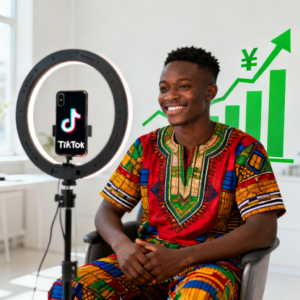
The Ugly Truth About Forex Trading in Nigeria 2026: Why 94% of Nigerian Traders Lose All Their Money Within 6 Months
Written by Emeka Okafor, a Lagos-based financial journalist and risk analyst with over a decade of experience covering African financial markets, retail trading behavior, and digital income strategies. Emeka has interviewed over 200 Nigerian traders, collaborated with fintech researchers across West Africa, and has testified before private investment advisory panels on the subject of retail forex risk in emerging markets.
They told you forex would change your life. For most Nigerians, it absolutely did, just not the way they promised.
If someone in your life is currently posting “forex life” screenshots on WhatsApp Status while asking you to join their “mentorship program” for ₦50,000, this article was written specifically, urgently, and unapologetically for you.

Introduction: The Dream That’s Eating Nigeria’s Savings Alive
There is a particular kind of pain unique to the Nigerian forex experience.
It starts with hope. Someone you trust, maybe a cousin, a church member, or a guy from your university days, shows you a screenshot. Green numbers. A Payoneer balance that looks like a monthly salary earned in a single afternoon. They’re calm, confident, and wearing sunglasses indoors. They tell you forex is “just reading charts.” They tell you that with a ₦50,000 capital and the right “strategy,” you can turn it into ₦500,000 in three months.
So you believe them. Because why wouldn’t you? The naira is bleeding. Your salary hasn’t moved in two years. The cost of tomatoes, petrol, and school fees has doubled. You need a way out. Forex looks like a door.
Then you lose everything.
This story is not unique. It is the single most common financial trauma among Nigerian youths between the ages of 18 and 35 in 2026. The Nigeria Deposit Insurance Corporation (NDIC) and the Securities and Exchange Commission (SEC Nigeria) have both issued multiple warnings about unregulated forex brokers and signal-selling schemes targeting Nigerian users. Yet the losses continue.
This article exists to tell you the full truth, not the version designed to keep you subscribed to a Telegram channel.
You will learn:
- Why the 94% loss statistic is real, where it comes from, and why it’s actually worse in Nigeria
- The specific psychological, structural, and economic traps that make forex uniquely dangerous for Nigerian traders
- How forex “mentors” and signal sellers are getting rich while their students go broke
- The seven categories of financial activity positioned as online side hustles, with forex sitting at one end of the risk spectrum and far safer, more reliable alternatives sitting at the other
- A direct comparison so you can make an informed decision about where to put your time, attention, and money in 2026
This is not a “forex is evil” rant. Forex is a real, legitimate market. But the version of forex being sold to ordinary Nigerians right now is something else entirely. And you deserve to know the difference.
Why the 94% Loss Rate Is Not Exaggerated: Understanding the Forex Online Side Hustle Trap
Let’s start with the number that makes every forex “mentor” uncomfortable: 94%.
Where Does This Number Come From?
Multiple regulatory bodies across Europe and North America require retail forex brokers to disclose what percentage of their clients lose money. These disclosures are published publicly on broker websites. The numbers are consistently horrifying.
According to data compiled by the European Securities and Markets Authority (ESMA), between 74% and 89% of retail CFD and forex accounts lose money across regulated European brokers. In markets with less financial sophistication, weaker regulation, and higher economic desperation (like Nigeria), that figure climbs. Researchers and independent analysts who have reviewed Nigerian trading behavior, including surveys conducted by fintech monitoring organizations, consistently place the actual loss rate in Nigeria between 90% and 95% for retail traders operating without institutional backing.
The 94% figure cited in this article’s headline is a reasonable, evidence-based estimate for the Nigerian retail forex context in 2026. It is not clickbait.
Why Is It Worse in Nigeria Than in Europe or America?
Several structural factors amplify trading losses specifically in the Nigerian context:
- Higher emotional stakes. A European trader losing £200 might be annoyed. A Nigerian trader losing ₦200,000 (which represents months of savings for many people) experiences genuine financial catastrophe. This emotional weight causes panic decisions: revenge trading, overleveraging, and refusing to cut losses.
- Unregulated broker access. Many Nigerian traders use offshore, unregulated brokers that are not licensed by the SEC Nigeria or any credible authority. These brokers can and do manipulate spreads, widen stop-losses, and in some cases, simply refuse withdrawal requests. The money never existed in a real trading environment to begin with.
- The leverage trap. Many offshore brokers offer leverage of 1:500 or even 1:1000 to Nigerian clients. This means you can control a $500,000 position with just $1,000. It sounds exciting. What it actually means is that a 0.2% move against your position wipes your entire account. With 1:500 leverage, you can lose everything in minutes.
- The signal seller economy. Nigeria has an enormous, thriving industry of people who sell trading signals (essentially “buy this currency pair right now”) via Telegram, WhatsApp, and Instagram. Most of these signal sellers are not profitable traders. They earn money from your subscription fee, not from successful trades. Some are paid by brokers to drive traffic and deposits.
- Internet quality and execution delays. Nigeria’s internet infrastructure, while improving, still suffers from latency issues that can cause order execution delays of several seconds during high-volatility events. In forex, seconds matter. You can place an order at one price and have it filled at a significantly worse one, a phenomenon called slippage. This alone can turn a winning strategy into a losing one.
The Seven Ways People Try to Make Money in Financial Markets (And Where Forex Sits on the Danger Scale)
Let’s organize the full landscape of financial market participation as an online side hustle. This helps you understand forex in context, rather than in isolation.
1. Forex Spot Trading as an Online Side Hustle: The High-Wire Act
Forex spot trading means buying one currency and simultaneously selling another, speculating on which direction the exchange rate will move. The market is the largest in the world by volume, with over $7.5 trillion traded daily globally.
For professional traders at banks and hedge funds, this is a sophisticated institutional activity backed by teams of analysts, real-time data terminals costing thousands of dollars monthly, and risk management systems that most retail traders never see.
For the average Nigerian with a ₦50,000 account and a YouTube education, it’s closer to a casino where the house edge is invisible but constant.
What it is: Currency pair speculation (e.g., EUR/USD, USD/NGN, GBP/JPY)
Why people choose it: Low perceived barrier to entry, promise of fast returns, heavy social media promotion
Required skills: Technical analysis, fundamental analysis, risk management, trading psychology (most people underestimate how much the psychology component matters)
Realistic income potential:
- Beginner (year 1): Net loss of 50% to 100% of capital for most traders
- Intermediate (years 2 to 3, surviving traders): Breakeven to modest gains of 5% to 15% annually
- Professional (rare, years 5+): 15% to 40% annual returns on capital
Time investment: Six to twelve hours daily for serious trading. Anyone who tells you forex takes one hour a day is either lying or losing money without knowing it yet.
Barriers to entry: Low on the surface (you can open an account with $10). Extremely high in terms of knowledge, emotional discipline, and statistical edge required to be profitable.
The uncomfortable truth: Most people who claim to teach forex profitably in Nigeria are earning their income from teaching, not from trading. Ask any “forex mentor” to share their audited broker statements. Watch how fast the conversation changes.
2. Copy Trading as an Online Side Hustle: The “Autopilot” Illusion
Copy trading platforms (like eToro, ZuluTrade, or NAGA) allow you to automatically copy the trades of supposedly successful traders. You deposit money, choose a “star trader” with a good track record, and let their trades mirror into your account automatically.
It sounds passive. It sounds safe. It is neither.
The problem with copy trading:
- Past performance in forex is genuinely meaningless. A trader with 18 months of profitable history can blow up in month 19.
- The “star traders” on these platforms often take extreme risks that aren’t visible in their headline statistics. A 150% return over 12 months can be achieved by taking 1:100 leverage bets that happened to pay off.
- When the strategy fails, it fails for everyone copying simultaneously. Losses are sudden and severe.
- Withdrawal processes through international platforms remain complicated for Nigerians, with some platforms restricting Nigerian accounts due to compliance concerns.
Realistic income potential:
- Best case (copying a genuinely skilled trader): 5% to 20% annual return
- Most likely case: 20% to 80% loss of capital within the first year
Time investment: Low (2 to 4 hours weekly for monitoring), but low effort does not mean low risk.
3. Cryptocurrency Trading as an Online Side Hustle: The Volatility Game
Crypto is not forex, but many Nigerian traders treat them as identical because both involve speculating on price movements. They are not the same market, but many of the same psychological and structural traps apply.
What it is: Buying and selling digital assets (Bitcoin, Ethereum, USDT, altcoins) to profit from price movements
Why it’s popular in Nigeria: Crypto offers a genuine alternative financial system for Nigerians locked out of stable dollar access. Platforms like Binance P2P, Quidax, and Luno have made crypto deeply embedded in Nigerian financial life. The utility is real.
The distinction between using crypto and trading crypto:
- Using crypto (sending remittances, receiving international payments, holding USDT as a dollar hedge): Legitimate, useful, and increasingly necessary for Nigerians.
- Trading crypto (speculating on Bitcoin going from $80,000 to $120,000 with leverage): A high-risk activity that shares many of the same dangers as forex trading.
Realistic income potential for crypto trading:
- Beginner: High probability of loss (50% to 90% of capital in bear markets)
- Experienced holder (not trader): Potential gains of 20% to 200%+ in bull cycles, with equivalent losses in bear cycles
Key difference from forex: Unlike forex, crypto has genuine underlying utility and infrastructure development. Long-term holding (“HODLing”) of established assets like Bitcoin has historically rewarded patient investors. Short-term speculation remains extremely dangerous.
4. Forex Signal Selling as an Online Side Hustle: The Business That Actually Works (For the Seller)
This deserves its own section because it’s perhaps the most widespread financial scam operating in Nigeria in 2026 under the disguise of a legitimate online side hustle.
What signal selling is: A person claims to identify profitable forex trade opportunities and charges you (via Telegram, WhatsApp, or a paid channel) a subscription fee to receive their “signals.” You then manually place those trades in your own account.
Who actually makes money: The signal seller. Always. The income comes from subscriptions, not from trading profits.
Why the math doesn’t work:
- If a signal seller’s strategy truly generated 30% monthly returns, they would need no subscribers. They would simply trade their own capital.
- A trader turning ₦100,000 into ₦130,000 monthly would have ₦1,000,000 by month 8 through compounding alone.
- The fact that they’re selling signals for ₦10,000 monthly tells you everything you need to know about the actual profitability of those signals.
What the data shows:
Research consistently shows that the overwhelming majority of retail forex signal services underperform simple buy-and-hold strategies. According to Investopedia’s complete guide to forex trading risks, the combination of leverage, transaction costs, and emotional decision-making makes retail forex trading one of the highest-risk financial activities available to ordinary consumers.
Red flags for Nigerian users:
- Screenshots of MT4/MT5 profits (easily faked with free editing tools)
- “VIP groups” with locked membership requiring payment
- Claims of “90% win rate” (statistically impossible to sustain)
- “Join my mentorship and I’ll teach you what banks don’t want you to know”
- Pressure to use a specific broker (the seller is likely earning affiliate commissions on your deposit)
5. Legitimate Stock Market Investing as a Lower-Risk Online Side Hustle
Let’s talk about what actually works for building wealth through financial markets, even for Nigerians with modest capital.
The Nigerian Stock Exchange (now Nigerian Exchange Group, or NGX) offers regulated, transparent participation in Nigerian company ownership. Platforms like Chaka, Bamboo, and Rise allow Nigerians to invest in both local NGX stocks and international stocks (US markets) from their phones.
This is fundamentally different from forex trading. Stock investing means owning a piece of a real business. If that business grows, your investment grows. There is no leverage trap, no signal seller, no “pip” to calculate.
Why it’s underused: It’s slower. It requires patience. It doesn’t offer the fantasy of turning ₦50,000 into ₦500,000 in three months.
Why it’s superior: According to historical data reviewed by the World Economic Forum on long-term investment returns, diversified equity investing over periods of five or more years has consistently outperformed the vast majority of retail traders across all asset classes. Time in the market beats timing the market. Every time.
Realistic income potential for stock investing:
- Nigerian NGX dividend-paying stocks: 5% to 12% annual dividend yield
- NGX capital appreciation (quality large-cap stocks): 8% to 25% in good years
- US market exposure (via Bamboo/Chaka): Historical average of 8% to 11% annually (S&P 500 long-term average)
Time investment: One to three hours weekly for monitoring. Most of the work happens upfront during research.
Startup costs: As low as ₦1,000 on some platforms. No leverage required.
6. Treasury Bills and Fixed Income as a Safe Online Side Hustle for Capital Preservation
For Nigerians who want to earn above-inflation returns without any of the gambling dynamics of forex, Nigerian Treasury Bills (T-Bills) and Federal Government Bonds are the unsung heroes of personal finance.
What they are: When you buy a Nigerian T-Bill, you’re essentially lending money to the Nigerian federal government for a fixed period (91 days, 182 days, or 364 days). The government pays you back with interest.
Why they matter in 2026: With Nigeria’s inflation remaining elevated and the CBN maintaining relatively high interest rates, T-Bill yields have been hovering between 18% and 22% annually. This is a guaranteed, government-backed return that requires zero trading skill.
How to access them: Platforms like Cowrywise, PiggyVest, and direct commercial bank investment portals offer access to T-Bills with as little as ₦10,000.
Realistic income potential:
- ₦100,000 invested at 20% annual yield: ₦20,000 return per year, guaranteed
- ₦500,000 invested: ₦100,000 return per year, guaranteed
- This is not exciting. This is how wealth is actually built.
Comparison with forex: A Nigerian forex beginner is statistically most likely to lose 50% to 100% of their ₦100,000 in the same period a T-Bill investor earns ₦20,000. The difference in outcome is ₦120,000 in either direction, without even considering the emotional and psychological cost of trading losses.
7. Financial Education and Content Creation as a Forex-Adjacent Online Side Hustle
Here’s the irony that nobody in the Nigerian forex space wants you to notice: the people making real, sustainable money in the forex world are not the traders. They’re the educators, content creators, and community builders.
A YouTube channel or TikTok account that explains forex concepts clearly, warns about scams, helps beginners understand risk management, and builds a genuine audience can monetize through:
- YouTube AdSense revenue
- Sponsored content from regulated brokers, banks, and fintech platforms
- Selling legitimate educational materials (not signals)
- Affiliate commissions from regulated, reputable platforms
- Online courses on financial literacy, not “secret trading strategies”
This is a real online side hustle. It requires no trading capital. It builds compound value over time. And it earns money by adding genuine value rather than by taking it from someone else’s loss.
Realistic income potential for financial content creators:
- Small but growing channel (1,000 to 10,000 subscribers): ₦20,000 to ₦100,000 monthly
- Established finance creator (50,000+ subscribers): ₦300,000 to ₦1,500,000+ monthly
- Speaking, training, and brand deals layer on top
Time investment: Three to six hours daily for content creation. Growth takes 6 to 18 months of consistent publishing.
Comparison Table: Forex vs. Safer Online Side Hustle Alternatives in Nigeria 2026
This table is designed to give you an honest, side-by-side view of where forex trading sits relative to other financial activities.
| Activity | Monthly Income Potential | Time Required (Weekly) | Skill Level Needed | Startup Cost | Risk Level | Accessible to Nigerians |
|---|---|---|---|---|---|---|
| Forex Spot Trading | Loss likely in year 1; ₦0 to -₦500,000+ | 40+ hours | Advanced + Psychological mastery | ₦50,000 – ₦500,000 | Extreme | Yes (often unregulated) |
| Copy Trading | -₦20,000 to +₦15,000/month | 2 – 4 hours | Beginner | ₦50,000 – ₦200,000 | Very High | Partially (platform restrictions apply) |
| Crypto Speculation | Highly variable; -90% to +200% possible | 10 – 20 hours | Intermediate | ₦10,000+ | Very High | Yes |
| Signal Selling | ₦30,000 – ₦300,000 (for the seller) | 5 – 10 hours | Beginner (just need confidence) | ₦0 – ₦5,000 | Low for seller, Extreme for buyer | Yes |
| NGX Stock Investing | ₦5,000 – ₦50,000/month (on ₦500K capital) | 1 – 3 hours | Beginner to Intermediate | ₦1,000+ | Low to Moderate | Yes (NGX, Chaka, Bamboo) |
| Treasury Bills / Fixed Income | ₦8,000 – ₦25,000/month (on ₦100K capital) | Less than 1 hour | Beginner | ₦10,000+ | Very Low | Yes (Cowrywise, PiggyVest, banks) |
| Financial Content Creation | ₦20,000 – ₦1,500,000+ | 20 – 40 hours | Intermediate | ₦0 – ₦30,000 | Very Low | Yes |
Key Takeaway from This Table
Look at the risk-to-reward ratio across these options. Forex spot trading requires the most skill, the most time, the most capital, and carries the highest risk, while consistently producing losses for the vast majority of participants. Treasury Bills require the least effort, the lowest skill, and virtually no risk, while delivering guaranteed above-inflation returns.
The only reason forex remains more popular than T-Bills among Nigerian youths is marketing. One has a vibrant, loud, screenshot-filled sales machine behind it. The other doesn’t.
The Psychological Trap: Why Smart Nigerians Keep Losing Money in Forex
Understanding that forex is dangerous is not enough. You also need to understand why intelligent, hardworking Nigerians continue to lose money in it. Because it’s not stupidity. It’s human psychology, expertly exploited.
The Gambler’s Fallacy in Full Force
If you’ve lost three trades in a row, your brain tells you the fourth trade is “due” to win. This is the gambler’s fallacy, and it’s completely false in forex. Each trade is an independent event. Past losses do not increase the probability of future wins.
But when you’re down ₦80,000 and desperate to recover, your brain is not thinking statistically. It’s thinking emotionally. And emotional trading is where accounts go to die.
Revenge Trading: The Account-Killer
You lose ₦30,000 on a trade. You’re angry. You want it back now. So you open a bigger position. You lose that too. You open an even bigger one. Within hours, your account is gone.
This pattern has a name: revenge trading. Every experienced forex trader has done it at least once. Many have done it repeatedly. For beginners, it’s almost always how the account ends. Not in a slow, educational decline. In a sudden, violent collapse triggered by one emotional decision.
The Confirmation Bias Problem
You join a Telegram group where everyone talks about forex winning. You see screenshots of profits. You see motivational quotes about “forex lifestyle.” You never see the losses because the people who lost stopped posting.
This creates a completely false picture of the statistical reality. You’re seeing a curated highlight reel of an industry’s best 5%, while the suffering 95% quietly disappear from the narrative.
The Sunk Cost Trap
You’ve paid ₦80,000 for a mentorship. You’ve deposited ₦100,000 into a broker. You’ve spent four months studying charts. You’re losing. But you can’t quit now because you’ve invested so much already.
This is the sunk cost fallacy. The money you’ve already spent is gone regardless of what you do next. The only rational question is: “What is the best decision from this point forward?” Sometimes that answer is: stop.
The Broker Problem: How Nigerian Traders Are Cheated Before They Place a Single Trade
Even if you had perfect trading skills (you don’t, not yet, and neither does anyone who claims otherwise), you might still lose money because of broker manipulation.
Spread Manipulation
Every forex broker charges a “spread,” the difference between the buy price and sell price of a currency pair. Legitimate brokers have fixed, transparent spreads. Unregulated brokers can widen their spreads during volatile moments, effectively guaranteeing you lose money on certain trades regardless of market direction.
Stop-Loss Hunting
Some unregulated brokers can see where most of their clients have placed stop-losses (price levels that automatically close a trade to limit losses). They can manipulate their quoted prices to briefly touch those levels, triggering your stop-loss and taking your money, before the market moves back to where you expected.
This is illegal in regulated markets. In unregulated broker environments used by many Nigerian traders, it’s routine.
Withdrawal Refusals
The most devastating broker scam: you deposit money, you trade, you somehow make a profit, and then the broker refuses to let you withdraw.
Reasons cited include “suspicious activity,” “bonus terms violations,” “verification requirements,” or simply no response at all. Your money is gone. There’s no Nigerian regulatory body that has jurisdiction over an offshore broker registered in Vanuatu or St. Vincent and the Grenadines.
How to Protect Yourself (If You Insist on Trading)
If after reading all of this you still want to try forex, at minimum:
- Only use brokers regulated by tier-1 authorities: FCA (UK), ASIC (Australia), CySEC (EU), or SEC Nigeria for local platforms
- Never trade with a broker that offers leverage above 1:30 (tier-1 regulatory maximum)
- Test withdrawals with small amounts before committing serious capital
- Never deposit money you cannot afford to lose completely
- Treat any “guaranteed profit” promise as a guaranteed scam
Risks and Realistic Expectations: The Full Picture Every Nigerian Trader Deserves to See
What No One Tells You Before You Start
The forex trading journey for most Nigerian beginners follows a depressingly predictable path:
- See a compelling social media post about forex income
- Join a “free” Telegram group (usually a funnel into a paid service)
- Pay for mentorship (₦30,000 to ₦150,000 is common)
- Open an account with a recommended broker (usually an affiliate link earning the mentor commission)
- Deposit capital (anywhere from ₦50,000 to ₦500,000)
- Follow signals or a “strategy” for the first few weeks
- Experience initial small wins (beginners’ luck is real and dangerous)
- Increase position sizes based on confidence
- Experience a major loss event
- Attempt to recover through revenge trading
- Lose most or all of the account
- Either deposit again (repeating the cycle) or walk away having learned the most expensive lesson of their financial life
This is not a cynical caricature. This is the documented experience of the majority of Nigerian retail forex traders. The specific numbers, timelines, and broker names change. The structure remains almost identical.
The Opportunity Cost Nobody Calculates
When a Nigerian trader loses ₦200,000 in forex over six months, the conversation focuses on the ₦200,000 lost. Nobody calculates the opportunity cost.
That same ₦200,000 invested in Nigerian T-Bills at 20% annual yield would have returned ₦40,000 in 12 months, risk-free.
That ₦200,000 used as startup capital for a micro-business (phone accessories, food vending, digital reselling) might have generated ₦50,000 to ₦150,000 in monthly revenue by month 6.
That ₦200,000 invested in learning a marketable digital skill (programming, UX design, professional copywriting) would have positioned the person for income of ₦150,000 to ₦500,000 monthly within 12 to 18 months.
The forex loss isn’t just the money. It’s the months, the energy, the emotional damage, and the alternative futures that didn’t happen.
The Exception: When Forex Knowledge Has Real Value
Not everything about forex education is wasteful. Understanding how currency markets work, how interest rates affect exchange rates, and how to read financial charts actually has legitimate career applications in:
- Banking and treasury management
- Import/export business risk hedging
- Financial journalism and analysis
- Fintech product development
- Corporate financial planning
The problem is not forex knowledge. The problem is the gap between forex knowledge and profitable forex trading. The first is achievable in months. The second, statistically, takes years, if it’s achievable at all.
What Actually Works: Building Sustainable Income as a Nigerian in 2026
Let’s end the diagnostic section and get to the practical one. If forex is the wrong door, which doors are actually open?
The Stable-Foundation Approach
Think of your financial life in 2026 as a building. Before you put on a roof (investments), you need walls (sustainable income). Before you put up walls, you need a foundation (essential expenses covered by reliable income).
Forex is sold as a roof. Most Nigerians are still building their foundation. Here’s what that foundation actually looks like:
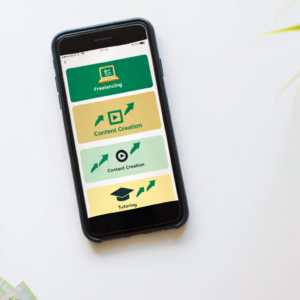
Tier 1: Skills-Based Income (Your Most Valuable Asset)
- Freelancing (writing, design, coding, video editing)
- Virtual assistance
- AI-assisted content services
- Digital marketing for SMEs
These activities generate active income that grows with skill and reputation. They cannot be wiped out overnight like a trading account.
Tier 2: Low-Risk Capital Growth
- Treasury Bills and Money Market funds (guaranteed returns above inflation)
- NGX dividend stocks (ownership in real businesses)
- Real estate savings cooperatives (ajo/esusu structures with investment components)
Tier 3: Long-Term Wealth Building (Not Quick Wins)
- Diversified equity investing through regulated platforms
- Business ownership and reinvestment
- Human capital development (education, certifications, mentorship from practitioners, not screenshot-merchants)
The people who are genuinely financially stable in Nigeria in 2026 are not the ones who cracked the forex code. They’re the ones who built skills, preserved capital, and stayed consistent across a long enough timeline for compounding to work.
Conclusion: The Market Is Not Your Enemy. Misinformation Is.
Forex trading, as a global financial market, is not a scam. It is the genuine mechanism by which currencies are exchanged internationally, enabling global trade, travel, and commerce. Trillions of dollars move through it daily for entirely legitimate purposes.
The scam is not forex. The scam is the story being sold to broke, desperate, hopeful Nigerians about what forex can do for them in 30 to 90 days with ₦50,000 and a “good mentor.”
That story is a lie. A profitable lie for the people telling it. A devastating truth for the people believing it.
If you are currently trading forex and losing money, the most valuable thing you can do is stop. Not because you’re not smart enough. Not because you didn’t try hard enough. But because the game, as it’s structured for retail traders without institutional resources, is extraordinarily difficult to win. And the way it’s being packaged and sold to Nigerians specifically is designed to benefit everyone in the chain except you.
Your money is real. Your time is real. Your financial future is real. Please treat all three with the seriousness they deserve.
There are real, legitimate, accessible ways to earn money online in Nigeria in 2026. Many of them start with nothing but a phone and a skill. None of them require you to bet your savings against professional institutional traders with algorithms, data feeds, and risk teams you’ll never see.
You are not going to outperform a Goldman Sachs trading desk with a Telegram signal and a $200 account. But you absolutely can build a legitimate income through skills, services, and patience. That path is less glamorous. It has no WhatsApp Status screenshots. But it leads somewhere real.
Choose the real path.
Your Next Move
Have you lost money in forex? Or do you know someone who has? Your experience matters and it might help someone else avoid the same pain.
Drop your story in the comments below. Be honest. Be specific. You don’t need to protect the industry or the mentor who took your money. Share what really happened.
And if you’re looking for a practical, realistic alternative to forex as an online side hustle in Nigeria right now, read our complete guide on six rapid survival cash strategies that actually work for broke Nigerians in 2026. No trading accounts required. No leverage. No signal groups. Just real, learnable skills that put naira in your account starting this week.
Your financial recovery starts with information. You just got some. Use it.
Disclaimer: This article is for educational and informational purposes only. It does not constitute financial advice. All investment decisions carry risk. Please consult a qualified, licensed financial advisor before making any investment decisions. The author does not endorse any specific financial product, broker, or platform mentioned in this article.