Written by Adewale Okonkwo, a fintech business analyst and financial inclusion researcher with over 8 years of experience covering agent banking networks, mobile money ecosystems, and small business development across West Africa.
POS Business in Nigeria 2026: The Insider’s Guide to Making ₦500,000 Monthly With Agent Banking (11 Powerful Secrets Successful Agents Won’t Tell You)
There’s a quiet revolution happening on almost every street corner in Nigeria. And the people cashing in on it are not who you think.
While you’re scrolling past that POS stand near your bus stop without a second glance, the person sitting behind that small table with a phone and a terminal might be earning more than your office manager. Sounds wild? Stick around, because this guide is about to change how you see those little machines forever.
Introduction: Why the POS Business in Nigeria Is the Most Underrated Wealth Builder of 2026
Let’s be honest. Nigeria’s economy has put most of us in survival mode.
Inflation crossed 33% in early 2025 before gradually moderating. The naira has been on a rollercoaster that nobody bought a ticket for. Fuel prices, food costs, rent. Everything keeps climbing. And for millions of Nigerians, one salary simply doesn’t cut it anymore.
But here’s the thing. While many people chase online side hustles that require stable internet, international payment accounts, and skills that take months to develop, a proven business model has been quietly minting millionaires in virtually every local government area across the country.
That business is agent banking. The POS business in Nigeria.
According to the Central Bank of Nigeria’s financial inclusion data, mobile and agent banking transactions surged past ₦8.9 trillion in total value by the end of 2024, representing a year-over-year growth of over 45%. The CBN’s National Financial Inclusion Strategy targets 95% financial inclusion by 2024, and agents are the backbone of that initiative. Even with that deadline passed, the push continues aggressively into 2026 and beyond.
Nigeria has over 1.8 million registered agent banking points as of late 2025. Yet, remarkably, many communities, especially in peri-urban and rural areas, remain underserved. The opportunity isn’t shrinking. It’s expanding.
This guide isn’t a surface-level “how to start POS business” overview. You’ll find those everywhere, and they’re mostly useless. Instead, this is a deep, honest, no-nonsense breakdown of the 11 powerful secrets that the most successful POS agents in Nigeria use to consistently earn ₦500,000 or more every single month.
Some of these secrets are counterintuitive. Some will challenge what you’ve been told. All of them are real, practical, and battle-tested by agents who’ve been in the trenches.
Let’s get into it.
Secret #1: Location Strategy Is Everything in the POS Agent Business
You’ve heard “location, location, location” a thousand times. But in the POS business in Nigeria, most beginners get this wrong in a very specific way.
They set up where there are already five other POS agents within shouting distance. They pick a “busy” area and assume traffic equals transactions. It doesn’t always.
The Real Location Formula
The most successful POS agents don’t just look for foot traffic. They look for “cash deserts.” These are locations where people need cash urgently but have limited access to ATMs or bank branches.
Think about it. A market woman at Oshodi doesn’t need your POS. There are ATMs and banks within walking distance. But a trader at a semi-rural market in Ijebu-Ode, or a resident of a new housing estate in the outskirts of Abuja where banks haven’t set up yet? That’s where real demand lives.
Winning location characteristics include:
- Areas within 500 meters of markets but more than 1 kilometer from the nearest bank branch or functional ATM
- Near transport hubs (motor parks, tricycle stands) where people need quick cash for fares
- Close to hospitals, clinics, or pharmacies where emergency cash needs arise
- Inside or adjacent to churches, mosques, or event centers with high weekend traffic
- University campuses and polytechnic hostels where students need frequent small withdrawals
- Industrial areas and construction sites on paydays
One agent in Owerri shared that she relocated just 300 meters from her original spot, from the main road to a junction near the local market’s back entrance, and her daily transactions tripled within two weeks. Same neighborhood. Different microenvironment.
The 3-Kilometer Rule
Smart agents do a simple exercise before setting up. They walk a 3-kilometer radius around their proposed location and count every POS agent, ATM, and bank branch. If the ratio of potential customers (households, shops, market stalls) to cash access points is high, that’s a green light.
If five POS agents already serve 200 shops in a small market, you’re fighting for scraps. But if two agents serve a housing estate of 3,000 residents? There’s room for you to eat well.
Secret #2: Starting Capital for POS Business in Nigeria Is Lower Than You Think (But You Need a Buffer)
One of the biggest myths about starting a POS agent business is that you need massive capital. In 2026, you don’t.
The Real Numbers
Here’s what a realistic startup budget looks like:
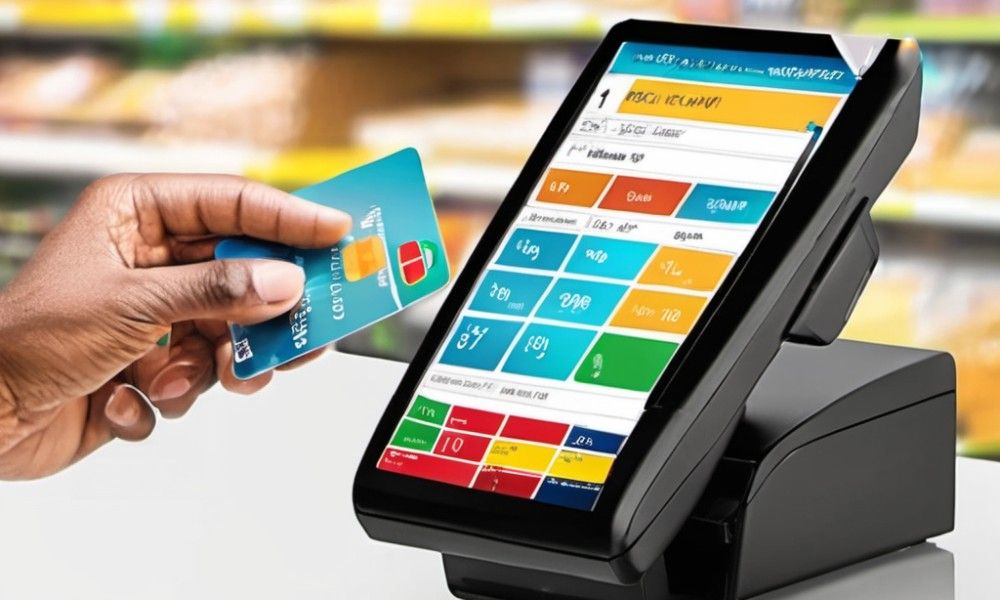
- POS terminal: ₦15,000 to ₦40,000 (depending on the provider; some providers like OPay, Moniepoint, and Palmpay offer terminals at subsidized rates or even free with a deposit)
- Initial float (working capital): ₦100,000 to ₦300,000
- Registration and documentation: ₦5,000 to ₦15,000
- Small table, chair, umbrella/canopy: ₦10,000 to ₦25,000
- Signage and branding: ₦5,000 to ₦15,000
- Miscellaneous (receipt rolls, phone data, power bank): ₦10,000
Total realistic startup: ₦150,000 to ₦400,000
Now, here’s what separates agents who survive from those who fold in the first three months: the buffer.
The Secret Buffer Strategy
Your float is not just the money in your POS account. It’s the total cash you can mobilize within 30 minutes. Top agents always maintain a “shadow float,” which is emergency liquidity they can access fast when their main float runs dry during peak hours.
This could be:
- Cash saved in a separate bank account accessible via mobile transfer
- A trusted neighbor or fellow trader who can lend you cash quickly (with a small commission arrangement)
- A second POS terminal with a different provider, allowing you to transfer between accounts
Running out of float during peak hours is the number one profit killer in this business. One agent in Kano estimated that every “float outage” hour costs him between ₦3,000 and ₦8,000 in lost commissions. Over a month, that adds up to ₦100,000 or more in missed income.
Secret #3: Choosing the Right POS Provider Is a Strategic Decision, Not a Loyalty Test
There are over 25 licensed mobile money operators and fintech platforms offering POS agent services in Nigeria. Choosing between them is one of the most important decisions you’ll make, and most agents make it for the wrong reasons.
Don’t Choose Based on Hype
Many beginners pick OPay or Moniepoint because “everyone uses them.” These are excellent platforms, no question. But “popular” doesn’t always mean “best for your specific situation.”
Factors that actually matter:
- Commission structure: How much do you earn per transaction? This varies wildly. Some providers pay ₦10 flat per withdrawal. Others pay a percentage. Others have tiered systems where your commission increases as your transaction volume grows.
- Settlement speed: How quickly does your float get replenished after transactions? Some providers settle instantly. Others take 30 minutes to 2 hours. In a fast-moving market, that delay can be the difference between serving 50 customers and serving 30.
- Network reliability: Does the terminal work consistently? Network failures during peak periods are devastatingly costly. Ask existing agents about uptime, not the provider’s marketing team.
- Dispute resolution: When a transaction fails but money is debited (the dreaded “reversal” situation), how quickly does the provider resolve it? This is where many flashy providers disappoint.
- Range of services: Can you do bill payments, airtime, transfers, and government payments? Each additional service is an additional income stream.
The Multi-Terminal Approach
Here’s a secret most beginners don’t know: many successful agents run two or three terminals from different providers simultaneously.
Why? Because when one network goes down (and it will), the others keep working. Also, different customers prefer different platforms. Having multiple options means you never turn anyone away.
An agent in Lagos who operates both Moniepoint and Palmpay terminals reported that the second terminal alone adds ₦80,000 to ₦120,000 in monthly commissions that she’d otherwise lose to network downtime on her primary terminal.
Secret #4: The Real Money in POS Agent Banking Isn’t Just Withdrawals
If you think the POS business in Nigeria is only about cash withdrawals, you’re leaving at least 40% of your potential income on the table.
Diversified Revenue Streams
The most profitable agents have built mini financial service centers. Here’s what the full menu looks like:
Cash withdrawals (the bread and butter):
- Commission: ₦50 to ₦200 per transaction, depending on amount and your negotiated charge
- Volume: 50 to 200+ transactions daily in a good location
Cash deposits:
- Many customers, especially traders, want to deposit cash into their bank accounts without visiting a branch
- Commission: ₦50 to ₦100 per deposit
Fund transfers:
- Bank-to-bank transfers via the POS terminal
- Commission: ₦50 to ₦100 per transfer
Bill payments (electricity, DSTV, GOtv, water):
- Commission: ₦20 to ₦50 per payment
- Consistent demand, especially for prepaid electricity (PHCN) tokens
Airtime and data sales:
- Small margin per sale, but extremely high volume
- Commission: 2% to 4% on airtime; higher on data bundles
BVN enrollment assistance (in partnership with banks):
- Some agents partner with banks to help customers with KYC (Know Your Customer) processes
- This is especially lucrative in underserved areas
Government payment collections:
- Tax payments, levies, school fees for government institutions
- These are seasonal but can be very profitable during peak periods
An agent in Port Harcourt shared that withdrawals account for only 55% of his total monthly revenue. Bill payments contribute 20%, transfers 15%, and airtime/data make up the remaining 10%. His total monthly commission consistently exceeds ₦550,000.
Secret #5: Your POS Business in Nigeria Will Die Without Proper Cash Flow Management
This is where most agents fail. Not because they don’t get customers. Not because their location is bad. But because they can’t manage the flow of physical cash in and out of their operation.
The Float Management System
Think of your POS business as a living organism. Cash is its blood. When cash stops flowing, the business dies.
Here’s the daily cycle:
- You start the day with a certain amount of cash in hand and electronic float in your POS account.
- When customers withdraw cash, your physical cash decreases but your electronic float increases.
- When customers deposit cash, the reverse happens.
- The ideal day has a healthy mix of both withdrawals and deposits, keeping your float balanced naturally.
But reality is rarely ideal. In most locations, withdrawals dominate heavily, especially in the first half of the day. By midday, many agents are out of physical cash and have to “rebalance” by visiting a bank to withdraw cash against their electronic float.
The Rebalancing Strategy
Successful agents don’t wait until they run out of cash. They rebalance proactively.
Here’s the system used by high-earning agents:
- Track your daily pattern for 2 weeks. Most locations have predictable peak times. Know when your cash will run low before it does.
- Build relationships with nearby traders. Market women and shop owners often have excess cash they want to deposit. Offer them a slightly better deal, and they become your “reverse ATM,” giving you cash in exchange for electronic transfers. Everyone wins.
- Schedule bank runs strategically. If you must visit the bank, go during off-peak hours (typically 11 AM to 1 PM when queues are shorter).
- Use mobile banking to pre-stage your rebalancing. Transfer funds between accounts while you’re still operating so the money is ready when you need it.
One agent in Ibadan told me, “I lost ₦150,000 in my first month because I kept running out of cash by noon. Once I started tracking my patterns and working with traders around me, my monthly income doubled within 60 days.”
Secret #6: Security Is Non-Negotiable for POS Agent Business Survival
Let’s talk about the elephant in the room. The POS business involves handling large amounts of physical cash daily. In a country where security is a genuine concern, this is a risk you must manage aggressively.
Physical Security
- Never operate alone in an isolated area. Position your stand where there are other businesses and foot traffic.
- Vary your bank run schedule. Don’t go to the bank at the same time every day. Predictability is vulnerability.
- Don’t carry all your cash. Use a lockbox at your stand (secured to the table or hidden) and carry only what you need for the next few hours.
- Install a CCTV camera if possible. Even a dummy camera can deter opportunistic thieves. A real one (solar-powered options cost as little as ₦25,000) is better.
- Build relationships with local security. Whether it’s community vigilantes, area boys who’ve become allies, or local police, having people who look out for you is invaluable.
Digital Security
- Never share your POS PIN with anyone. Not your employee, not your sibling, not your “trusted” friend. Create sub-agent accounts if you need others to operate your terminal.
- Verify every transaction before releasing cash. The “I just transferred, check your account” scam has cost agents millions collectively. Always confirm that funds have hit your account before paying out.
- Keep your POS firmware updated. Outdated software can have security vulnerabilities.
- Use strong, unique passwords for your agent banking app. Enable two-factor authentication wherever available.
An agent in Enugu was robbed of ₦180,000 in her third month of operation because she followed the same routine daily. After she randomized her schedule and partnered with a nearby phone accessories seller for mutual security watch, she hasn’t had an incident in over two years.
Secret #7: Customer Service Is the Competitive Moat in Agent Banking Nigeria
In a market where multiple agents might serve the same area, the one who wins is rarely the cheapest. It’s the one customers trust and prefer.
The Trust Factor
People are handing you their money. That’s an act of trust. Every interaction either builds or erodes it.
What top-earning POS agents do differently:
- They greet every customer by name (or learn their name quickly). In Nigeria, where personal relationships drive business, this alone is a superpower.
- They explain charges upfront. No surprises. No “hidden” fees. Transparency builds loyalty.
- They handle failed transactions with grace. When a transaction fails and a customer’s money is debited but cash isn’t dispensed, panic sets in. The agent who calmly says, “Don’t worry, Aunty. I’ll resolve this for you. Here’s my number, I’ll call you once it’s reversed,” keeps that customer for life. The one who shrugs and says “Call your bank” loses them forever.
- They offer small courtesies. A chair for waiting customers. A phone charger. A pen and paper for those who need to write down account numbers. These cost almost nothing but create emotional loyalty.
- They operate during extended hours. If your competitors close at 6 PM and you stay open until 9 PM, you capture all the evening demand. Weekend and holiday availability is equally powerful.
One agent in Abeokuta built such strong customer loyalty that when a new agent set up two doors away with lower fees, her customers stayed with her. When asked why, one customer said, “She knows me. She won’t cheat me. And she always has money.” That’s a competitive moat no amount of marketing can replicate.
Secret #8: Scaling Your POS Business in Nigeria Requires a System, Not Just Effort
Working harder won’t take you from ₦200,000 to ₦500,000 monthly. Working smarter will. And “smarter” means building a system.
The Solo Agent Ceiling
A single agent, operating one terminal at one location, has a natural income ceiling. There are only so many hours in the day and only so much float you can manage alone.
Most solo agents in good locations max out at ₦150,000 to ₦250,000 monthly. Getting to ₦500,000 and beyond requires one or more of these scaling strategies.
Strategy 1: Multiple Locations
Open a second (and third) POS point in a different location. Hire a trusted operator for each. Pay them a salary plus commission (typically ₦30,000 to ₦50,000 base salary plus 10% to 20% of daily commissions).
Key challenges:
- Finding trustworthy operators (this is the single biggest challenge in scaling)
- Managing float across multiple locations
- Maintaining service quality when you’re not physically present
Solutions:
- Start with family members or well-known community members
- Use POS platforms that allow multi-agent management from a single dashboard
- Do random spot checks and audit transaction records daily
Strategy 2: Increased Float Capacity
More float means more transactions per day. If you typically run out of cash by 2 PM with ₦200,000 float, increasing to ₦500,000 could extend your operating hours and serve twice as many customers.
Some agents take small business loans specifically to increase float. The Bank of Industry (BOI) and various microfinance banks offer SME loans that agent banking operators can access. Interest rates vary, but if your commission income comfortably exceeds the loan repayment, the math works.
Strategy 3: Value-Added Services
Become the one-stop financial shop in your area. Add services like:
- International money transfer pickups (Western Union, MoneyGram sub-agent)
- Insurance product sales (micro-insurance for market traders)
- Savings collection (informal “ajo” or “esusu” digitized through your platform)
- Loan disbursement agent for microfinance institutions
Each additional service increases revenue without proportionally increasing your time investment.
Secret #9: Understanding the Regulatory Landscape for Agent Banking Nigeria
Ignorance of regulations is not a defense, and it can cost you your entire business. The CBN and other regulatory bodies have clear guidelines for agent banking operations in Nigeria.
Key Regulatory Requirements
- You must operate under a licensed institution. You cannot independently operate a POS terminal for financial transactions. You must be an agent of a licensed bank, mobile money operator, or fintech company (OPay, Moniepoint, Palmpay, Kuda, FirstMonie, etc.).
- KYC (Know Your Customer) compliance. You’ll need to register with valid identification (NIN, BVN), proof of address, and sometimes a guarantor.
- Transaction limits apply. Depending on your tier and provider, daily and per-transaction limits vary. Exceeding these limits can lead to account suspension.
- Anti-money laundering (AML) obligations. You’re required to report suspicious transactions. Large, unusual cash movements must be flagged to your provider.
- Tax obligations. POS agent income is taxable. While enforcement has historically been lax, the Federal Inland Revenue Service (FIRS) is increasingly tracking fintech agent incomes. Smart agents set aside 10% to 15% of their profit for tax compliance.
Staying Compliant
- Keep detailed records of all transactions (most platforms do this automatically, but maintain your own backup)
- Respond to audit requests from your provider promptly
- Display your agent ID and provider branding visibly at your operating point
- Never process transactions that seem fraudulent, regardless of the commission temptation
An agent in Kaduna had his account frozen for two weeks because he processed a series of unusually large transactions without flagging them. He lost an estimated ₦200,000 in commissions during the freeze and nearly lost his agent license. Compliance isn’t optional.
Secret #10: The Technology Edge for Modern POS Agent Business
The POS business in Nigeria in 2026 is not the same as it was in 2020. Technology has evolved, and agents who embrace new tools earn significantly more than those who don’t.
Tools and Apps That Boost Income
- Transaction tracking apps: Apps like Prospa, Biz Analyst, or even a well-structured Google Sheet help you monitor daily income, track trends, and identify your most profitable hours and services.
- WhatsApp Business: Create a WhatsApp Business account for your POS service. Broadcast your operating hours, announce when you have sufficient float (“Cash available until 8 PM!”), and offer a “reserve cash” service where regular customers can pre-request large withdrawals.
- Social media presence: A simple Facebook or Instagram page for your POS business costs nothing but increases visibility. Post your location, hours, services, and customer testimonials.
- Multiple POS terminals: As mentioned earlier, running terminals from two or three providers simultaneously protects against network downtime and increases your service range.
- Solar power backup: In a country where power supply is unreliable, a small solar-powered system (₦50,000 to ₦100,000) ensures your terminal and phone stay charged. An agent who can operate when others are shut down due to “no light” captures all the demand in the area.
The Data Advantage
Your POS platform provides transaction data. Most agents ignore it. Top earners study it.
What to look for:
- Which days of the week have the highest transaction volume? (For most agents, it’s Mondays, Fridays, and market days.)
- What time of day is peak? (Typically 8 AM to 11 AM and 4 PM to 7 PM.)
- What is your average transaction size? (This tells you whether to focus on volume or value.)
- Which services generate the most commission? (You might be surprised. Bill payments can sometimes outperform withdrawals on a per-hour basis.)
This data lets you optimize your operating hours, float allocation, and service mix for maximum profit.
Secret #11: The Mindset Shift That Separates ₦100K Agents From ₦500K Agents in POS Business in Nigeria
This is the secret that ties everything together. And it’s the one that most guides on POS business in Nigeria completely miss.
The agents earning ₦500,000 monthly don’t see themselves as “POS operators.” They see themselves as financial service entrepreneurs.
The Operator Mindset vs. The Entrepreneur Mindset
The operator:
- Sits and waits for customers
- Charges the same fees as everyone else
- Operates one terminal at one location
- Sees the POS business as a temporary hustle
- Complains about network issues, competition, and “bad market”
The entrepreneur:
- Actively markets their service
- Understands their cost structure and prices strategically
- Plans for multiple terminals and locations
- Invests profits back into the business
- Solves problems creatively and sees challenges as opportunities
Reinvestment Is Key
The agents who grow fastest follow a simple rule: reinvest at least 30% of your monthly profit back into the business for the first 12 months.
That 30% goes toward:
- Increasing float
- Getting a second terminal
- Improving your physical setup (better signage, shade, seating)
- Hiring help to extend operating hours
- Building an emergency fund for the inevitable slow months
One agent in Uyo started with ₦150,000 total capital in January 2024. By December 2024, through disciplined reinvestment, she was operating three terminals across two locations, employed two operators, and her combined monthly commissions exceeded ₦600,000. Her secret? “I didn’t touch my profits for nine months. I lived on my teaching salary and let the POS money grow the POS business.”
POS Agent Business Comparison Table: Services, Income, and Requirements
| Factor | Solo Agent (1 Terminal) | Growing Agent (2 Terminals) | Scaled Agent (3+ Terminals) |
|---|---|---|---|
| Monthly Income Range | ₦80,000 – ₦250,000 | ₦200,000 – ₦450,000 | ₦400,000 – ₦800,000+ |
| Startup Capital Needed | ₦150,000 – ₦300,000 | ₦400,000 – ₦700,000 | ₦800,000 – ₦1,500,000 |
| Daily Float Required | ₦100,000 – ₦300,000 | ₦300,000 – ₦600,000 | ₦600,000 – ₦1,500,000 |
| Time Commitment | 10 – 14 hours/day | 4 – 8 hours/day (managing operators) | 2 – 4 hours/day (oversight) |
| Skill Level Required | Beginner | Intermediate | Advanced |
| Number of Staff | 0 (self-operated) | 1 – 2 operators | 2 – 5 operators |
| Risk Level | Low – Medium | Medium | Medium – High |
| Services Offered | Withdrawals, transfers, airtime | All basic + bill payments, deposits | Full suite + partnerships, sub-agents |
| Lifestyle Flexibility | Low (location-bound) | Moderate | High (can be semi-passive) |
| Geographic Flexibility | Fixed location | 2 locations | Multiple locations/areas |
| Growth Potential | Limited | Good | Excellent |
| Breakeven Timeline | 1 – 3 months | 2 – 4 months | 3 – 6 months |
Revenue Breakdown: What a ₦500,000 Monthly Agent’s Income Actually Looks Like
For transparency, here’s a realistic breakdown of how a successful agent banking operator in Nigeria might hit ₦500,000 monthly:
| Revenue Source | Daily Average | Monthly Total (26 working days) |
|---|---|---|
| Cash withdrawals (100 transactions × ₦100 avg. commission) | ₦10,000 | ₦260,000 |
| Cash deposits (20 transactions × ₦75 avg. commission) | ₦1,500 | ₦39,000 |
| Transfers (30 transactions × ₦75 avg. commission) | ₦2,250 | ₦58,500 |
| Bill payments (25 transactions × ₦40 avg. commission) | ₦1,000 | ₦26,000 |
| Airtime/data sales (₦50,000 daily volume × 3% margin) | ₦1,500 | ₦39,000 |
| Second terminal income (70% of primary) | ₦11,375 | ₦295,750 |
| Gross Monthly Revenue | ₦718,250 | |
| Less: Operator salary (1 staff) | -₦50,000 | |
| Less: Transport/bank runs | -₦20,000 | |
| Less: Data/communication | -₦5,000 | |
| Less: Miscellaneous expenses | -₦15,000 | |
| Net Monthly Profit | ₦628,250 |
Note: These figures represent a well-established agent in a good location running two terminals. Results vary significantly based on location, float capacity, operating hours, and service mix. New agents should expect lower figures in their first 3 to 6 months while building a customer base.
Risks and Realistic Expectations for POS Business in Nigeria
No honest guide would be complete without addressing the risks. The POS business is real and profitable, but it’s not a guarantee of wealth. Here’s what you need to watch out for.
Common Risks and Pitfalls
1. Failed Transactions and Reversals This is the most frustrating aspect of the business. A customer’s account gets debited but the cash isn’t dispensed due to a network glitch. You’re stuck mediating between the customer and the provider. Resolution can take hours or even days, during which your float is tied up and the customer is unhappy.
Mitigation: Always document failed transactions immediately. Screenshot the error. Note the customer’s details. Report to your provider within minutes, not hours. Build a small “dispute fund” (₦20,000 to ₦50,000) to refund customers immediately while waiting for the reversal. This builds trust and prevents confrontations.
2. Fraud and Scams Scammers target POS agents regularly. Common scams include:
- Fake transfer alerts (always confirm in your banking app, never trust screenshots)
- “Network manipulation” where the scammer claims a transaction failed when it actually succeeded
- Counterfeit currency
- Identity fraud (someone using stolen bank details)
Mitigation: Verify every transaction independently. Count cash carefully. Install a UV light for detecting counterfeit notes. Never rush, no matter how long the queue is.
3. Market Saturation Some areas are becoming oversaturated with POS agents. When too many agents compete for the same customers, commissions drop as agents undercut each other on fees.
Mitigation: Differentiate through service quality, extended hours, and additional services. Consider relocating to underserved areas rather than fighting in overcrowded markets.
4. Regulatory Changes The CBN can change agent banking regulations at any time. New compliance requirements, transaction limits, or fee caps could impact your income.
Mitigation: Stay informed. Join agent banking WhatsApp groups and follow fintech news sources. Maintain compliance buffers in case regulations tighten.
5. Cash Handling Risks Handling large amounts of cash daily carries inherent security risks. Theft, robbery, and loss are real concerns.
Mitigation: Follow the security protocols outlined in Secret #6. Never carry more cash than necessary. Vary your routines. Build relationships with local security networks.
Setting Realistic Expectations
- Month 1 to 3: You’ll likely earn ₦50,000 to ₦150,000 monthly. This is the learning phase. You’re building a customer base, understanding your location’s patterns, and refining your operations.
- Month 4 to 6: Income typically rises to ₦150,000 to ₦300,000 as word spreads and you optimize your processes.
- Month 7 to 12: With consistent effort and smart reinvestment, ₦300,000 to ₦500,000 becomes achievable, especially if you’ve added a second terminal or expanded services.
- Year 2 and beyond: Agents who scale systematically can reach ₦500,000 to ₦1,000,000+ monthly.
Not everyone will hit ₦500,000 monthly. Some locations simply don’t have enough demand. Some agents don’t have the discipline to reinvest and grow. Some get unlucky with provider issues or security incidents. This business requires patience, consistency, and genuine effort.
How to Start Your POS Agent Business: A Step-by-Step Quickstart
If you’ve read this far and you’re ready to take action, here’s a concise action plan:
Step 1: Research your area. Walk around. Count existing agents, ATMs, and bank branches. Talk to people. Identify underserved locations.
Step 2: Choose your provider. Compare at least three options. Talk to existing agents about their experience, not just the provider’s sales team. Consider starting with platforms like Moniepoint, OPay, or Palmpay, which have strong agent support networks in Nigeria.
Step 3: Register and get your terminal. Most providers can onboard you within 3 to 7 days. Have your NIN, BVN, proof of address, and passport photographs ready.
Step 4: Set up your physical point. A clean, visible, and accessible stand. Good signage. Comfortable seating for customers. Power backup for your terminal and phone.
Step 5: Fund your float. Start with what you can afford, but aim for at least ₦100,000 initial float. Remember, more float means more transactions.
Step 6: Start operating and track everything. Record every transaction. Note peak hours. Track your daily income. Identify patterns from day one.
Step 7: Optimize and grow. After 30 days, review your data. Adjust your hours, fees, and services based on what the numbers tell you. After 90 days, evaluate whether to add a second terminal or expand to a new location.
The Future of POS Business in Nigeria: What 2026 and Beyond Holds
The POS business in Nigeria isn’t going anywhere. If anything, several trends suggest it will become even more lucrative:
1. Continued cashless policy push. The CBN continues to encourage digital financial transactions, which paradoxically increases demand for POS agents as the bridge between digital and cash economies.
2. Rural financial inclusion expansion. With millions of Nigerians still unbanked or underbanked, the demand for agent banking services in semi-urban and rural areas will continue growing for years.
3. Integration with government services. More government payments, subsidies, and social interventions are being channeled through agent banking networks. This creates new revenue streams for agents.
4. Technology improvements. Better terminals, faster networks, more reliable platforms. Each improvement makes the agent’s job easier and more profitable.
5. Competition from mobile wallets. This is both a threat and an opportunity. As more people adopt mobile wallets, the demand for cash withdrawal from these wallets (through POS agents) actually increases. The cash economy and the digital economy aren’t enemies. They’re partners, and POS agents sit right at the intersection.
According to insights from the GSMA’s State of the Industry Report on Mobile Money, Sub-Saharan Africa continues to lead global mobile money adoption, with Nigeria as one of the fastest-growing markets for agent banking transactions. This trajectory supports the long-term viability of the POS agent business model.
Conclusion: Your POS Business Journey Starts With a Decision
Here’s the truth that nobody tells you about the POS business in Nigeria.
It’s not glamorous. You won’t post it on Instagram with motivational quotes and laptop lifestyle photos. You’ll deal with network frustrations, difficult customers, the anxiety of carrying cash, and the mundane routine of counting, transferring, and reconciling.
But it works. It genuinely, verifiably works.
In a country where many “opportunities” turn out to be empty promises, agent banking stands as one of the most accessible, scalable, and consistently profitable small businesses available to ordinary Nigerians.
You don’t need a degree. You don’t need foreign currency. You don’t need a fancy office or specialized skills. You need a POS terminal, working capital, a good location, and the willingness to show up every day and serve people who need your service.
The 11 secrets in this guide aren’t theoretical. They come from real agents in real Nigerian markets who figured out what works through trial, error, and persistence. The agents earning ₦500,000 monthly aren’t geniuses. They’re not lucky. They’re simply the ones who treated this business like a real business, not a side thing they’d try for a few weeks and abandon.
If the economy has taught us anything in recent years, it’s that relying on a single income source is risky. The POS business offers a realistic, proven path to building a second income stream, and for many, it becomes the primary one.
The machine is small. The opportunity is not.
Take the Next Step
Which of these 11 secrets surprised you most? Are you already running a POS business and have insights to add? Or are you considering starting one and have questions this guide didn’t cover?
Drop your thoughts in the comments below. If you found this guide valuable, share it with someone who’s been thinking about starting their own POS agent business. They’ll thank you for it.
And if you’re ready to dive deeper into building income streams in Nigeria, explore our guides on the best online side hustles for Nigerians and how to build multiple income sources in Africa’s growing digital economy.
Your financial independence journey doesn’t have to start with a grand gesture. Sometimes, it starts with a small machine on a plastic table at a busy junction. The rest is up to you.