
Poultry Farming Side Hustle Nigeria 2026: 12 Proven Tips to Scale Big
Everyone is looking for a business that pays every week. Very few realise that the answer might be clucking in their backyard right now.
Poultry farming in Nigeria is not just a hobby for retired civil servants or village grandmothers. It is a serious, scalable agribusiness that thousands of young Nigerians are using to replace salaries, fund school fees, and build generational wealth, often starting with less than ₦200,000. If you have been waiting for a business idea that has guaranteed demand, a short profit cycle, and a clear path from small to big, this is the one.
Why Poultry Farming Is Nigeria’s Most Underrated Business Opportunity
Let us look at a hard truth first. Nigeria’s population is currently above 220 million people, and it is growing. All of those people eat. Most of them eat chicken and eggs, regularly and in large quantities. Nigerians spend over ₦800 billion annually on poultry and poultry-related food products. That is not a typo. That is ₦800 billion, every single year, on chicken, eggs, turkey, and everything that comes out of a poultry farm.
Here is what makes this even more interesting. Local production only meets about 30% of the demand for chicken eggs and meat in Nigeria. The other 70% is either imported, undersupplied, or simply unmet. That gap is your opportunity.
The Nigeria Poultry Market is projected to grow at over 10% in 2026, driven by population growth, urbanization, and rising demand for affordable protein. Meanwhile, the government banned chicken imports way back in 2003, which means every kilogram of chicken on Nigerian plates has to be produced domestically. You are not competing with cheap foreign imports. You are filling a genuine domestic gap.
Yet despite all of this, most Nigerians still hesitate. They think poultry farming is too complicated, too risky, or only for people with large land. This guide is going to prove all of that wrong.
In the next sections, you will learn 12 powerful, tested strategies to start a poultry farming business in Nigeria with ₦200,000 in 2026 and create a path toward ₦5 million in annual revenue. Whether you live in Lagos, Kano, Enugu, Ibadan, or Port Harcourt, there is a version of this business that works for your situation.
About the author: This guide was researched and written by an agribusiness content specialist with over seven years of experience covering agricultural entrepreneurship, farm economics, and food systems in Nigeria and West Africa. All cost figures and income projections reflect current 2026 market data from verified Nigerian agri-business sources.
Tip 1: Choose the Right Poultry Farming Business Model Before Spending a Kobo
The first step in any successful poultry farming business in Nigeria is not building a pen or buying chicks. It is choosing the right farming model. This single decision shapes everything else: your startup cost, your profit timeline, your daily workload, and how fast you can scale.
There are four main poultry business models that work in Nigeria. Each one suits a different type of person, budget, and lifestyle.
Broiler Farming (Meat Production)
Broiler farming means raising chickens specifically for their meat. Broilers grow from day-old chicks to market-ready birds in just 6 to 8 weeks. This gives you one of the fastest return-on-investment timelines in any business in Nigeria. You invest at the start of the cycle and collect your money in less than two months.
A fully grown broiler chicken in Nigeria currently sells for between ₦4,500 and ₦7,000 depending on size, location, and season. Demand spikes around Christmas, Easter, Eid celebrations, and school resumption periods, which are times when the price per bird can jump significantly. If you raise 100 broilers and sell them all at ₦5,500 each, that is ₦550,000 in revenue from one cycle.
Best for: Beginners who want fast cash flow and short cycles. Production cycle: 6 to 8 weeks per batch. Market: Restaurants, hotels, event caterers, market sellers, households.
Layer Farming (Egg Production)
Layer farming means raising hens specifically for egg production. Layers start producing eggs at around 18 to 22 weeks of age and continue laying for 12 to 18 months. This creates a daily income stream rather than a lump-sum payout.
A crate of 30 eggs currently sells for between ₦2,500 and ₦3,500 in most Nigerian markets. A well-managed flock of 500 layers can produce 400 to 450 eggs daily, which translates to roughly 13 to 15 crates per day. At ₦3,000 per crate, that is between ₦39,000 and ₦45,000 in daily revenue. The daily income model of layer farming is what makes it attractive for people who need consistent cash flow.
Best for: People who prefer daily income over lump-sum payouts. Also great as a secondary income stream alongside a job. Production cycle: Ongoing daily income for 12 to 18 months per flock cycle. Market: Households, bakeries, restaurants, schools, food vendors.
Turkey and Exotic Bird Farming
Turkey farming is a niche but highly profitable segment of the poultry farming business in Nigeria. Nigerians consume turkey heavily during festive seasons, especially Christmas and New Year celebrations. Mature turkeys sell for between ₦30,000 and ₦80,000 per bird during peak demand periods.
The challenge is that turkeys take 5 to 6 months to mature, and they require more space and slightly more careful management than chickens. However, because of the premium prices they command during festive seasons, the margins are excellent for experienced farmers.
Best for: Farmers who want to combine turkey farming with an existing chicken operation for diversified, season-specific income.
Feed Production and Supply
This is a lesser-known but highly lucrative extension of the poultry farming business in Nigeria. Feeding costs account for 60 to 70% of total production costs in poultry farming. If you can produce your own feed at scale or supply feed to other small-scale farmers in your area, you build a second revenue stream that complements your farming operation.
Feed production requires slightly more capital and technical knowledge, but the margins are excellent and the demand is guaranteed because every poultry farmer in Nigeria needs feed every single week.
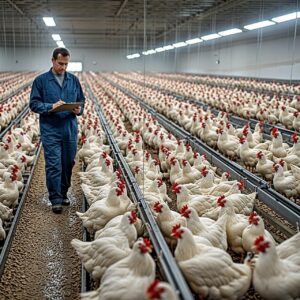
Poultry Farming
Tip 2: Write a Real Business Plan Before You Buy Your First Chick
The second most common reason poultry businesses fail in Nigeria, right after disease outbreaks, is lack of planning. Many beginners rush to buy chicks before calculating whether the business actually makes sense at their scale, with their available capital and market access.
A practical poultry farming business plan does not have to be long or complicated. But it must address five core questions before you invest a single naira.
The Five Core Planning Questions
1. What is my starting capital and what can I realistically afford?
If you have ₦200,000 to start, you are looking at a small-scale broiler operation of 100 to 150 birds, or a small layer operation of 100 birds. Be honest about this number. Do not buy 500 birds if your capital only supports 150.
2. Where will I sell my birds or eggs?
This is the question most beginners skip, and it is the most important one. Before you build your pen, identify at least 3 guaranteed buyers. Walk to your nearest market and speak to the chicken sellers. Visit local restaurants, bukaterias, and event catering companies. Talk to school feeding program operators if you are in a state running that program. Your market plan must exist before your chicks arrive.
3. Where will I source quality day-old chicks and feed?
Your chick source determines the health and performance of your flock. Reputable hatcheries in Nigeria include Amo Hatchery (Oyo State), Zartech (Ibadan), Arbor Acres (Lagos), and several NASC-certified hatcheries around the country. Poor-quality chicks mean high mortality and low returns regardless of how well you manage everything else.
4. What is my mortality assumption and risk buffer?
In any poultry operation, you should plan for 5% to 10% mortality during a normal cycle. In your financial projections, always assume 10% mortality. If you lose fewer birds than that, you make more money than projected. If you plan for zero mortality and lose 15%, you end up confused and undercapitalized.
5. What is my profit per cycle and my payback period?
Work out your numbers clearly. If your total cost for 100 broilers over 7 weeks is ₦180,000 (chicks, feed, vaccines, labor, and miscellaneous), and your expected revenue at ₦5,500 per bird for 90 surviving birds is ₦495,000, your gross profit is ₦315,000 per 7-week cycle. Over a year, with 6 cycles, that is roughly ₦1.89 million in gross profit from just 100 birds. Scale that to 500 birds and you start approaching the ₦5 million annual target.
Tip 3: Start Small, But Plan Big From Day One
This advice sounds obvious, but it is one of the most violated rules in Nigerian poultry farming. New farmers either start too small with no plan to grow, or they start too big and collapse under the weight of mismanagement.
Starting small means your first batch of birds is primarily a learning investment. You are paying tuition. You will lose some birds. You will make feeding mistakes. You will realize your pen design has a ventilation problem. All of this costs less when you are doing it with 100 birds rather than 1,000.
But starting small does not mean thinking small. From day one, set up systems, record books, and processes that work for 1,000 birds, even if you are only running 100. Track every bag of feed consumed. Track your mortality daily. Record your sales price and the name of every buyer. Build the infrastructure for scale now, so that scaling later is just adding birds, not rebuilding your entire operation.
The most successful poultry farming entrepreneurs in Nigeria did not start big. They started with 50 or 100 birds, ran one profitable cycle, reinvested the profit, and doubled down cycle after cycle. That compounding effect is how you get from ₦200,000 to ₦5 million annually. It is not one giant leap. It is six to ten disciplined, well-executed cycles.
Tip 4: Build the Right Housing for Your Climate and Budget
Your poultry house is your most important one-time investment in the poultry farming business in Nigeria, and it is one of the places where many beginners either over-invest or under-invest dangerously.
Under-investment looks like this: buying a plot of land and rigging a tarpaulin over bamboo poles, thinking it will do the job. It will not. Poorly ventilated, unstable housing leads to respiratory diseases, temperature stress, and high mortality that will wipe out your entire margin.
Over-investment looks like spending ₦500,000 on a beautifully tiled, Instagram-worthy pen before you have even raised your first batch of birds. You end up broke before the chicks arrive.
What a Proper Starter Pen Needs
A pen for 100 to 150 birds built with locally sourced materials in Nigeria should cost between ₦80,000 and ₦150,000. The non-negotiable features are:
- Good ventilation. Birds die more from heat stress than almost any other cause in Nigerian conditions. Your pen walls should be open-sided with wire mesh, not solid blocks. Air must flow through constantly.
- Raised flooring or deep litter bedding. Sawdust, wood shavings, or rice husks spread 5 to 7 centimeters deep keeps the floor dry, controls ammonia levels, and reduces disease.
- East-west orientation. Build your pen so it runs east to west, with the long sides facing north and south. This minimizes direct sun exposure while maximizing cross-ventilation.
- Predator protection. Wire mesh on all sides prevents attacks from snakes, rats, and other predators that can cause catastrophic overnight losses.
- Drainage around the pen. Poor drainage leads to dampness and disease. Always build on slightly elevated ground and ensure water runs away from, not toward, your pen.
As your farm grows, you can upgrade to more permanent structures. But these fundamentals apply at every scale.
Tip 5: Master Feed Management to Protect Your Profit Margin
Feed is the engine of your poultry farming business in Nigeria and the biggest cost you will face. Feed accounts for 60 to 70% of total production cost in poultry farming. This means that if you cannot manage feed efficiently, you cannot be profitable, regardless of how well you manage everything else.
There are three feed phases for broilers and a similar progression for layers: starter feed (week 1 to 2), grower feed (week 3 to 5), and finisher feed (week 6 to 8 for broilers). Each phase has a different protein content and price point. Using starter feed all the way to market weight is wasteful and expensive. Using finisher feed too early slows growth in the critical early weeks.
Key Feed Management Tips
- Buy feed in bulk when possible. Feed prices in Nigeria fluctuate with maize and soybean prices. Buying 20 bags at once is almost always cheaper per bag than buying 2 bags at a time.
- Track your feed conversion ratio (FCR). FCR tells you how many kilograms of feed it takes to produce one kilogram of live bird weight. The industry standard for well-managed broilers is 1.8 to 2.0. If your FCR is above 2.5, something is wrong, whether with your feed quality, your housing, or your bird health.
- Never mix old and fresh feed. Old or improperly stored feed can grow mold, which produces aflatoxins that destroy your birds’ livers and suppress their immune systems.
- Consider on-farm feed mixing as you scale. Large-scale farmers mix their own feed from raw ingredients like maize, soybean meal, fish meal, and premixes. This can cut feed costs by 20 to 30% once you reach a scale of 500 birds and above.
The Lagos State government launched a 25% feed subsidy program for poultry and fish farmers in January 2025. If you are in Lagos, access this program through the Lagos State Ministry of Agriculture. Similar programs exist at the federal level through the Anchor Borrowers Programme managed by the CBN.
Tip 6: Vaccination and Disease Control Are Not Optional
This is the section that separates profitable farmers from heartbroken ones. Nothing in poultry farming hurts more than losing 200 birds in three days to a preventable disease. Nothing is more preventable with a proper vaccination and biosecurity protocol.
The three diseases responsible for the most devastating losses in Nigerian poultry farms are Newcastle Disease (ND), Infectious Bursal Disease (IBD or Gumboro), and Avian Influenza (bird flu). All three can be prevented or significantly mitigated with the right vaccination schedule.
Standard Vaccination Schedule for Broilers
| Age (Days) | Vaccine | Administration Method |
|---|---|---|
| Day 1 | Marek’s Disease | Usually done at hatchery |
| Day 7 | Newcastle Disease (ND) + Gumboro (IBD) | Eye drop |
| Day 14 | Gumboro (IBD) booster | Drinking water |
| Day 21 | Newcastle Disease (ND) booster | Eye drop or drinking water |
| Day 28 | Fowl pox (if in affected area) | Wing web stab |
Always store vaccines at the correct temperature (2 to 8 degrees Celsius). Use a cooler box with ice when transporting vaccines from the supplier to your farm. Discard any unused vaccine after opening.
Beyond vaccination, biosecurity is your first line of defense. This means controlling who enters your farm, making visitors disinfect their footwear before entering the pen, keeping wild birds and rodents away, and never bringing sick birds into contact with your healthy flock. Simple, consistent biosecurity practices reduce disease incidence dramatically.
Tip 7: Build Your Market Before Your Birds Arrive
The most successful poultry farming businesses in Nigeria are not built on the best feed or the best housing. They are built on the best market access. You can raise the most beautiful flock of broilers in Ogun State, but if you are selling them at ₦3,000 per bird to a single market buyer because you have no other options, your margins will be terrible.
Here is the honest truth about poultry marketing in Nigeria: the people with the best profit margins are not the ones who raise the best birds. They are the ones who sell directly, at the best price, to the most buyers. Every intermediary in the chain takes a cut. Your job is to shorten that chain.
High-Value Market Channels for Nigerian Poultry Farmers
Direct-to-consumer sales are the highest-margin channel. This means selling live birds directly from your farm to families, event organizers, and individuals who come to you. Use WhatsApp groups, Facebook marketplace, and word of mouth in your community to build a direct buyer database before your first harvest.
Restaurants and bukaterias buy in consistent volume. A medium-sized restaurant in Lagos or Abuja might buy 30 to 50 birds per week. That is your entire 100-bird batch in just 2 to 3 weeks. One relationship with a reliable restaurant buyer changes your business completely.
Schools and institutions are underutilized market channels. With the Federal Government’s Home-Grown School Feeding Programme active in many states, there is structured demand for eggs and processed chicken from schools. Approach state government program offices to understand how to register as a supplier.
Egg supply contracts for small-scale layer farmers can lock in guaranteed revenue. Bakeries, hotels, fast food outlets, and supermarkets buy eggs in consistent weekly volumes. A written supply agreement with even one major buyer eliminates the anxiety of wondering where you will sell your eggs each week.
The food service sector is one of the fastest-growing segments of Nigeria’s economy. According to FAO research on Nigerian poultry production, local production only meets 30% of existing demand for chicken and eggs. Consistent, quality supply is what the market is crying out for.
Tip 8: Keep Detailed Financial Records From Day One
This tip is not glamorous. But it separates the farmers who scale to ₦5 million annually from the ones who always feel like they are working hard but never seem to have money.
Poultry farming generates cash quickly. Broilers sell in bulk cash transactions. Eggs sell every day. Without a record system, that cash disappears into living expenses and vague recollections of “it went into feed” and you have no idea whether you made a profit or a loss.
What to Track in Your Farm Records
- Daily mortality count. Record every bird that dies, on the day it dies. This helps you identify disease outbreaks early.
- Daily feed consumption. Number of bags opened and used per day.
- Vaccination dates and vaccines used. With batch numbers and suppliers.
- Sales records. Date, buyer, number of birds or crates of eggs, price, and payment method.
- All expenses. Every receipt, every payment, no matter how small.
You do not need special software to start. A ₦500 exercise book works perfectly. As your farm grows, apps like Farmwise, Excel, or even Google Sheets can help you spot patterns and make better decisions. The habit of recording matters far more than the tool you use to do it.
Tip 9: Use Government Programs and Agricultural Loans Strategically
One of the genuine advantages of doing agribusiness in Nigeria right now is that the government, through several programs, is actively subsidizing the cost of starting and growing farms. Most Nigerians do not access these programs simply because they do not know they exist or assume they are too complicated.
Programs Worth Knowing About
The Anchor Borrowers Programme (ABP) is managed by the Central Bank of Nigeria (CBN). It provides single-digit interest rate loans to smallholder farmers, including poultry farmers, through participating commercial banks and microfinance institutions. The loans cover the cost of inputs like chicks, feed, and vaccines.
NIRSAL Microfinance Bank provides agricultural financing specifically designed for Nigerian farmers. Their poultry value chain lending program offers loans from ₦300,000 to ₦10 million at subsidized rates for registered farmers.
State-level agricultural support programs exist in almost every Nigerian state. Lagos, Ogun, Oyo, Kaduna, Kano, and several other states have active programs that provide subsidized inputs, extension services, and marketing support to registered farmers.
The Youth Entrepreneurship in Agriculture Programme (YEAP) by the Federal Government specifically targets young Nigerians who want to enter agribusiness. It provides mentorship, training, and in some cases grants.
To access most of these programs, you need a registered business (CAC registration), a bank account in the business name, and a basic farm business plan. All of these are achievable for under ₦20,000 in paperwork and registration fees.
Tip 10: Diversify Your Revenue Streams Within the Poultry Value Chain
One of the most powerful things you can do for your poultry farming business in Nigeria is to stop thinking about it as just a chicken-selling operation and start seeing it as an entry point into a broader value chain. Every part of the poultry cycle generates a potential income stream.
Value Chain Revenue Opportunities
Spent layers. After 18 months of egg production, your laying hens are “spent” but still extremely valuable. Spent layers sell well at Nigerian markets, particularly just before major celebrations when demand for “tough” boiling chickens is high. Old layers fetched ₦3,000 to ₦5,000 per bird at the end of their cycle in late 2025 markets.
Poultry manure. Chicken manure is one of the richest organic fertilizers available in Nigeria. Vegetable farmers, crop farmers, and garden operators buy it regularly. A full bag of processed poultry manure sells for ₦800 to ₦1,500. A farm of 500 birds generates dozens of bags of manure per cycle. This is typically free money for farmers who would otherwise be paying to dispose of it.
Day-old chick sales. Once you have mastered the fundamentals, setting up a small hatchery or buying in bulk from certified hatcheries and reselling to smaller farmers in your area creates another revenue line.
Training and consulting. If you have been farming successfully for 12 to 18 months, you have knowledge that newer farmers will pay for. Many successful Nigerian poultry farmers now run weekend training programs, charging ₦5,000 to ₦20,000 per participant. This is not a distraction from farming. It is a direct monetization of the expertise you earned through your experience.
Tip 11: Leverage Technology to Run Your Farm More Efficiently
You do not have to use technology to start a poultry farm in Nigeria. But if you want to scale efficiently, technology makes a meaningful difference, and most of the tools you need are already on the smartphone in your pocket.
WhatsApp Business is the single most powerful marketing and customer management tool for Nigerian poultry farmers. Create a WhatsApp Business profile for your farm, post photos of your flock at different growth stages, share your prices and availability, and let your buyers place orders through chat. Many Lagos and Abuja poultry farmers generate 80% of their sales through WhatsApp alone.
Google Forms and Sheets make order tracking, buyer databases, and financial record-keeping clean and simple. If you supply eggs to multiple buyers on a weekly schedule, a simple Google Sheet tracks who ordered, what was delivered, and what is outstanding in payments.
Weather and agricultural apps like AgriApp, FarmEasy, and local Nigerian platforms help you track disease alerts in your region, get veterinary advice, and connect with other farmers. When Newcastle Disease outbreaks are reported in a neighboring Local Government Area, you want to know within days, not weeks.
Social media for market building is underused by Nigerian poultry farmers. A simple Facebook page or Instagram account showing your farm, your birds, and your prices builds local credibility and attracts buyers who never would have found you through word of mouth alone.
Tip 12: Reinvest Aggressively in Your First Three Years
This final tip is about mindset, and it is the one that separates farmers who stay small indefinitely from those who reach ₦5 million in annual revenue.
The math of scaling a poultry farming business in Nigeria is not complicated. If you start with 100 broilers and make ₦100,000 net profit in your first cycle, you can either spend that ₦100,000 or you can reinvest it to run 200 birds in your second cycle. If you reinvest and run 200 birds, you make roughly ₦200,000 in cycle two. Reinvest again, and in cycle three you run 400 birds and make ₦400,000.
Within 12 months of disciplined reinvestment starting from ₦200,000, you can be operating at a scale of 500 to 700 birds per cycle, generating ₦500,000 to ₦700,000 gross profit per 7-week cycle. Over 6 to 7 cycles in a year, that is ₦3 million to ₦5 million in annual gross profit from a business that started with ₦200,000 and a lot of focus.
The most successful agribusiness entrepreneurs in West Africa did not hit ₦5 million because they found a secret formula. They hit it because they reinvested consistently, managed their costs rigorously, and refused to pull their capital out until the farm had reached its target scale. Discipline in the first three years is the difference between a small hobby farm and a real business.
Comparison Table: Poultry Farming Models at a Glance
| Model | Startup Cost | Cycle Length | Revenue per Cycle (100 birds) | Monthly Income Potential | Skill Level | Lifestyle Fit |
|---|---|---|---|---|---|---|
| Broiler Farming | ₦150K – ₦250K | 6 – 8 weeks | ₦450K – ₦700K | ₦200K – ₦500K+ | Beginner | Flexible, hands-on |
| Layer Farming | ₦200K – ₦400K | 12 – 18 months | Daily egg sales | ₦100K – ₦600K/month | Beginner–Mid | Daily commitment |
| Turkey Farming | ₦200K – ₦500K | 5 – 6 months | ₦600K – ₦2M+ | Seasonal peaks | Intermediate | Semi-intensive |
| Feed Production | ₦500K – ₦2M | Ongoing | Variable | ₦300K – ₦1.5M+ | Intermediate | Business hours |
| Broiler + Layer (Combined) | ₦400K – ₦700K | Ongoing | Multiple streams | ₦400K – ₦1.5M+ | Intermediate | Full-time |
| Large Scale Broiler (500+) | ₦1M – ₦3M | 6 – 8 weeks | ₦2.5M – ₦4M | ₦800K – ₦2M+ | Advanced | Full-time or managed |
Income figures are gross estimates before expenses. Net profit typically ranges from 30% to 60% of revenue depending on cost management. All figures based on 2026 market conditions.
Risks and Realistic Expectations: What Can Go Wrong and How to Prepare
No guide on poultry farming in Nigeria is complete without an honest section on what can go wrong. This section will save you from the most common and most costly mistakes that sink beginners.
Disease Outbreaks Are the Biggest Threat
Newcastle Disease, Gumboro, and Avian Influenza can wipe out an entire flock in days. A single disease outbreak without a vaccination protocol in place has destroyed the entire capital investment of many Nigerian beginners. This is not a risk to be managed with optimism. It is a technical risk that requires a standard vaccination schedule, proper biosecurity, and a relationship with a qualified veterinary doctor or animal health technician in your area.
Budget approximately ₦1,500 to ₦2,500 per 100 birds for vaccines and medications per cycle. Do not cut this cost. Ever.
Feed Price Volatility Compresses Margins
Maize and soybean prices, the two primary ingredients in poultry feed, fluctuate significantly with harvest seasons and exchange rate movements. When the naira weakens, imported soy premixes become more expensive. When maize harvests are poor in the North, feed prices spike nationwide.
Protect yourself by budgeting conservatively. When calculating your projected profit, use the higher end of current feed price ranges, not the lower end. If prices come in lower, you make more money. If you planned for the lower price and prices rise, you lose.
Capital Mismanagement Kills More Farms Than Disease
Many Nigerian poultry farms fail not because of disease or feed costs but because the farmer spent the profit before completing the next cycle. When your broilers sell and you receive ₦500,000 in cash, it is tempting to solve every other financial problem in your life with that money. But if you spend more than your actual profit, you are not expanding, you are liquidating.
Keep a strict mental and physical separation between your farm capital and your personal finances. A separate bank account for your farm business is non-negotiable once you are operating above 100 birds.
Scam Suppliers and Fake Vaccines
A growing problem in Nigerian poultry farming is the circulation of fake or improperly stored vaccines sold by unregistered dealers. Farmers pay for vaccines, administer them correctly, and still lose birds to Newcastle Disease because the vaccine they bought was a counterfeit or had been stored improperly.
Only buy vaccines from registered veterinary pharmacies or the manufacturers’ certified distributors. Cross-check that your vaccine has not expired before use. For chick sourcing, buy only from NASC-certified hatcheries with a track record. The money you save by buying cheap, unverified chicks or vaccines will not compensate for the losses you suffer.
Theft and Security
Poultry farms, particularly those in semi-urban or rural areas, face real risks of theft. Birds can disappear overnight. Feed stores can be broken into. A simple, well-maintained fence with padlocked gates, and relationships with nearby neighbors who can raise an alarm, are your best defense. Some farmers in high-risk areas invest in simple CCTV cameras, which are now available for as little as ₦15,000 for a basic setup.
Realistic Timeline to ₦5 Million
The headline figure of ₦5 million annually is achievable, but it requires 12 to 24 months of disciplined reinvestment from a ₦200,000 starting point. Here is a realistic growth path:
- Month 1 to 3: First batch of 100 to 150 broilers. Learn the basics. Expect modest profit after a learning curve.
- Month 4 to 6: Second and third cycle with reinvested capital. Now running 200 to 300 birds.
- Month 7 to 12: Expand to 400 to 500 birds with reinvested profits and possibly a small loan.
- Year 2: Target 700 to 1,000 birds per cycle across multiple batches. Annual gross revenue of ₦3 million to ₦5 million+ becomes achievable.
Conclusion: The Chickens Are Ready. Are You?
There is a particular kind of person who succeeds in poultry farming in Nigeria. It is not the person with the most capital. It is not the person with the best-designed pen. It is the person who commits to learning the fundamentals, starts before they feel 100% ready, executes consistently, and reinvests with discipline.
The demand for chicken and eggs in Nigeria is not going to decrease. It is going to grow every single year for the foreseeable future, driven by a population that adds millions of mouths every year and a growing middle class that eats more protein as incomes rise. The government has banned chicken imports for over two decades. Local production still only meets 30% of demand. The market gap is enormous and it has been there for years, waiting for committed farmers to fill it.
You do not need a large inheritance, a bank manager uncle, or a plot of land in Oyo to start. You need ₦200,000, a clear plan, a small piece of land whether leased or owned, quality chicks from a reputable hatchery, and the patience to run the first cycle as a learning experience. The second cycle, you run more professionally. The third, more profitably. And somewhere around cycle six or seven, you look up and realize you have a real business.
The chickens are the easy part. Consistency is the business.
Ready to Build Your Poultry Business? Here Is Your First Action Step
Which poultry model fits your current capital and lifestyle best? Drop your answer in the comments below, and tell us what your starting budget is. We will help you figure out exactly where to begin.
If you are ready to start right now, here is your week-one action plan:
- Identify a location for your pen, whether your backyard, a rented plot, or family land.
- Visit your nearest poultry feed store this week and ask for the current price per bag of starter, grower, and finisher feed.
- Contact a NASC-certified hatchery in your region and ask for their day-old broiler chick prices and availability dates.
- Write down your projected costs and expected revenue for your first batch. Make the numbers real before the birds arrive.
- Register your business name with the CAC for under ₦10,000, so you can access government support programs when your farm is ready for them.
That is it. Five steps this week. The business starts with those five steps.
Want to go deeper? Read our complete guide on how to write a winning agricultural business plan to access CBN Anchor Borrowers loans in Nigeria, including a downloadable template and step-by-step walkthrough.
Disclaimer: Income projections in this article are estimates based on current Nigerian market conditions as of 2026. Actual profits vary based on farm management, market conditions, feed prices, and disease incidence. Always consult a qualified agricultural extension officer or veterinarian before starting or scaling a poultry farming operation.